
Categories
Artificial Intelligence

Artificial Intelligence for Wildlife Conservation

Artificial Intelligence (AI) with its myriad of applications over the years in the research labs and business world is now stepping onto the arena of wildlife conservation.

The recent advances in Machine Learning, Deep Learning (DL) and especially Image Recognition technologies have paved the way for development AI-based applications that play a significant role in wildlife conservation.

Why AI for Conservation?

AI in collaboration with other technologies like Big Data is aiding wildlife researchers in studying and protecting wildlife. From predicting the extinction of endangered species to assessing species population, measuring the global footprint of industries & businesses, predicting climate changes and stopping wildlife poaching, AI changing the future of environmental conservation.

Wildlife Conservation Projects Using AI

World Wildlife Fund (WWF) is working in collaboration with Intel on monitoring and protecting Siberian tigers in China by leveraging AI. Their collaboration has resulted in the development of an integrated solution that comprises a visual device at the frontend and an analysis & recognition platform at the backend.

The visual device called Intel Movidius has been deployed for surveillance and data collection in tigers’ habitat. For analysis of collected data on tigers and to track them, the back-end platform leverages TensorFlow tools and Intel’s DL library MKL-DNN. This solution has also deployed to protect polar bears and whales across the world.

DeepMind

Capturing photographs of animals and identifying them using humans usually would take more than a year. DeepMind, a UK-based company developed a product that helped to speed up the process and recognizes most of the animal species with high-accuracy.

This product which leverages ML has been deployed at Serengeti National Park in Tanzania to detect and count animals using millions of pictures taken at the park.

Rainforest Connection

Rainforest Connection is a San Francisco-based non-profit organization that is using AI to fight wildlife poaching. Their product called RCFx acoustic monitoring system helps by recognizing activity patterns related to bushmeat hunting like detecting the presence of trucks, motorcycles, cars and other vehicles.

This system has been deployed in African key roads using which poachers enter the rainforest. This helps the wildlife organizations to protect the rainforest to allocate manpower on days or hours when poaching activity is predicted to be high.

About Data Labeler

Data Labeler offers world-class labeled datasets to train your ML/AI-based wildlife research and conversation models. Reach out to us at sales@datalabeler.com for top-quality data labeling services.
Categories
Artificial Intelligence

AI in Retail

Artificial Intelligence is one of the emerging technologies that offer a wide range of applications for nearly all market segments, business domains, and sectors. Naturally, how can the retail industry be left behind? By leveraging AI, companies will be able to reduce costs and make shopping an amazing and efficient experience for the end customers.

As per insights from the Global Market, investments by the retail segment in AI is expected to exceed USD 8bn by 2024. Digital disruption is expected to happen in the retail sector at a rapid pace as more applications are developed using machine learning and deep learning technologies.

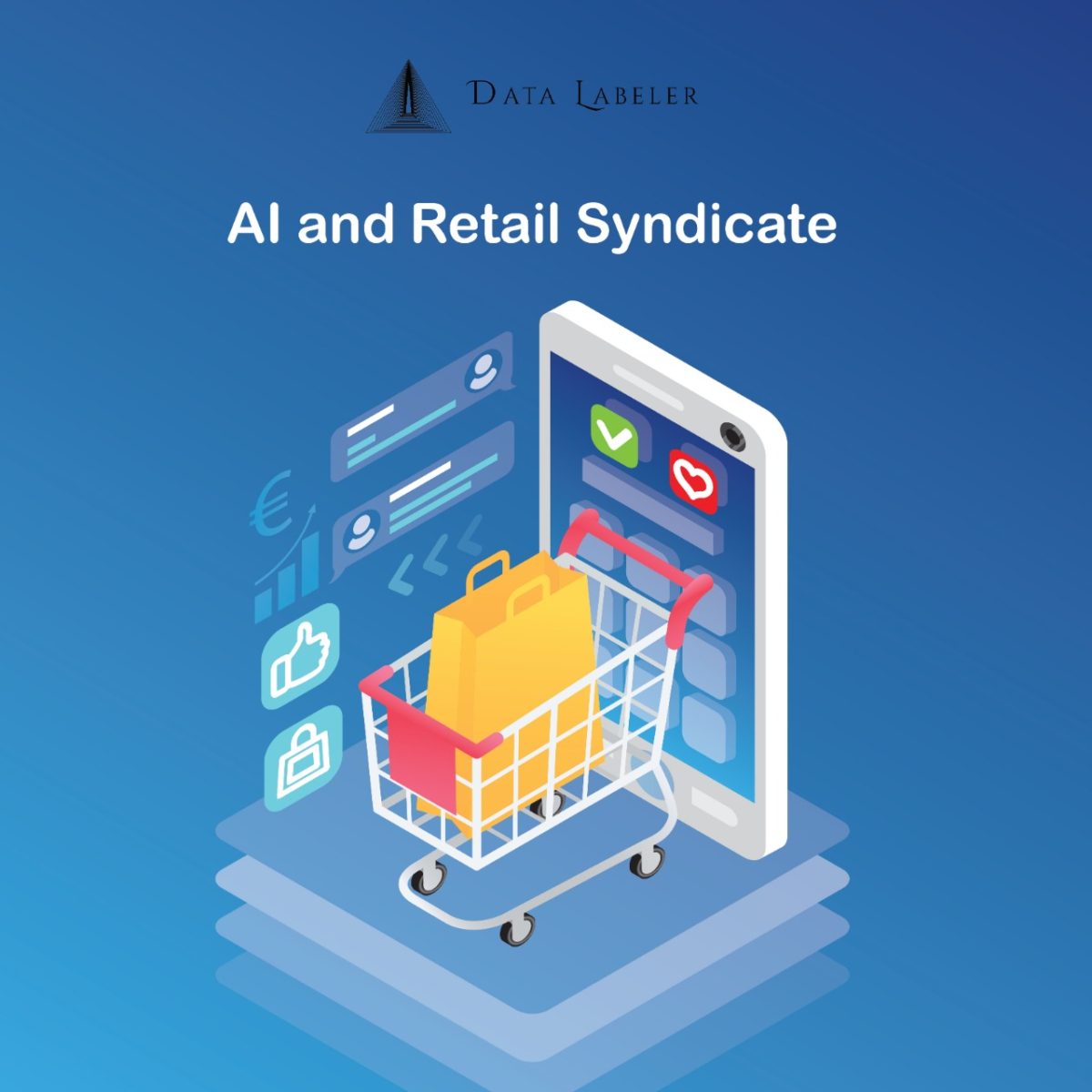
AI is believed to offer a diverse range of applications for the retail industry. Several AI-based solutions will be developed that will impact the day-to-day operations of the retail sector. The AI-Retail Syndicate will enhance the customer service cycle in the retail sector and both consumers, as well as retailers, are going to benefit from the syndicate.

Use Cases of AI in Retail

AI helps retailers to offer personalized shopping experiences to its end customers via interactive chatbots, smart in-store bots, and structured webshops. Let us take a look at how AI will transform the shopping experience for end customers.

Virtual Racks

Apparel and fashion product retailers can create virtual trial rooms and racks having touch-free monitors or gesture walls that will help the shoppers to find their style without having to go through a pile. They can check how a dress would look on them instantly and also get recommendations as per their style and preferences.

This helps to enhance shopping experiences of customers and also to select from a huge collection which is otherwise not possible in a physical outlet due to space constraints. Stores can collect insights on shoppers’ behavior which they can use to optimize their business and product for delivering the best retail experiences.

Virtual Trial Rooms for Instant Decision Making

Customers can get quite frustrated while trying out different options to buy new apparel and it is also time-consuming. Retailers can equip their stores with virtual trial rooms having digital mirrors which allows customers to try dresses without having to keep changing again and again.

A shopper can mix and match dresses, shoes, and accessories with a touch or gesture-based interface to get the perfect look swiftly. Apart from apparel brands, even cosmetic companies can use AI to help customers to check how a cosmetic product will look on them without actually applying it.

Digital Assistance

By leveraging AI, predictive analytics and Natural Language Processing, retailers can develop robots and touch panels to assist customers inside the stores. These robotic assistants can help customers find what they are looking for, answer to their queries and give info on the product.

Developing AI-powered customer service bots will help retail stores to reduce costs on manpower and offer assistance 24X7 to their customers which helps to attract more buyers to the stores.

Enhanced Customer Support

Retail brands can use chatbots powered by AI to engage customers with their brand efficiently. Chatbots can be used to handle millions of queries simultaneously without the need for retailers to employ a large workforce.

Apart from answering queries, chatbots can be configured to offer shopping suggestions and personalized attention to customers which will help them engage with the brand deeply thereby leading to enhanced customer loyalty.

About Data Labeler

Data Labeler specializes in providing high-quality data labeling services and is one of the top data annotation companies in New Jersey. Are you looking for Machine Learning Training Data to train your AI-based algorithms and models? Reach out to us at sales@datalabeler.com for top-quality data labeling services.

Categories
Artificial Intelligence

Wildlife Population Assessment and Estimation

Machine Learning tools have been used to assess and evaluate wildlife status, population and distribution trends. Aerial imagery, motion-sensor cameras and other powerful monitoring tools have been used to collect wildlife pictures frequently and unobtrusively. This has generated rich datasets that help to us understand wildlife and improves our ability to conserve ecosystems.

Data Labeler specializes in extracting information from these large monitoring datasets. Our high-quality training labeled datasets enable our clients to develop and train Machine Learning/Artificial Models that can monitor the wildlife.

Our world-class labeled datasets can be used to train models/algorithms to do the following:

  • Detect the presence of rare species in images and videos
  • Conduct wildlife population surveys
  • Study animal behaviour
  • Estimate wildlife population trends over time
Categories
Machine Learning

Computer Vision trends that will dominate the industry in 2021

During the current pandemic, the one thing which every brand adopted is a quick digital transformation. The transformation which would have taken place in the next 5 years, just happened in the past six months. This accelerated adoption will continue in 2021 in the areas of intelligent industrial automation and artificial intelligence.

Video analytics powered by computer vision will revolutionize risk management and mitigation, automated monitoring, and security, which will achieve operational efficiency in industrial environments. Keeping the prospects of growth in mind, amalgamation, or advanced computer vision with different techs will dominate the year 2021.

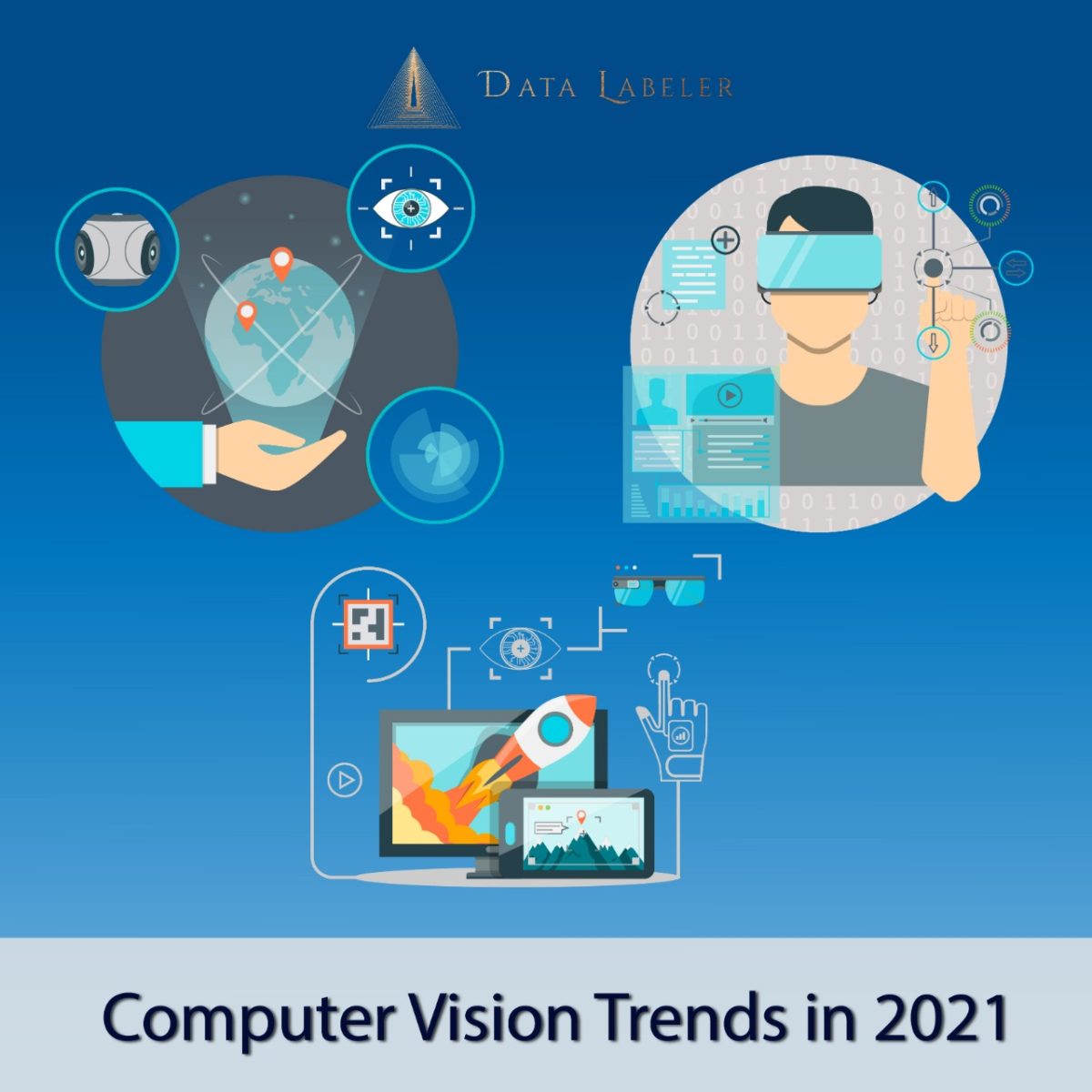
Here are the Top 6 Computer Vision Trends that will dominate the industry in 2021

  1. Make way for safety: Ensure public and workplace safety

Ensuring safety in every organization is very important. Therefore, safety protocols and new daily routines have been introduced for improving the safety programs approach. Currently, technology is playing a significant role in facilitating those enforced changes. And vision intelligence is further being utilized by many industries around the globe for implementing safety.

HSE video anomaly detectors have been proven effective for automated monitoring and analysis for finding anomalies like absence of Safety Masks, PPE Kits, and other regulations like social distancing for employee safety.

  • Root for Quality Inspections: Automate Anomaly Detections

The largest electronic manufacturers have adopted the technologies for automating production monitoring and defect detection. High-quality images are produced; printed circuit boards are utilized for checking 20+ anomalies and defects.

Other industries like Automotive, Food and Beverage, and steel are leveraging computer vision for optimizing visual inspection and automation.

With a laid-off workforce and declining profit margins, 2021 would be the crucial year when more industrial leaders who are looking to utilize Computer Vision and AI inspections would gain golden quality, flexibility, accuracy and low cost, which the technology brings.

  • Opt for Non-destructive Testing: Utilization of Thermal Cameras

Augmented non-destructive testing computer vision is a solution which detects defects and marks the area of interest if there is a high probability for defined defects or anomalies, making use of radiology images that are taken via NDT techniques.

Automated Vision, which is based on inspections, widens the visible spectrum, and detects the metal surface defects which are often invisible to the human eye.  Another fascinating applied thermal imaging data application is to recognize the surface cover of the Peruvian Andes glaciers, which shrunk by 30 % in the past few decades. Due to its melt rate, it’s a serious threat to the water supply for the people living in the Ancash region of Peru.

Advanced computer vision applications and deep learning technologies would further help in analysis and experiments in the upcoming years.

  • Gain in real-time: The advancement of Edge Computing

The rise of edge computing is quickly solving the problems of network accessibility and latency. This also helps in better real-time response and move with relevant insights to the cloud for further analysis.

It enables engineers, trainers, team leads, and quality teams of lining operators for examining every step of the manufacturing process with real-time video analytics. This saves a lot of time needed for manual cycle time monitoring and also optimizes the production cost.

  • Look for helping hands- Sensor Data Triangulation

Video Analytics is unleashing a new frontier for automating surveillance cases in the Military and Defense. The ability to detect events and alert the security has contributed to the physical security at national borders. 

Advanced perimeter monitoring system gathers several forms of data such as video feeds, sensor data, and drone imagery from various touchpoints and triangulates them for providing real-time insights. This integration offers a multi-layered security system with robust features of unidentified object detection, intrusion detection, vehicle detection, and user access control. 

  • Opportunity of Automation- The Closed Loop Solution

We have witnessed rigorous development in the last decade. And one simple example is automatic user access control by facial recognition. 

The advancement of vision-based control is realized in the developments of autonomous cars and unmanned vehicles. Vision system controls the vehicle movements in real-time for any user-defined and desired inputs by making use of visual feedbacks only when conventional sources of accurate position or orientation data are not available. 

About Data Labeler

Data Labeler aims to provide a pivotal service that will allow companies to focus on their core business by delivering datasets that would let them power their algorithms. – https://datalabeler.com/

Contact us for high-quality labeled datasets for AI applications -Sales@DataLabeler.com

Meta Description:

Advanced computer vision with different techs will dominate the industry in 2021. Check out the top 6 computer vision trends now to know about the thriving world of AI, ML and deep learning. 

—————————————————————————————————-