Categories
Annotation

How Data Annotation is Changing the Future of Businesses?

Data Annotation is a rigorous task of labeling data with metadata while preparing it to train a machine learning model. Data and metadata come in multiple forms, which include content types such as audio, text, images, or videos. These annotated datasets can be further used for training autonomous vehicles, chatbots, or translation systems. 

What is Data Annotation? 

It is typically a process of adding metadata to a dataset. This metadata usually takes the form of tags, which could be added to various data types like text, images, or videos. Hence, adding comprehensive as well as consistent tags is a part of developing training datasets for machine learning. 

Data annotation is a crucial stage of processing data, as supervised machine learning models allow you to learn and recognize multiple recurring patterns in annotated data. Once an algorithm has processed enough annotated data, it starts recognizing the same patterns when presented with new annotated data. So, as a result, data scientists must use clean annotated data to train machine learning models. 

Types of Data Annotations

There are variety of data annotations, and all suit distinct use cases. So, let’s run through the most common annotation types used for popular machine learning projects. 

Image and Video Annotation

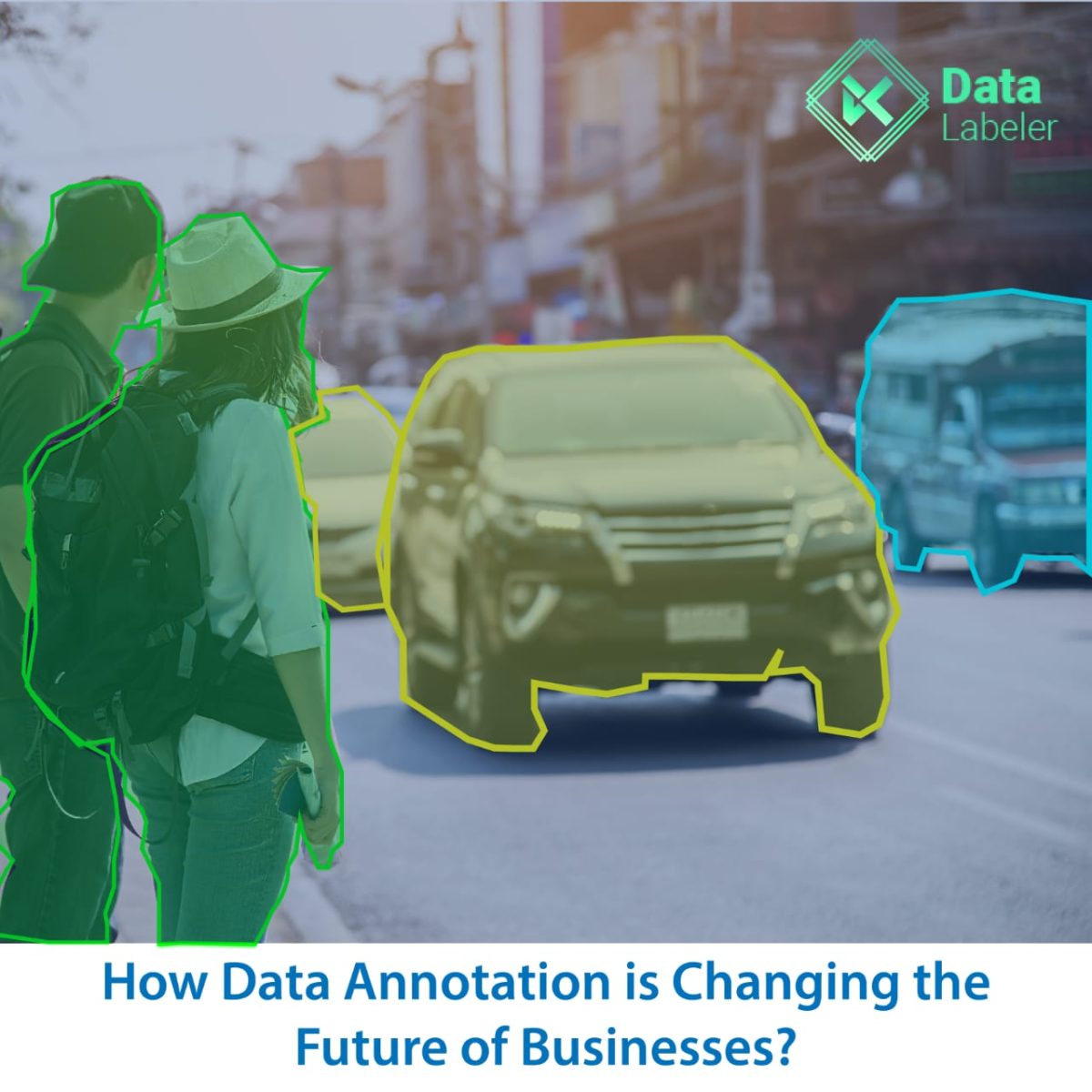
Image annotation has multiple forms, such as bounding boxes or semantic segmentation. Bounding boxes are imaginary boxes drawn on images, and semantic segmentation is where every pixel in an image is assigned a meaning. This kind of labeling helps machine learning models perceive the annotated areas as a distinct type of object. 

Even video annotation involves adding bounding boxes, polygons, or key points to content. This is done on a frame-by-frame basis through a video annotation tool. 

Semantic Annotation 

It is the procedure of annotating various concepts within the text, such as objects, people, or company names. Machine learning models seamlessly use semantically annotated data to learn how to categorize new concepts in new texts. This also helps in improving the search relevance as well as training the chatbots. 

Text Categorization

Text or content categorization refers to the task of assigning predefined categories to the respective documents. For instance, you can tag sentences or paragraphs in a specific document by topic or organize news articles by subjects like national, sports, entertainment, or international affairs. 

Presently, how Brands are making the best use of Data Annotation? 

Building your own AI or ML model that acts and takes decisions like humans need loads of training data. So, for a model to take action and decide on its own, it must be trained to understand the information. This is why data annotation is a crucial undertaking for most businesses today. With human-powered high-quality annotations, companies could improve their AI implementations in a better way. Therefore, brands are securing enhanced customer experience solutions such as product recommendations, computer vision, speech recognition, relevant search engine results and more, from data annotation services.

Various companies use data annotation services to make the best use of it by combining a human-assisted approach with machine-learning. They also provide high-quality training data that offers you the confidence to deploy your AI & ML models at scale. So, whatever your data annotation needs are, data labeling platforms would efficiently understand and cater you with the market standard AI & ML project. 

Know-How Data Labeler could help you

Data Labeler offers high-quality labeled datasets which are accurate, convenient, expedited, and customized for AI and ML initiatives. 

We provide the best training datasets in the market, empowering you to increase your competitive advantage and growth. 

Hence, to summarize what do you get from Data Labeler.

– Highly Accurate Labeled Data

– Options on Real-time Labeling

– Guidance on Labeling Instruction and more

Contact us for detailed information – Sales@DataLabeler.com
Categories
Artificial Intelligence

How Manufacturing Sector is benefiting from Artificial Intelligence?

Introduction

What is the ultimate goal of a manufacturer? The answer is more production and higher-quality products at minimum cost. The “Smart Manufacturing” revolution enables manufacturers to reach their aim successfully, and one of the core technologies driving this new innovation is industrial artificial intelligence. 

Data has become an impeccably precious asset and, at the same time, cheaper to capture and store. At present more manufacturers are leveraging their data significantly for improving their bottom line through the assistance of artificial intelligence and machine learning. 

After all these years, data has significantly contributed to in improving production capacity and efficiency by reducing the causes of production losses and other costs. 

Also, getting tangible business value out of artificial intelligence is easier said than done. Artificial Intelligence is a complex technology with various applications. How can manufacturers understand the “hype” and empty promises to invest in AI that will truly give a competitive edge? 

Focus is the key to successful industrial Artificial Intelligence & Machine Learning.

It is nearly impossible to be ignorant about the growing utilization of artificial intelligence technology in almost all sectors. It’s like every other industry is stirred by the innovations of Artificial Intelligence, Machine Learning, and digitization or automation technologies. 

AI technologies could be effective rightly, hence getting those contexts and the kinds of technologies that apply to them are the key for setting realistic business goals for AI adoption. 

Artificial Intelligence is not a silver bullet; no solution will solve a specific problem, but most of your problems. As a rule of thumb, AI makes the best use of solving particular problems: General AI.

A study by Accenture and Frontier Economics study reveals that by 2035, AI-powered technologies would increase labor productivity up to 40 percent across sixteen industries, including manufacturing. As it is evident that AI is transforming the manufacturing industry eventually, let’s discuss few use cases.

Few use cases of Artificial Intelligence in Manufacturing..

  1. Quality Checks

Few flaws in a product are too small to be noticed, and even, the QC inspector could miss it. Therefore, machines are equipped with cameras to detect even the smallest error. 

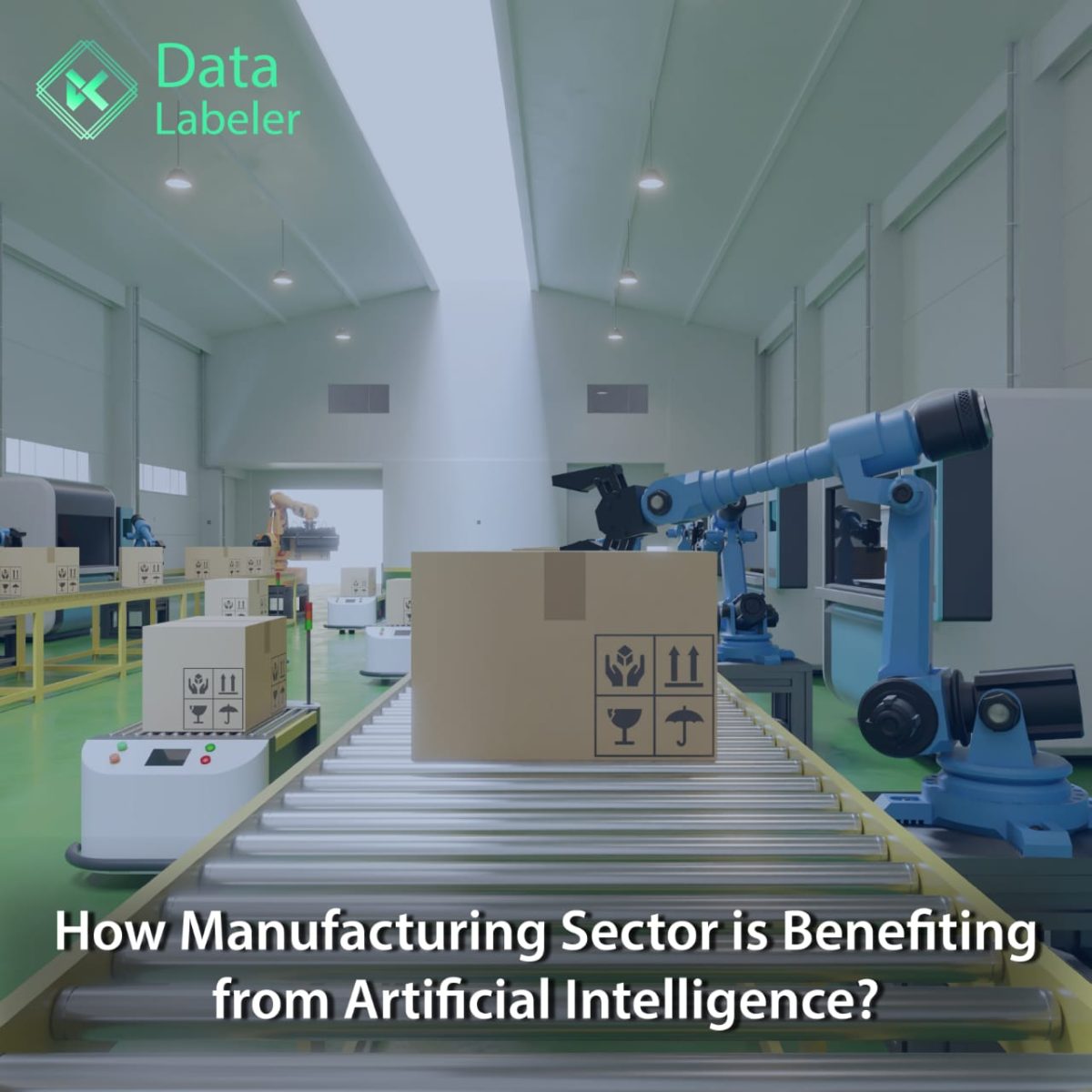
Machine vision allows the machine to view the products on the production line and spot the imperfections immediately. The logical further steps might would be sending the pictures of the found detected flaws to the human expert or fully automated. The system realizes identifies defects mark them and send alerts. 

2. Predicts failure modes

For this, we could make false conclusions by considering products and processes. Products could fail in multiple ways, irrespective of the visual inspection. A product that looks perfect might still break down after its first use. Similarly, a product might look flawed but might work just perfectly. With massive amounts of data on how products are tested and how they perform, artificial intelligence could identify the areas which need more attention in testing. 

3. Predictive Maintenance

It allows companies to predict when machines need maintenance, with higher accuracy instead of preventive or presumptive maintenance. It prevents unplanned downtime by using machine learning. Technologies like sensors and advanced analytics embedded on manufacturing equipment enable predictive maintenance by responding to alerts or resolving machine issues only when required. 

4. Generative Design

This process involves a program that generates several outputs to meet a given criteria. Engineers or designers input design goals and parameters, like materials, manufacturing methods, and cost constraints, into generative design software for exploring design alternatives. This solution utilizes machine learning techniques to make them learn from each iteration that works. 

Digital transformations could change the way a company delivers value to the customers and improve efficiency of the process. 

Now, the question “Is AI is the future of manufacturing industry? 

Artificial intelligence is a game-changing technology for any industrial sector now. As technology is maturing and prices are dropping, AI is becoming more accessible for more companies. In manufacturing, it would be effective at making products and making them better and cheaper.

With AI adoption, manufacturers are able to make rapid, data-driven decisions, minimized operational costs, optimized manufacturing processes and improving the way they serve their customers. Similarly, at the same time, it doesn’t mean that machines will take over AI. Artificial Intelligence is an augmentation to human work, and nothing could substitute human intelligence and the ability to adapt to unexpected changes. 

About Data Labeler

Data Labeler specializes in catering accurate, customized, convenient, expedited, and quality-labeled datasets for Artificial Intelligence and Machine Learning initiatives. 

So, are you looking to raise your competitive advantage & exponential growth? Collab with us – Sales@DataLabeler.com

Categories
Artificial Intelligence

The thriving growth of Aerial Technology and Drones

Introduction

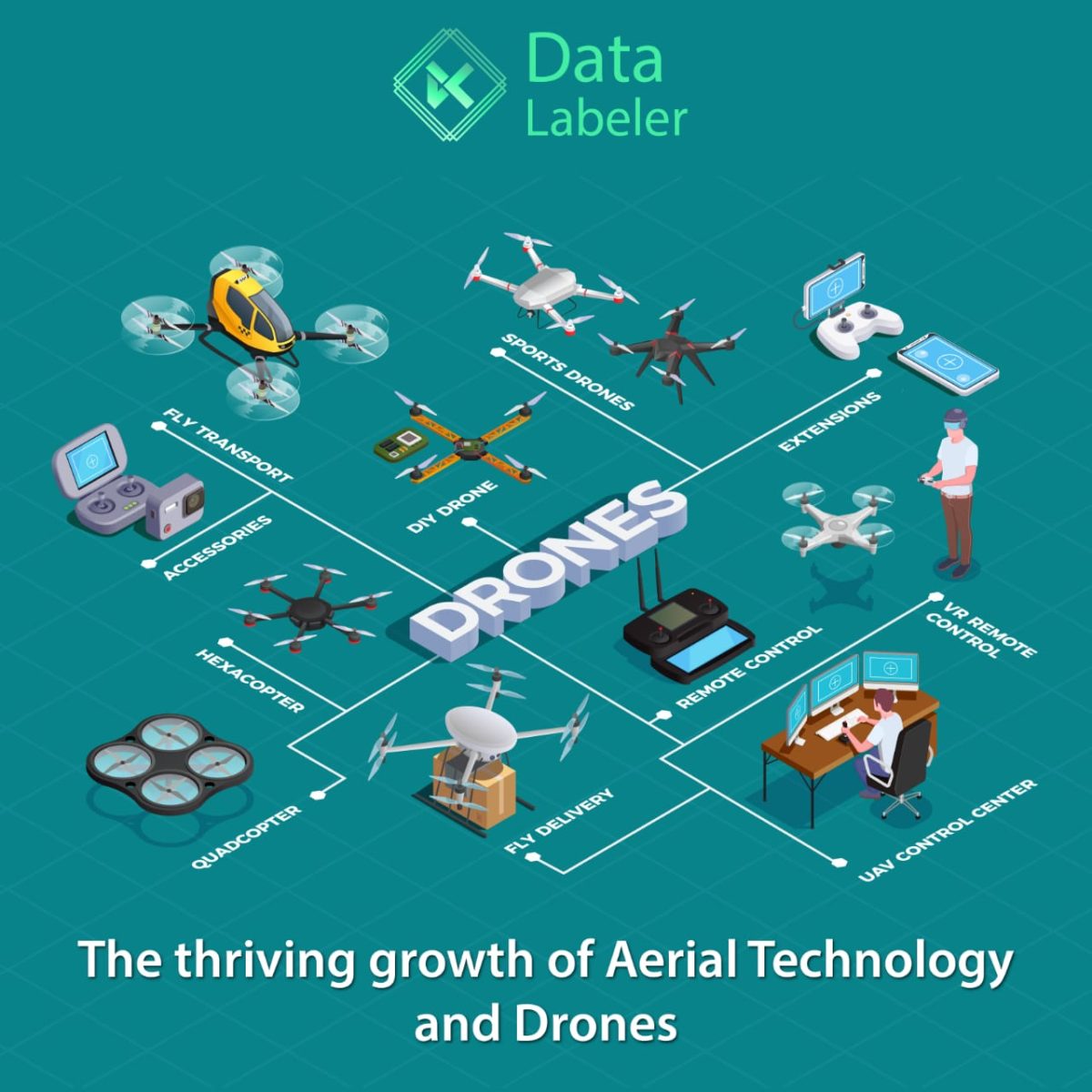
Some call it flying mini-robots or miniature pilotless aircraft, and some call it unmanned aerial vehicles, and most commonly, it is known as drones. Aerial technology is one of the most rapid-growing technologies in terms of usage and mass adoption. They have successfully broken through the barriers in almost all traditional sectors, which seemed to be dense through other technological innovations. 

In the last few years, drone technology has become the prime focus of various business operations of multiple industrial sectors and government bodies. Aerial technologies have managed to pierce through various areas in some industrial sectors, while few of them are still lagging behind. Starting from quick deliveries at rush hours to scanning an aloof military base, drones are proven to be amazingly beneficial in places where humans could not make it in time or in person. 

Work efficiency and productivity are increasing every day, and so are the workload and production costs. The drone technology has been in the top uses to improve accuracy, refining services, resolving security issues on a large scale, and aiding customer relations globally. 

The rising adoption of aerial technology across the industries is due to the potential and scope of the very technologies which the businesses have started to realize. 

What is a Drone? 

In terms of technology, the drone is an unmanned aircraft. It is actually a flying robot which is controlled remotely and flies autonomously via software-controlled flight plans inside the embedded systems present in it, integrated with onboard sensors and GPS. 

Drones and aerial Technology are now used in variety of applications ranging from civilian roles, surveillance, weather monitoring, traffic monitoring, fire-fighting to personal drones or drone-based photography businesses.  

How are drones controlled today? 

They are controlled through remote or accessed via smartphone application. They have the capacity to reach the remote areas without any human resources and minimal effort, energy, and time. This is one of the most important reasons why all businesses are adopting it worldwide, particularly by the Future, Personal, Commercial, and Military sectors. 

Betterment of Computer Vision in AI Drones utilizing Image Annotation Services

Drones use computer vision technologies for hovering in the air, avoiding objects, and travel in the correct path. Presently, artificial intelligence drones are utilized by the online retail giant, Amazon for delivering products at the doorstep of their customers. It is one of the most revolutionizing transportation and delivery systems adopted by logistics and supply chain brands. 

So, here’s how Computer Vision in Drone works?

Computer vision plays a crucial role in detecting various kinds of objects as drones fly in mid-air. Drone neutral networks are commonly utilized for object classification, detection, and tracking while soaring into the air. 

Computer vision is now backed with machine learning and deep learning algorithms, which creates a drastic change in the drone industry. It aids algorithms in learning from captured images of several objects that appear while using drones for multiple purposes. 

The Objects are annotated, for the drones to recognize them through computer vision. There are massive variety of entities that are labeled to assure that drones could detect and decide their direction and control the safety of flying. 

Case Study: Touchless Drone-Based Aerial Intelligence

The drone technology sector is on a high due to the thriving demand of customers. They seek a complete touchless industrial drone solution that is easy to use and delivers relevant data for closing insurance claims quickly, survey mines, measure stockpiles, and operate other earthworks effectively. 

Touchless Drone-Based Aerial Intelligence helps its customers in each and every step. It helps the brands improve their safety, reduce loss adjustment expenses, and enable them of highly accurate risk assessments. 

Know-how Data Labeler could aid in growing Aerial Technology.

We build highly efficient training datasets which could help your drone/device recognize nearby objects accurately. With our robust bounding box annotation, brands could customize their requirements, identify almost all objects, and settle the claims. 

For more info contact us – Sales@DataLabeler.com

Categories
Machine Learning

The Role of Machine Learning in the Insurance Industry

The insurance industry depends heavily on data for calculating risks and procuring personalized ratings. And today, the sector is going through a significant digital transformation due to the gradual advent of technologies. Insurers use machine learning to smoothen business operations, seamless customer experience, and effective detection of fraud. Lately, Artificial Intelligence has created a lot of buzz in almost all the industrial sectors, and the insurance industry is no exception. 

At present, data plays a crucial role in the insurance industry as insurance carriers have access to most of it. Like any other sector, even insurers are overwhelmed by the thriving data resources, which include multiple data sources like online and social media activity, voice analytics, connected sensors, or other wearable devices. They are extensively making use of machine learning for processing the information and unleash the analytical insights. 

This circumstance has been witnessing a steady change driven by the environment featured by increased competition, complex claims, elastic marketplaces, fraud behaviors, higher customer expectations, and tighter regulations. Insurers are now forced to look for ways to utilize predictive modeling and machine learning for maintaining their competitive edge, boosting business operations and enhancing customer satisfaction seamlessly. 

Let’s discuss the four effective ways how the Insurance Industry is adopting the advanced assistance of Machine Learning:

1. Improvement of the Automation process

The insurance industry is regulated through several legal requirements. It processes multiple claims and replies to so many customer queries. Apparently, machine learning could easily improve the process and automatically move claims through the systems beginning from the initial report to the analysis and interacting with the customers. 

In few cases, the claims might not require any work of the human employees. Hence these Machine Learning would allow them to dedicate their time to other demanding claims. Insurance companies automate few parts of their claim process and have increased their quality of service. 

For instance, Captricity has developed algorithms that would extract handwritten or typed forms into digital forms with 99.9% accuracy. This would help the insurers to reduce cycle times. Due to low accuracy in reading handwriting and poor-quality images, enterprises have struggled with automation technology. 

2. Sophisticated Rating Algorithms for Data Insurance

Rating is the foundation of insurance companies. As the famous saying goes, “there are no bad risks, only bad pricing,” which means brands let the companies accommodate most risks as long as they find a good match for pricing. 

Though various insurers still depend on traditional methods of risk evaluation. So while calculating property risks, they might make use of historical data for specific zip codes. Also, individual customers are being assessed using outdated indicators like loss history or credit score. 

In this way, machine learning could offer agents new tools and methods that support them in classifying risks and calculating predictive pricing models, reducing loss ratios. 

3. Provides better Customer Lifetime Value (CLV) prediction

Customer Lifetime Value prediction helps insurance companies predict the customer behavior data and assess the customer’s potential profitability of the insurer for creating a personalized marketing offer. 

These behavior-based machine learning models could be applied for forecasting retention or cross-buying all critical factors in the brand’s future income. Machine Learning also helps the insurer predict the likelihood of specific customer behaviors, such as maintaining or surrendering their policies.

4. Detection & Prevention of Fraud

Nowadays, fraud is a serious concern, and it costs the US insurance sector nearly 40 billion USD in a year. So, if insurance companies found the methods of mitigating fraud effectively, they could easily impact the profit and loss statements. Now, this is where machine learning algorithms could help.

ML is being used to identify the claims that are more seem to be fraud and subject them to further investigation by human employees. ML tools enable insurance companies to take action against fraud way more quickly than human capabilities. 

Conclusion

Machine Learning is leading the way for creating a significant disruption across multiple industrial sectors. Since insurance companies have always worked with data, it makes sense that they could easily master the digital transformation wave and implement machine learning solution for having an in-depth look into data and unleash new insights. 

About Data Labeler 

From offering quality and customized datasets with our sophisticated softwares to catering seamless machine learning datasets, we are a full-time Data Labelers. 

We intend to empower businesses all over the world and ensure supreme quality. Our robust data labeling platform promises consistency, efficiency, accuracy, and speed. Read more – https://datalabeler.com/

Contact us for advanced Data Labeling Services – Sales@DataLabeler.com