Categories
Artificial Intelligence

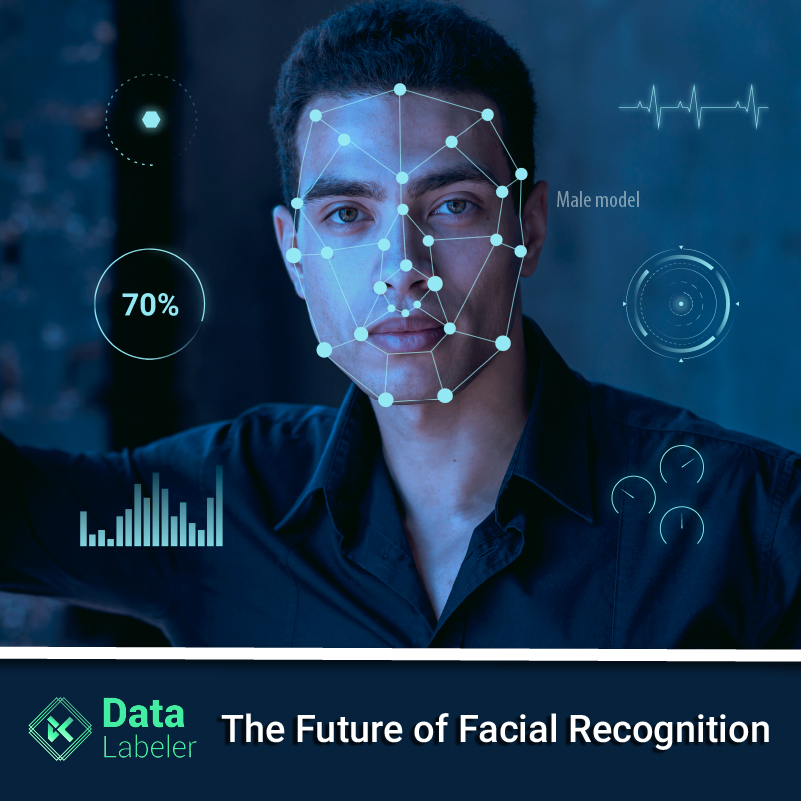
The Future of Facial Recognition – The Aspects, Advancements and Limitations

Do you know what are the benefits of Facial Recognition Systems?

  • Helps locate missing persons efficiently
  • Improves medical care and safeguards businesses against fraud
  • Enhanced security precautions
  • Shopping becomes easier
  • Decreases the number of touchpoints
  • Organises photos
  • And more…


Let’s discuss the Future of Facial Recognition Systems:
One could think that facial recognition only serves to unlock their smartphone.
But, its function is more significant. In reality, facial recognition technology can improve
customer experiences, increase crime prevention, and advance society’s safety and
security adversely.


Today globally, seven out of ten governments make extensive use of face recognition
technology (FRT). And according to 68% of Americans, facial recognition can make
society safer.
Facial Recognition and Its Future aspects
Using a person’s face, facial recognition technology may recognize or verify their
identity. It is possible to identify persons in real-time or in real-world scenarios using
facial recognition software.


One kind of biometric security is facial recognition. The ability to recognize voices,
fingerprints, and the retina or iris of the eye are all examples of additional biometric
software. Despite growing interest in other applications, the technology is now mostly
employed for security and law enforcement.


Are you aware?
Facebook Deep Face has a 97% accuracy rate when determining whether two faces in
photographs belong to the same individual.


Following are various uses for the Technology:

  • Airports & Border security
    A growing number of visitors have biometric passports, which enable them to speed up
    the check-in process by avoiding the typically lengthy lines and instead passing through
    an automated ePassport control. The use of facial recognition not only shortens wait
    times but also enhances security at airports.
  • Decrease in Retail Crime
    Facial recognition is used to recognize people who are known as shoplifters, organized
    retail criminals, or have a history of fraud. To alert professionals in loss prevention and
    retail security when customers who could pose a threat enter the store, photographs of
    individuals can be compared against enormous databases of criminals.
  • Banking
    In Banking sector, the hackers can steal just by using facial recognition without any
    password. Hence, ‘Liveliness’ detection is a mandate. It is a method for determining if
    the source of a biometric sample is a living human being or a fake representation. And
    this is how it should stop hackers from utilising your photo database for impersonation.
  • Healthcare
    Facial recognition is used in hospitals to assist in patient care. Healthcare organisations
    are experimenting with the use of facial recognition to access patient records, speed up
    patient registration, identify specific hereditary disorders, and even assist patients
    express emotion and suffering.
  • Tracking Attendance
    To prevent students from missing class, certain Chinese educational institutions employ
    face recognition technology. Students’ identities are verified by using tablets to scan
    their faces and compare them to pictures stored in a database. The technology can be
    used to sign employees in and out of the office so that employers can monitor
    attendance.
  • Recognizing drivers
    According to a consumer survey report, automakers are testing the use of facial
    recognition to replace car keys. The technology would play a part in being the key to
    unlock and start the vehicle and remember the driver’s preferred settings for the seat,
    mirrors, and radio station presets.


Business entities should be aware of the few limitations that comes with facial
recognition technology.

The four drawbacks of facial recognition technology are listed below.

  • Processing and storing of data
  • Bad Picture Quality
  • Low Resolution Images
  • Unsuitable Face Angles

Are you looking for Image Annotations services? Or want to label your data effectively?
At Data Labeler, we specialise in producing high-quality, specially labelled datasets. To
provide our clients with the greatest quality, our crew works nonstop.

Consistency, efficiency, accuracy, and speed are all features of our integrated data
labelling platform’s advanced software.
Contact us now for best Data Labeling Services.

Categories
Annotation

How is Data Annotation shaping the World of Deep Learning Algorithms?

The size of the global market for data annotation tools was estimated at USD 805.6 million
in 2022, and it is expected to increase at a CAGR of 26.5% from 2023 to 2030. The growing
use of image data annotation tools in the automotive, retail, and healthcare industries is a
major driver of the expansion. Data Labeling or adding attribute tags to data, users can
enhance the value of the information.

The Emergence of Data Annotation 
The industrial expansion of data annotation tools is being driven by a rising trend of using AI
technology for document classification and categorization. Data annotation technologies are
gaining ground as practical options for document labeling due to the increasing amounts of
textual data and the significance of effectively classifying documents. The increased usage of
data annotation tools for the creation of text-to-speech and NLP technologies is also
changing the market.

The demand for automated data annotation tools is being driven by the growing significance
of automated data labeling tools in handling massive volumes of unlabeled, raw data that
are too complex and time-consuming to be annotated manually. Fully automated data
labeling helps businesses speed up the development of their AI-based initiatives by reliably
and quickly converting datasets into high-quality input training data.

Automated data labeling solutions can address these problems by precisely annotating data
without issues of frustration or errors, in contrast to the time-consuming and more error-
prone manual data labeling procedure.

Labeling Data is the basis of Data Annotation
When annotating data, two things are required:

  1. Data
  2. A standardized naming system

The labeling conventions are likely to get increasingly complex as labeling programs
develop.

Additionally, you might find that the naming convention was insufficient to produce the
predictions or ML model you had in mind after training a model on the data. Applying labels
to your data using various techniques and tools is the main aspect of data annotation tools.
While some solutions offer a broad selection of tools to support a variety of use cases,
others are specifically optimized to focus on particular sorts of labeling.

To help you identify and organize your data, almost all include some kind of data or
document classification. You may choose to focus on specialists or use a more general
platform depending on your current and projected future needs. Several forms of
annotation capabilities provide data annotation tools for creating or managing guidelines,
such as label maps, classes, attributes, and specific annotation types.

Types of Data Annotations


Image: Bounding boxes, polygons, polylines, classification, 2-D and 3-D points, or
segmentation (semantic or instance), tracking, transcription, interpolation, or transcription
are all examples of an image or video processing techniques.


Text: Coreference resolution, dependency resolution, sentiment analysis, net entity
relationships (NER), parts of speech (POS), transcription, and sentiment analysis.


Audio: Time labeling, tagging, audio-to-text, and audio labeling


The automation, or auto-labeling, of many data annotation systems, is a new feature. Many
solutions that use AI will help your human labelers annotate your data more accurately
(e.g., automatically convert a four-point bounding box to a polygon) or even annotate your
data without human intervention. To increase the accuracy of auto-labeling, some tools can
also learn from the activities done by your human annotators.


Are you too looking for advanced Data Annotation & Data Labelling Services?


Contact us and we will provide you with the best solution to upgrade your operations
efficiently.

Categories
Data Labeler

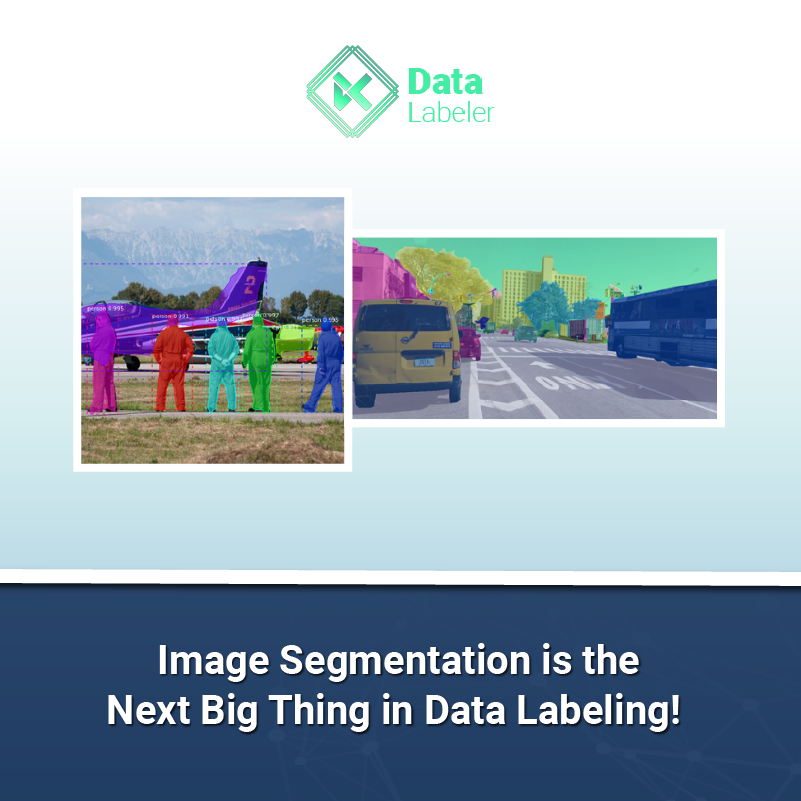
Image Segmentation is the Next Big Thing in DataLabeling! Here’s why

One of the most important areas of computer vision & data labelling is image segmentation. It uses
both learning-based and image processing-based algorithms.


Image Segmentation is not only one of the most crucial areas of computer vision & data labeling, but
it is also one of the oldest problem statements. The earliest works involved simple region growing
methods and optimisation strategies, which were created as early as 1970–1972.


How Data Labeling changed the Image Segmentation Game?


Image segmentation involves both localization and categorization. To determine an object’s location,
the model emphasizes the object’s boundary in picture segmentation, a subset of image
classification.


Unlike classifiers, which typically use a single encoder network, computer vision picture
segmentation models typically use an encoder-decoder network. The encoder transforms the input
into a latent space representation, which the decoder transforms into segment maps, or, more
precisely, maps indicating the positions of each object in the picture.


Annotation for Image Segmentation


As with all supervised deep learning methods, supervised segmentation techniques need a
significant amount of annotated, pre-processed training data.


Depending on the sort of segmentation the model performs, different types of annotations are
needed, from very detailed annotations for panoptic segmentation tasks to very basic annotations
for semantic segmentation tasks.


For delicate and important use cases like self-driving cars and medical imaging, auto-annotate can
quickly generate high-precision segment maps.


How Does AI Image Segmentation Work?


Image Segmentation divides an image into various areas or parts according to how similar the pixels
are inside each region of interest. This likeness might stem from many things, including the color,
texture, or shape of the object.


Convolutional neural networks (CNNs), fully convolutional networks (FCNs), and transformers are
modern sophisticated approaches used in AI picture segmentation to increase task accuracy.


Pre-processing and data collection: A complete set of labeled data is gathered at this stage. Both
input and output are present in this kind of dataset.


As a result, the AI system can operate more effectively with hidden images.


Steps to Effective Image Segmentation


Training: The AI system is trained on the relevant dataset during this stage. By establishing a
connection between the input and ground truth during training, the system learns patterns and
representations.


Testing: After the system has been trained, it is put to the test on a new dataset to assess how well it
performs.

Segmentation Generation: If the model works well during testing, it is then put into use in the real
world where it builds segmentation masks on the actual images in real time. Also known as the
inference phase.


The Major Gains from AI Image Segmentation for Automated Image Analysis


Time-Saving:
Because of the inherent features of the item, the manual analysis might take hours or
even days while AI algorithms can analyze and segment photos within seconds. This increases the
effectiveness of the analysis process and facilitates speedy decision-making.


Cost-Effective: Compared to manual image analysis, AI image segmentation can be more cost-
effective because fewer or no human resources are required. As a result, more people can afford
and have access to the analytical process.


Safety: The possibility of bias in the training data, which can provide skewed findings, is a prevalent
worry. Yet the possibility of inaccuracy can be decreased with precise data labeling and testing.


Robust Application: People frequently grow weary while performing repetitious jobs. The fact that
humans’ attention spans are getting shorter over time is another important worry. Inefficiency and
subpar performance can be caused by these two elements. Because it was trained on a lot of data
and is not fatigued by repetition, AI image segmentation is robust.


With reinforcement learning, these algorithms can also learn from their errors and gradually become
more effective. This indicates that they can adjust to various types of images and function well even
under trying circumstances.


If you’re looking for seamless Image Segmentation and Data Labeling Service .
Data Labeler, provides a effective data labeling services that allows companies to focus on their core
ML/AI business, while we create the datasets that you need to power your algorithms.
Want to know more? Click here

Categories
Annotation Artificial Intelligence

It’s Time that Businesses around the world startadapting Data Annotation & Labelling into their operations

Do you know? Artificial Intelligence has the potential to deliver an additional Global Economic
Activity of $13 trillion by 2030.


The foundation of AI and ML algorithms, data annotation, generates a highly accurate contextual
information that has a direct impact on algorithmic performance. For AI and ML models to recognize
and analyse in coming data accurately, annotated data is essential.


Worldwide spending on third-party data annotation solutions is anticipated to increase seven times
by 2023 compared to 2018, accounting for nearly one-fourth of all spending on annotation.


Large training dataset requirements, which are frequently specific to individual enterprises and
which data annotation services are addressing, are at the heart of the AI revolution.


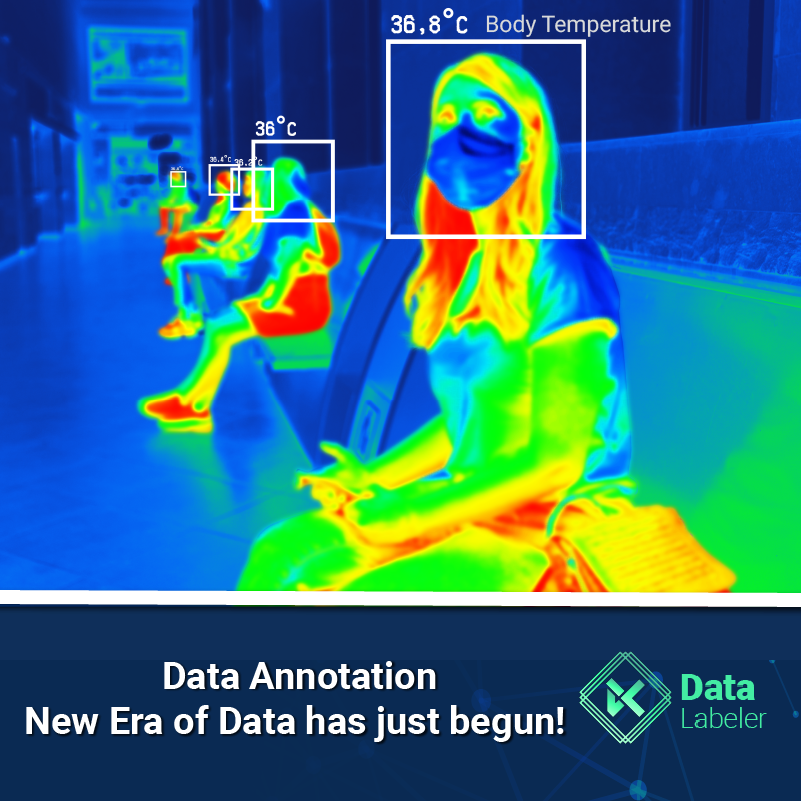
Data Annotation: New Era of Data has just begun!
All machine learning and deep learning algorithms depend on data in some way. That is what drives
these smart and intricate algorithms to provide cutting-edge performances.


So, one must feed the algorithms with data which is appropriately structured and labelled if they
want to create AI models that are actually accurate. And this is where the Data Annotation process
makes an absolutely sense to the businesses.


Data must be annotated for machine learning algorithms to use it and to learn how to carry out
specific tasks.


Data Annotation – what is it?


This simply refers to marking the region or area of interest; this kind of annotation is unique to
photographs and videos. Apart from that, adding relevant information, like metadata, and
categorising text data are the main components of annotation.


Data annotation typically falls under the topic of supervised learning in machine learning, where the
learning algorithm links input with the relevant output and refines itself to minimise errors.


Types of Data Annotation


Image Annotation
The process of labelling an image is known as image annotation. It makes sure that an annotated
area in a given image is recognised by a machine learning system as a certain object or class.

  1. Bounding box: Drawing a rectangle around a specific item in an image is known as “bounding.” Bounding boxes’ edges should contact the labelled object’s furthest pixels.
  2. Object Detection: It can be used to annotate items that need to be grasped by a robot, such as those on flat planes that need to be navigated, like cars or planes.
  3. Polygons: Users can make a pixel-level mask around the intended object which is why polygons are
    useful.
  4. Semantic Segmentation :The process of grouping comparable parts or pixels of an object in an image is known as semantic segmentation. This method of annotating data enables the machine learning algorithm to learn and comprehend a particular feature and can aid in the classification of anomalies.


Best Use Case Scenario Data Labeling and Annotation

Rise of Virtual Assistants: Just like Alexa and Siri, developing next-generation personal assistants
involves a lot of text annotation. This is necessary because there are so many subtleties in human
speech that the annotators must label every piece of textual material to aid the system in
understanding them.

Increasing Crop Yield: With data annotation, now farmers can find the parts of the farmland that
needs more cultivation with the aid of drones that are driven by computer vision technology. For
farmers to make the most of their available farmland in order to successfully yeild crops.

Robotic Process Automation: A lot of the repetitive tasks that are performed in factories, farms,
warehouses, and other industries can be automated to relieve some of the workload from human
employees. However, in order to see and interact with the physical environment around them, these
robots depend on LiDAR and 3D Point Clouds.

Development of Autonomous Vehicles: AI vehicles are taught using a variety of image and video
training sets, which call for data annotators to label different aspects of the images. Simple examples
include drawing a bounding box around another object, or more complex examples include semantic segmentation, LiDAR, and 3D point cloud labelling.

Wondering how to start with Data Labeling Service?
In comparison to insourcing or in-house annotation, outsourcing data annotation has proven to be
both commercially and technically superior. In fact, a report claims that considering the
infrastructure, expertise, and employment costs associated with it, in-house data annotation is likely
to prove four to five times more expensive than outsourcing.

Outsourcing also means a stronger professional dedication and greater scalability. Additionally, it
includes a higher level of professional experience and expertise as well as significant and long-lasting cost savings from ready infrastructure without having to pay for hiring costs.
Data Labeler, specializes in creating quality labeled datasets for machine learning and AI initiatives.
Want to know how? Contact us!