Categories
Machine Learning

How to Choose the Right Machine Learning Algorithm?

Choosing the right Machine Learning algorithm is a tough task as it plays a major part in the success of your AI project. You have to choose over a range of factors before deciding on the one that best suits your use case or business problem. In this blog, we will take you through a list of major factors that helps you in selecting the right model for a particular task. 

Before we start, let’s have a look at the different types of Machine Learning algorithms:

Supervised Learning

In supervised learning, the algorithm uses training data having both input and output labels to create a mathematical model

Unsupervised Learning

In unsupervised learning, the algorithm uses data that only has input features without any output labels to build a model.

Reinforcement Learning

In reinforcement learning, the model performs a set of actions and makes decisions. It then improvises itself by learning from the feedback from its previous actions and decisions.

Important Factors Worth Considering While Choosing a ML Algorithm

Data

The first and foremost factor you need to consider while choosing an algorithm is your data. You need to understand the data type, its characteristics, and size by visualizing the data and identifying the hidden patterns in it.

You can categorize your data into input and output data. If the input data is labeled, then it is best to use a supervised learning model, or if otherwise, an unsupervised learning model will fit in. The type of your output data can also help in determining the right ML model. For instance, the regression model works better for numeric output data while for a set of groups, the clustering model is the best.

The means by which your data is formed also plays a role. For linear data, you may require a linear model whereas, for complex data, an algorithm like random forest will work.

The performance of your algorithm depends on the size of your training datasets. Algorithm having high bias or low variance classifiers work better for shorter datasets whereas, for larger datasets, algorithms with low bias or high variance will work better. 

Accuracy

The accuracy of a model can be defined as its ability to predict the right outcome from its observation that can be close enough to the actual response for a particular observation set. The accuracy of your model is determined by the type of problem you are trying to solve.  

Models can be categorized as flexible and restrictive based on the range of shapes they produce of the mapping function. Restrictive models produce a small range of shapes while flexible models produce a wide range of shapes. 

Restrictive models are preferred when inference is the goal and you would like to achieve interpretability. Flexible ones are preferred when high-accuracy is your goal. The interpretability of a model decreases as its flexibility increases.

Speed

Speed here generally refers to training time. If you want to achieve higher accuracy, then you may have to train your model using larger training data which again requires a longer time. Speed & accuracy are opposite to each other. If you are short on time, use a simpler algorithm and if accuracy is more important to you, a more complex algorithm will be useful for your AI project

Number of parameters & features

Parameters determine the behavior of an algorithm. Error tolerance, number of iterations, options between variants are some of the parameters that will affect how your algorithm behaves. Most of the time, the number of parameters determine the time needed to train and process the data. As the number of parameters increases, the training and processing time also increases.

Based on the number of data points, the number of features of a dataset varies. A dataset with a large number of features may bog down a few algorithms. It is best to use an algorithm such as SVM that will work for apps having a large number of features.

About Data Labeler

Data Labeler helps AI companies develop smart machine learning models by providing high-quality datasets that can train, validate, and test their models. If you are looking for the best data labeling companies in Philadelphia, drop a mail to sales@datalabeler.com
Categories
Natural Language Processing and Deep Learning

Transformers – A Deep Learning Model for NLP

The Transformer is a Deep Learning Model that was introduced in 2017 and is mainly used for Natural Language Processing Tasks. It is mainly designed to handle sequential data for carrying out tasks such as text summarization and translation.

Let’s take a deep dive into its architecture and why it is considered better than the Recurrent Neural Networks.

Encoder & Decoder Architecture

Transformers has an encoder-decoder architecture. The encoder consists of two important components; a feed-forward neural network and a self-attention mechanism. The decoder consists of three important components; a feed-forward neural network, a self-attention mechanism, and an attention mechanism over the encodings

Both encoder and decoder are modular, having modules that can be stacked one on top of each other multiple times. Each encoder module processes the input to generate encodings which are then passed as inputs onto the next encoder module. The encodings generally contain information on the parts of the inputs that are relevant to each other.

The decoder modules on the other hand process the encodings and generates an output sequence by using the contextual information incorporated within the encodings. Each of the encoder and decoder layers uses the attention mechanism to weigh the relevancy of every input and extracts information from them accordingly to generate the output. Each decoder layer comes with an additional attention mechanism that helps to extract information from the outputs of previous decoders. This takes place before the decoder can even draw information from the encodings. Both the encoder and decoder layers rely on a feed-forward neural network for additional processing of the output.

Why Transformers Are Preferred Over RNNs?

Most of the Natural Language Processing systems till recently were dependent on gated recurring neural networks (RNNs) such as Long short-term memory (LSTMs) and gated recurrent units (GRUs) having additional attention mechanisms. But after the introduction of Transformers, it has started to replace the older RNNs like LSTMs.

Even though both RNNs and Transformers can handle sequential data, unlike the former, the latter doesn’t require the sequential data to be processed in the order. This means when a transformer model is processing a natural language sentence, it doesn’t have to process it from the beginning. Hence, Transformers allows for more parallelization when compared to RNNs, and therefore requires less training.

The transformers were built using attention technologies without using an RNN structure. This highlights the fact that the attention mechanism alone minus the recurrent sequential processing can achieve the performance of RNNs.

Since Transformers facilitate more parallelization than older RNNs, it can easily enable training on larger datasets thereby making the development of pre-trained systems possible such as Bidirectional Encoder Representations from Transformers (BERT) and Generative Pre-Trained Transformer (GPT). These systems were trained using larger datasets of general language and as a result, can be customized to perform specific language tasks.

Trust Data Labeler with All Your Human Data Annotations Needs

Data Labeler specializes in building comprehensive datasets that are perfect for training your ML models. Even though Data Annotation is a very significant part of your AI/ML undertaking, you don’t have to worry about spending time annotating data yourself. We will do the heavy weight-lifting part while you focus on optimizing your AI/ML models to perfection. Write to us at sales@datalabeler.com for customized training datasets for your AI/ML projects.

Categories
Machine Learning

Why Data Annotation is Important for Machine Learning?

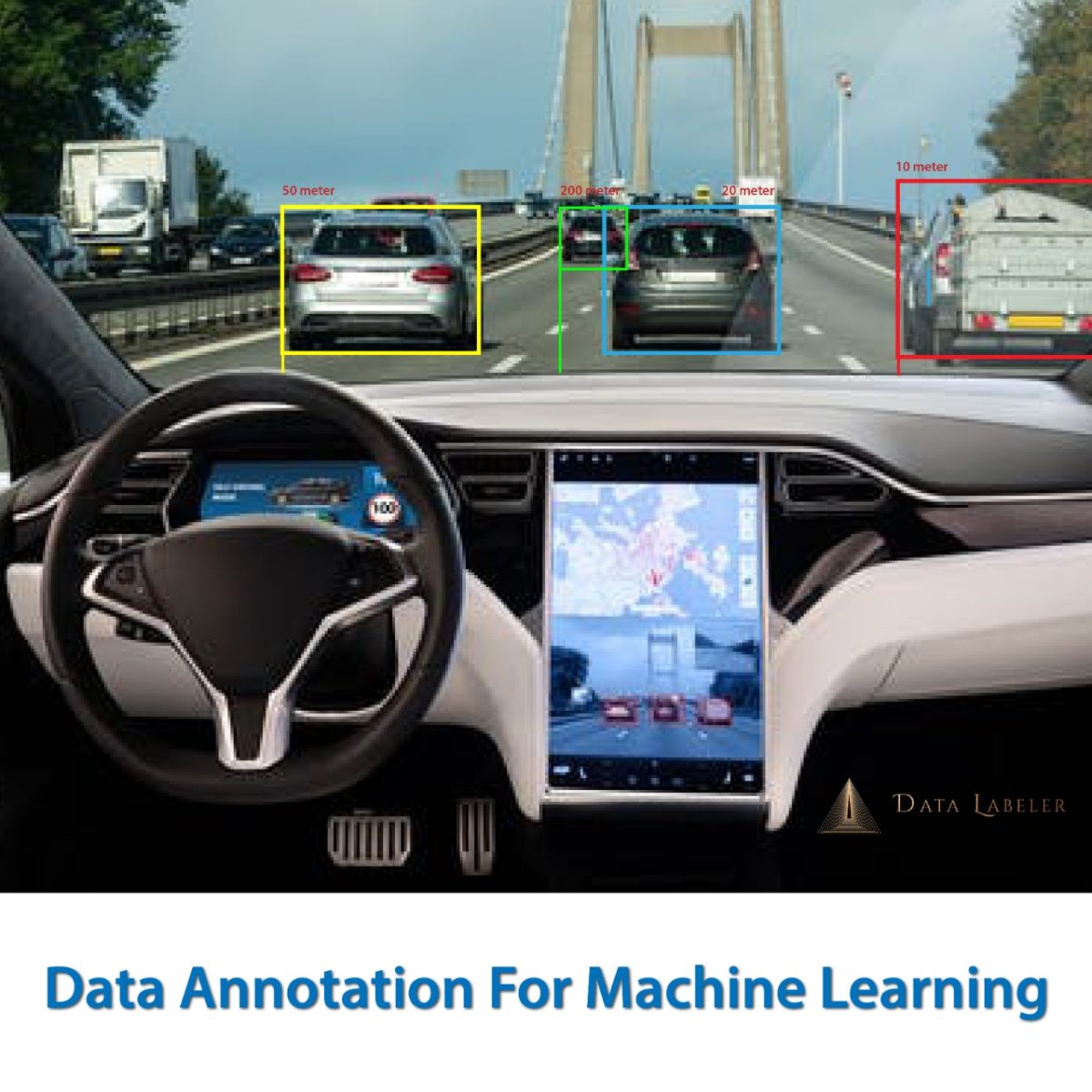
Data Annotation is the process of attaching labels to datasets that are used for training machines. About 80% of Artificial Intelligence project development time is spent on data preparation. The success of any AI or Machine Learning project is directly proportional to the quality of the annotated data fed to the algorithms for training them. Even the slightest of errors can prove disastrous to humankind especially when you trust machines with your life.

Data Annotation for Supervised & Unsupervised ML Algorithms

Data Annotation plays a crucial role in the training of the machine learning algorithms more so in the case of supervised ML projects. Annotated data helps the machines to understand its surroundings better and identify the objects in its vicinity.

When it comes to unsupervised ML project, you would need annotated data sooner or later to improve the performance of your ML algorithms. Human data annotation can play a key role to increase the accuracy rate of an unsupervised ML algorithm that learns on its own by connecting the dots. In such cases, human annotators can manually review each image to determine if the quality of the annotated image is good enough for the algorithms to learn or not.

Are Open-Sourced Datasets a Good Choice for AI/ML projects?

Even though there are open-sourced annotated data available, not the best option to consider. As per Mckinsey, about ¾ of AI projects would need monthly data refresh while 1/3rd of them need a weekly data refresh. As the datasets need to be refreshed every week, using the publicly available datasets may not be good for your AI/ML projects.

Trust Data Labeler with All Your Human Data Annotations Needs

Data Labeler specializes in building comprehensive datasets that are perfect for training your ML models. Even though Data Annotation is a very significant part of your AI/ML undertaking, you don’t have to worry about spending time annotating data yourself. We will do the heavy weight-lifting part while you focus on optimizing your AI/ML models to perfection. Write to us at sales@datalabeler.com for customized training datasets for your AI/ML projects.

Can you build Machine Learning models without data? The answer to that question is an obvious NO. Whether you are creating supervised or unsupervised algorithms, annotated data is the key to successful #MachineLearning projects.

And about 80% of Artificial Intelligence project development time is spent on data preparation of which #dataannotation is an indispensable stage.

Read the blog to find out how valuable is #AnnotatedData and the role it plays in the development of highly-efficient #MLModels

what crucial role does data annotation play in the development of 

Is it possible to build Machine Learning projects without data? Whether supervised or unsupervised machine learning development require data annotation

Categories
Machine Learning

Data Labeling Approaches for Machine Learning

Data Labeling is one of the key factors that determine the quality of a machine learning project. Although data labelling tasks are time-consuming and can get very complex, by selecting the right approach, your machine learning project can steer clear of any quality or accuracy hurdles.

In this blog, we have listed out 5 data labeling approaches for Machine Learning projects along with their pros and cons.

Data Labeling for Machine Learning

Internal Labeling

As the name suggests, the data labeling tasks are performed by an in-house team. Internal labeling can help you achieve the highest level of accuracy and also allows you to track the progress. This means your ML models will predict good results and you will have complete control over the data labeling process. But, it is a very slow process when compared to other data labeling approaches. Hence, you should opt for this approach if your company has enough time, human and financial resources,

Outsourcing

You can create a team of freelancers who provide data labeling services to speed up your ML development. You can find them on recruitment and social networking sites. You can also easily find them on freelancing sites like UpWork. This approach allows you to get the right people onboard since you check for the freelancer’s skills with tests.

Outsourcing mostly entails small to mid-sized teams. Hence you will be able to control their work. But the drawback of this approach is that you will have to build an intuitive workflow and that requires some amount of planning. You should also be able to provide them with the right tools to finish their job.

Crowdsourcing

Crowdsourcing platforms give you access to datalabelers from across the world. It is one of the cost-effective approaches and you can get the data labeled in a quick time. The quality of the workers and quality assurance may vary from platform to platform. Hence when choosing a crowdsourcing platform, it is best to check for workers’ quality, QA, and the tools they use to manage data labelers and projects.

Data Programming

This approach involves the method of using scripts to label data automatically. The programming approach not only gets your data labeling done quickly but also reduces the need for human data labelers. It is often combined with a QA team as the processes are still far from being perfect.

Synthetic Labeling

Synthetic labeling involves the generation of data having the required parameters set by the user for real data. Generative models that are trained and validated using an original dataset are used to produce synthetic data. There are three types of generative models – Variational Autoencoders, Generative Adversarial Networks, and Autoregressive models. This approach to data labeling is fast and cheaper but may require high computational power to render and train the model further.

About Data Labeler

Data Labeler helps AI companies develop smart machine learning models by providing high-quality datasets that can train, validate, and test their models. If you are looking for innovative data labeling companies in Philadelphia, drop a mail to sales@datalabeler.com