Categories
Annotation

How to Ensure Project Success with best Annotation & Labeling Metrics to Track?

It all boils down to performance and quality metrics when determining what makes a machine-learning model effective. To assess if a model will perform as planned for its application and particular industry use, AI practitioners need to consider these evaluation aspects. Essentially, performance evaluation and monitoring during development result ineffective products.


When a model is deployed in the field, it must be able to predict various circumstances and adapt to them naturally. Without good training data, it would not be able to achieve this degree of responsiveness and reliability. There is a special set of metrics devoted to that earlier stage of any AI development pipeline to obtain higher-quality data.


Why Data Labeling Metrics is not always easy to track?


Long after data has been input into a model, the data management stage is an essential and crucial step that is sometimes devalued and disregarded in favor of model iterations during training and evaluation. ML modeling cycles that are greatly prolonged by frequently inaccurate data and, as a result, produce inferior results. So, it wouldn’t be a stretch to claim that the data that powers AI algorithms and apps is only as good as that data itself.


Data management may be challenging for any ML team to handle, as is well-known. It’s not surprising that this isn’t the area practitioners like to concentrate on since processing and preparing data takes up an estimated 80% of model-building time.


However, the effort put into the annotation or labeling that forms the core of the data processing workflow will pay off greatly in the form of optimal performance and a finished product that requires less maintenance and trouble shooting after deployment.


Significance of Data Labeling Metrics

The common data labeling approach is frequently related to a few activities. Depending on
the volume of data that has been collected, annotation is required to organize and separate
datasets into what information is useful and usable and what information is not. The
thought process is that this labeled data is now properly formatted and prepared to assist
model training and deployment.


The tasks at hand—collecting, organizing, and annotating data before it can be used—appear simple enough, but carrying them out is trickier than it seems. Most likely because the average ML team performs data labeling activities expensively and inefficiently.
Unfortunately, a lot of AI software developers tend to rely on a small number of generic, poorly implemented solutions.


These include handling data processing requirements internally, using larger teams of designated workers to handle annotation tasks, crowdsourcing, contractors who are frequently freelance and temporary, and dedicated data labeling teams or individuals assigned to labeling tasks.


To prevent creating incorrect and subpar datasets, practitioners must establish and adhere to rules and standards regardless of the method they choose. Given this knowledge, it is advised to focus on the following factors when processing data: the quantity or size of the datasets, the frequency of label or annotation errors, the reduction of noise, data filtration, time management, and the capacity to filter down to the most precise subsets of data.


How does Data Labeler play an important role in Tracking Data Labeling
Metrics? 

Regardless of the particular requirements of a given project, the size and number of datasets that need to be processed, or the level of expertise of the team that will be managing the data, a reliable data preparation platform will go a long way to simplifying data management to effectively measure and track the recommended criteria. Any AI ML project dataflows can be worked on in a comprehensive and tailored environment thanks to Data Labeler.


Contact us to know more about data labelling services in USA!
Categories
Data Labeling

Businesses are achieving new heights through Data labeling & Biometric operations

Biometrics are increasingly being used in a variety of home and business security systems. Given the specific characteristics of your genetics and behaviors, this can seem insurmountable. However, many people are wary of using biometric identity as the only source of authentication.


Modern cybersecurity is focused on reducing the dangers associated with this reliable security solution because traditional passwords have long been a concern for security systems. Biometrics, which links identity to bodily traits and behavioral tendencies, addresses this issue.

Data Labeling & Biometric Operations

The need to rethink how to approach data labeling in various attributes is significant. The current categories can be limited and not reflective of the diversity of human identities, and inconsistencies are present in the labeling of soft biometric attributes in facial image data sets.


The reliability and quality of machine learning algorithms can be significantly impacted by how data is labeled. When establishing demographic variables, it is crucial to keep an eye on the label quality, especially in data sets involving biometric features like face photographs, iris, fingerprints, and more.

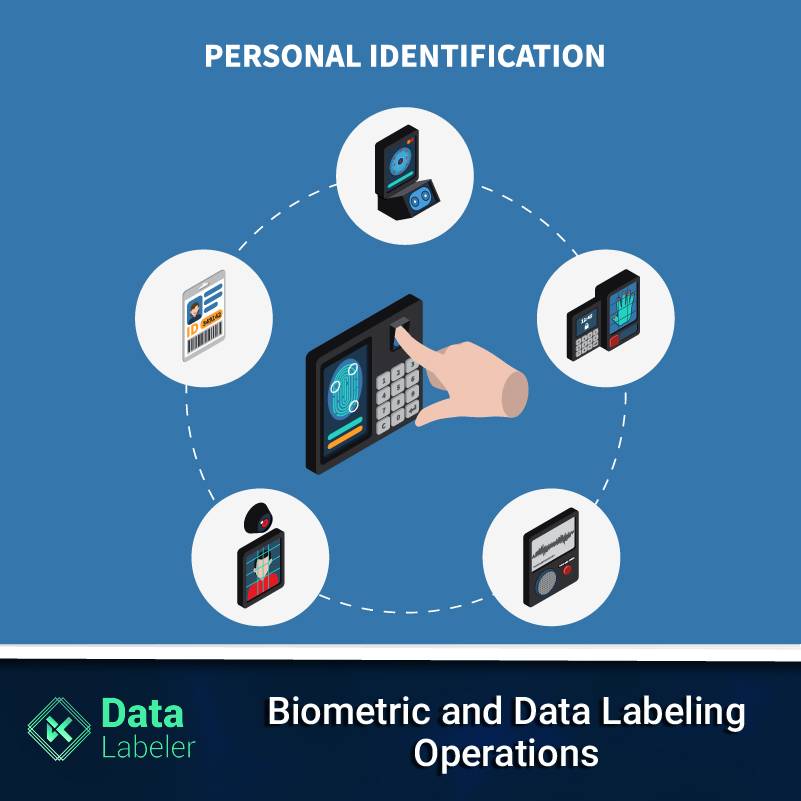
Examples of Biometric Security

  • Voice Recognition
  • Fingerprint Scanning
  • Facial Recognition
  • Iris Recognition
  • Heart-Rate Sensors

Sensitive documents and valuables are protected using advanced biometric technology. The British bank Halifax is developing gadgets that monitor heartbeat to confirm customers’ identities, and Citibank already utilizes speech recognition. Ford is even thinking about installing biometric sensors in automobiles.

How business sectors are deploying Biometric technology into their Operations?

In both residential and commercial buildings, facial recognition technology is widely used to grant access to pre-registered visitors, family members, and authorized personnel while preventing illegal people from entering. Examples are

  • Entrance to business facilities for staff and visitors
  • Residential and business buildings can use smart locks.
  • Residential and commercial buildings with smart elevators
  • Access control systems for equipment and resources that are restricted

In everything from research facilities, hospitals, factories, and warehouses to agriculture and mining, there is a vast array of specialized equipment and technology that requires strict access controls, operational oversight, tracking, and reporting. Access to restricted equipment and resources can be kept safe thanks to face recognition technology. 


Factories and storage facilities are needed for the manufacture of consumer goods. Additionally, they store goods before transporting them around the globe via vast and complex supply chain networks. Only people with the proper authorizations and credentials are allowed access to the usage of machinery, thanks to facial recognition systems, which also ensure that only authorized individuals may enter restricted areas.

How Data Labeling can help with Biometric business use cases and more?

Facial recognition technology works by comparing real-time photographs to a database of pre-enrolled identities. Data labeling involves detecting unprocessed data (such as photos, text files, videos, etc.) and adding one or more insightful labels to provide the data context so that a machine learning model may learn from it.


Labels might say, for instance, if an x-ray shows a tumor or not, which words were spoken in an audio clip, or whether a picture of a bird or an automobile. Data labeling is essential for a number of use cases, including speech/Facial/iris recognition, computer vision, and natural language processing.


Contact us to know how Data Labeler can help you with your specific Use Case.

Categories
Data Labeling

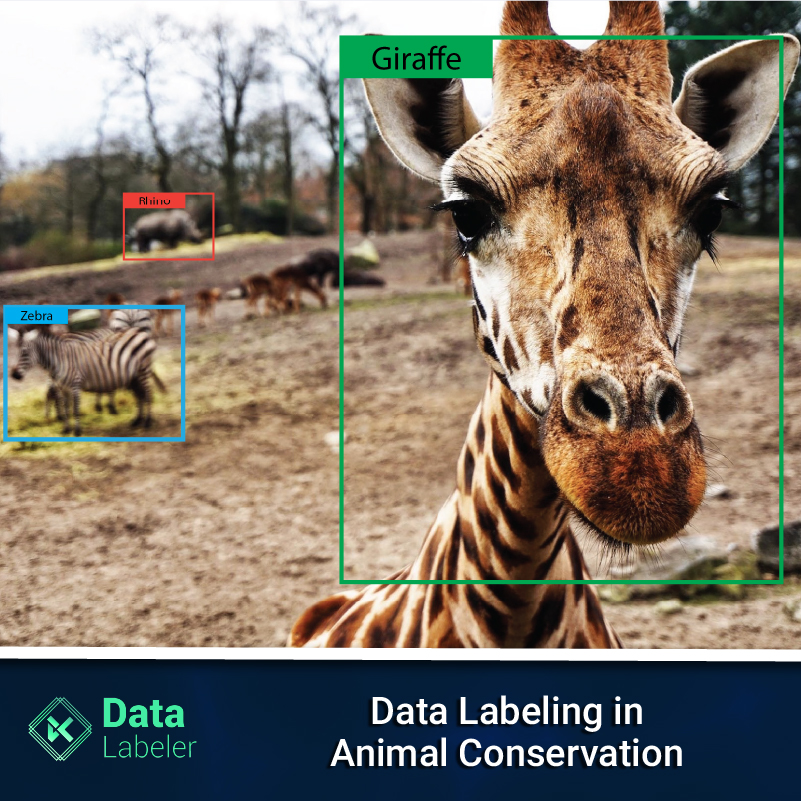
How Data Labeling & Annotation significantly aids in Animal Conservation?

According to the most recent reports, the number of wild animals roaming the planet is
predicted to decrease by two-thirds by the end of 2020. The preservation of the planet’s
natural biodiversity is essential for the better operation of our natural ecosystems. Hence,
animal ecological data collection is being accelerated by affordable and available sensors. 


These technologies have a great deal of potential for understanding ecology on a global
scale, but they are constrained by present processing techniques that ineffectively turn data
into useful knowledge. Animal ecologists may benefit from the vast datasets produced by
contemporary sensors by fusing domain expertise and machine learning techniques. 


How Ecology & Conservation will be accelerated by technology? 


Animal variety is vanishing in a previously unmonitored way. There is currently a lack of
knowledge about this loss, which affects not only genetic variety but also ecological and
behavioral diversity. Up to 17,000 of the more than 120,000 species monitored by the IUCN
Red List of Threatened Species have a status of “Data deficient”. 


Tools that can quickly analyze wildlife diversity and population dynamics at a wide scale and
with great spatiotemporal precision, from individual animals to global densities, are critically
needed. In this perspective, we seek to connect ecology and machine learning to
demonstrate how pertinent technological advancements might be used to meet this
pressing need for animal protection.


How animals are monitored Traditionally Vs Technologically? 


Traditionally, data gathering for the management and protection of animal species is done
by human field workers who count animals, watch their behavior, and monitor natural
areas. Such initiatives are costly, labor-intensive, and time-consuming. 


Due to difficulties in removing observer subjectivity and guaranteeing high inter-observer
reliability, as well as frequently inevitable animal reactions to observer presence, they might
also lead to biased datasets. Hence, the number of animals that can be viewed concurrently,
the complexity and temporal resolution of the data that can be gathered, and the size of the
physical area that can be efficiently monitored are all inexorably limited by human physical
and cognitive limitations.

New sensors expand available data types for animal ecology and recent developments in sensor technologies have significantly increased data collection capacity by lowering costs and extending coverage in comparison to traditional approaches, opening up new opportunities for ecological studies at scale. High-resolution remote sensing has made it possible to study many previously inaccessible conservation-related places, and digital tools like camera traps consumer cameras, and sound sensors are collecting vast volumes of non-invasive data.


Study of Animal Movement & Migration through Data Labeling & Annotation


The study of animal movement and migrations is being revolutionized by new on-animal
bio-loggers, such as miniature tracking tags and sensor arrays with accelerometers, audio
loggers, cameras, and other monitoring devices. These devices allow researchers to track
individuals over their lifetimes and across hemispheres with high temporal resolution.
Data labeling projects are already successfully analyzing millions of camera trap images
automatically, giving wildlife conservation researchers and professionals the information,
they need to investigate animal diversity, abundance, and behavior. Utilizing ML significantly
lowers analytical expenses in addition to pure acceleration, with the reduction in multiple
factors. Moreover, Ecological workflows that incorporate machine learning could result in
integrated hybrid modeling tools and better ecological model inputs. 


Therefore, preserving Earth’s Biodiversity is essential to keeping the equilibrium of the
planet’s ecosystem as a whole. The authorities frequently do not have access to fine-scale
data since the current animal monitoring systems are either unable to scale internationally,
do not have the proper resolutions or both.


Want to know how DATA LABELER can help you? Or do you have a Use Case in
mind? Contact Us Today!

Categories
Data Labeling

Determine the best Data Labeling Approaches and know what’s best for you?

As technology and AI continue to permeate our daily lives, producing ever-increasing amounts of data, data labeling services will continue to have a huge impact on modern civilization.
Data must be treated and refined from its raw form into something more valuable and helpful since it is a commodity, just like any other commodity. Machine learning uses vast volumes of data every day. Businesses spend a significant amount of time and money on training employees and developing the best data-enrichment technologies so that they can train, test, and fine-tune AI models.

Machine Learning led Data Labeling

Machine learning is developed in large part through data labeling, and as a result, its applications are widespread. In the field of healthcare, data labeling aids AI in the early diagnosis of cancer, eye diseases including glaucoma, and skin ailments.
A recent study even demonstrated that AI can identify a patient’s likelihood of developing dementia better than doctors can. The training of AI for use in search engines to develop ranking algorithms has been one of the greatest uses of data labeling. This influences both the order in which the results appear and the results you see on the first page of a web search.
The development of what is fast becoming “everyday” AI, such as playlist recommendations, intelligent virtual assistants, and self-driving cars, is also being aided by data labeling services.

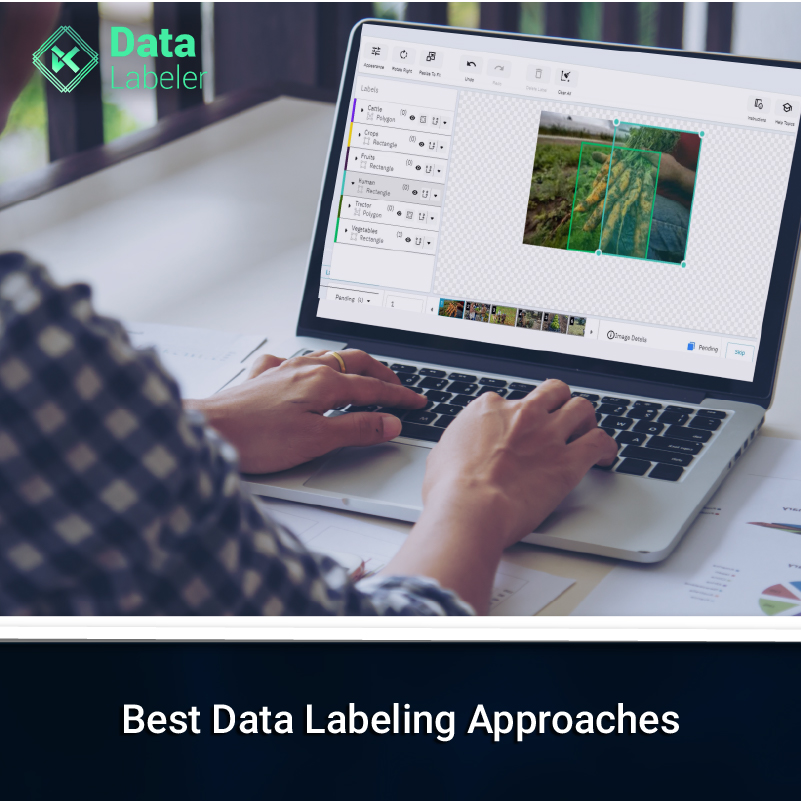
Let’s check out the best Data Labeling Approaches

An essential step in creating a high-performance ML model is data labeling. Although labeling seems straightforward, it’s not always simple to use.
As a result, businesses must weigh a variety of aspects and strategies to choose the most effective labeling strategy. A thorough evaluation of the task complexity, as well as the size, scope, and duration of the project, is advised because each data labeling approach has advantages and disadvantages.

Data Labeling Approaches

Internal Labeling: Utilizing internal data scientists facilitates monitoring and raises quality. However, this tactic frequently requires more time and benefits large companies with loads of resources.

Synthetic Labeling: This technique generates fresh project data from pre-existing datasets while enhancing data quality and time efficiency. However, synthetic labeling requires a lot of processing power, which could increase the cost.


Programmatic Labeling: This automated data labeling process makes use of scripts to save time and do away with the requirement for human annotation. However, HITL must continue to be included in the quality assurance (QA) process due to the possibility of technical problems.


Crowdsourcing: This approach is quicker and more cost-effective since it enables microtasking and web-based distribution. But there are variations across crowdsourcing platforms in terms of project management, quality assurance, and labor. One of the most well-known examples of crowdsourcing data labeling is Recaptcha.

Outsourcing Data Labeling Services:

This can be the best option for complex AI projects. And Data Labeler can help you in achieving the best out of your data. So, while we concentrate on developing algorithms for Data Annotation projects that will help your business and society you can focus on growing your business aspects.
Want to know more about Data Labeler and its offerings? Contact us now!