Categories
Data Labeler

Realizing the ultimate power of Human-in-loop in Data Labeling?

As more automated systems, software, robots, etc. are produced, the world of today
becomes more and more mechanized. The most advanced technologies, machine learning,
and artificial intelligence are giving automation a new dimension and enabling more jobs to
be completed by machines themselves.


The term “man in the machine” is well-known in science fiction books written in the early
20th century. It is obvious what this phrase refers to in the twenty-first century: artificial
intelligence and machine learning. Natural intelligence—humans in the loop—must be
involved at many stages of the development and training of AI. In this loop, the person takes
on the role of a teacher.

What does “Human-in-Loop” mean?   

Like the humans who created them, AIs are not perfect. Because machines base their
knowledge on existing data and patterns, predictions generated by AI technologies are not
always accurate. Although this also applies to human intellect, it is enhanced by the
utilization of many inputs in trial-and-error-based cognition and by the addition of
emotional reasoning. Because of this, humans are probably more likely to make mistakes
than machines are to mess things up.

A human-in-the-loop system can be faster and more efficient than a fully automated
system, which is an additional advantage.

Humans are frequently considerably faster at making decisions than computers are, and
humans can use their understanding of the world to find solutions to issues that an AI might
not be able to find on its own.

How Human-in-the-loop Works and Benefits Data Labeling & Machine Learning?

Machine learning models are created using both human and artificial intelligence in the
“human-in-the-loop” (HITL) branch of artificial intelligence. People engage in a positive feedback loop where they train, fine-tune, and test a specific algorithm in the manner known as “human-in-the-loop”.
It typically works as follows: Data is labeled initially by humans. A model thus receives high-
quality (and lots of) training data. This data is used to train a machine learning system to
make choices. The model is then tuned by people.

Humans frequently assess data in a variety of ways, but mostly to correct for overfitting, to
teach a classifier about edge instances, or to introduce new categories to the model’s scope.
Last but not least, by grading a model’s outputs, individuals can check its accuracy,
particularly in cases where an algorithm is too underconfident about a conclusion.
It’s crucial to remember that each of these acts is part of a continual feedback loop. By
including humans in the machine learning process, each of these training, adjusting, and
testing jobs is fed back into the algorithm to help it become more knowledgeable, confident,
and accurate.

When the model chooses what it needs to learn next—a process called active learning—and
you submit that data to human annotators for training, this can be very effective.

When should you utilize machine learning with a Human in the loop?

  • Training: Labeled data for model training can be supplied by humans. This is arguably where data scientists employ a HitL method the most frequently.
  • Testing: Humans can also assist in testing or fine-tuning a model to increase accuracy. Consider a scenario where your model is unsure whether a particular image is a real cake or not.
  • And More…

Data Labeler is one of the best Data Labeling Service Providers in USA

Consistency, efficiency, precision, and speed are provided by their well-built integrated data
labeling platform and its advanced software. Label auditing ensures that your models are
trained and deployed more quickly thanks to its streamlined task interfaces.

Contact us to know more.
Categories
Artificial Intelligence

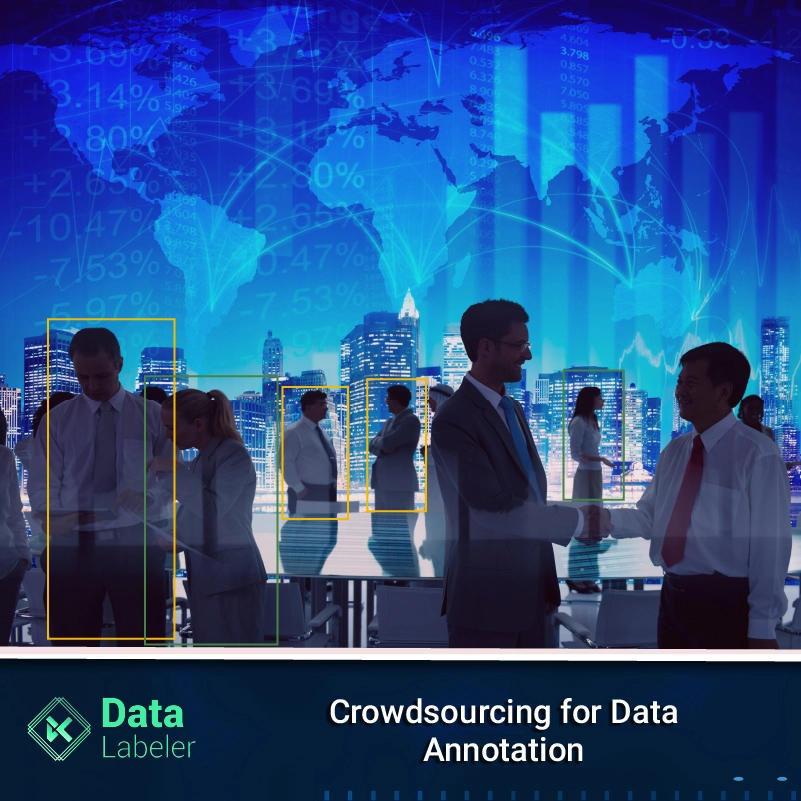
Leveraging Crowdsourcing for Large-Scale Data Annotation in Artificial Intelligence

Machine learning and deep learning, while revolutionary, necessitate massive amounts of
data. Companies still need annotators to identify the data before they can utilize it to train
an AI or ML model, despite automated data collecting methods like web scraping.
Companies frequently resort to crowdsourced workforces for quick annotation when they’re
pressed on time to develop an algorithm. But is it always the wisest choice to do so? Your
data can essentially be annotated with crowdsourcing.

Why Crowdsourcing has become significant for all Business Enterprises? 

Crowdsourcing can be used for a variety of tasks, such as website development and
transcription. Companies that seek to create new products frequently ask the public for
feedback. Companies don’t have to rely on tiny focus groups when they can reach millions
of users through social media, ensuring that they get opinions from people from different
socioeconomic and cultural backgrounds. Consumer-focused businesses frequently gain by
better understanding their customer and fostering more engagement or loyalty.

Businesses must evaluate the quality of various data points when using crowdsourcing alone
to make decisions from a variety of network sources. They must also come up with
alternative solutions to address any regional variations that may exist, before connecting to
the organizational objectives. Big data analytics was then shown to be quite helpful in
ensuring the success of crowdsourcing. By applying known big data principles, businesses
can find the genuine nuggets in crowdsourced data that drive innovation, development
choices, and market practices. Crowdsourcing and big data analytics are strongly related to
trends.

5 Top Advantages of Employing an Image Annotation Crowdsourcing

1. Less Effort
The key advantage of using a crowdsourcing service is that the practicalities of the process
are taken care of for you. The service provider will already have a platform set up and
complete the task for you at a far lower cost than you could do it yourself by using the
crowdsourcing model.


2. A Bigger, Better Crowd
Additionally, a service provider will be able to supply a far larger population than you can
locate on your own. This is primarily because they have invested years building up their
following and making sure the appropriate people are hired.


3. Responsibility Shifting
The crowdsourcing of image annotation will involve certain ethical and legal ramifications
because images are regarded as biometrics data. By using a crowdsourcing platform, you
relieve yourself of these obligations and avoid moral and legal entanglements.


4. Higher Caliber
Because they have more experience than you do in this field, crowdsourcing service
providers also follow quality assurance procedures and standards. Your service provider will
make sure to uphold your image annotation quality criteria; all you need to do is make them
clear.


5. Added security
A better level of data security can also be provided by crowdsourcing service providers. To
protect the data, the service providers can make sure that the annotators sign non-
disclosure agreements and adhere to rigid security procedures.


Crowdsourcing the Labeling of Data 

Data Labeling is a task that data science teams prefer to outsource rather than do
themselves. These advantages are provided by doing so:

  • Reduces the need to hire tens of thousands of temporary workers.
  • Reduces the workload of data scientists
  • Investment in annotating technologies is necessary for internal data labeling.

Crowdsourcing eliminates this cost (subject to comparable costs)
Most platforms for crowdsourcing appoint independent contractors from around the world
to annotate data. Crowdsourcing platforms, at their most basic, divide the project into
smaller jobs, which are then assigned to several freelancers.


Here’s how Data Labeler can help you

With its sophisticated algorithms and integrated Data Labeling platform provides
consistency, efficiency, accuracy, and speed. Label auditing ensures that your models are
trained and deployed more quickly thanks to its streamlined task interfaces.
For Machine Learning and Artificial Intelligence (AI) projects, Data Labeler specializes in providing
precise, practical, customized, accelerated, and quality-labeled datasets.
Contact us now!


Categories
Artificial Intelligence

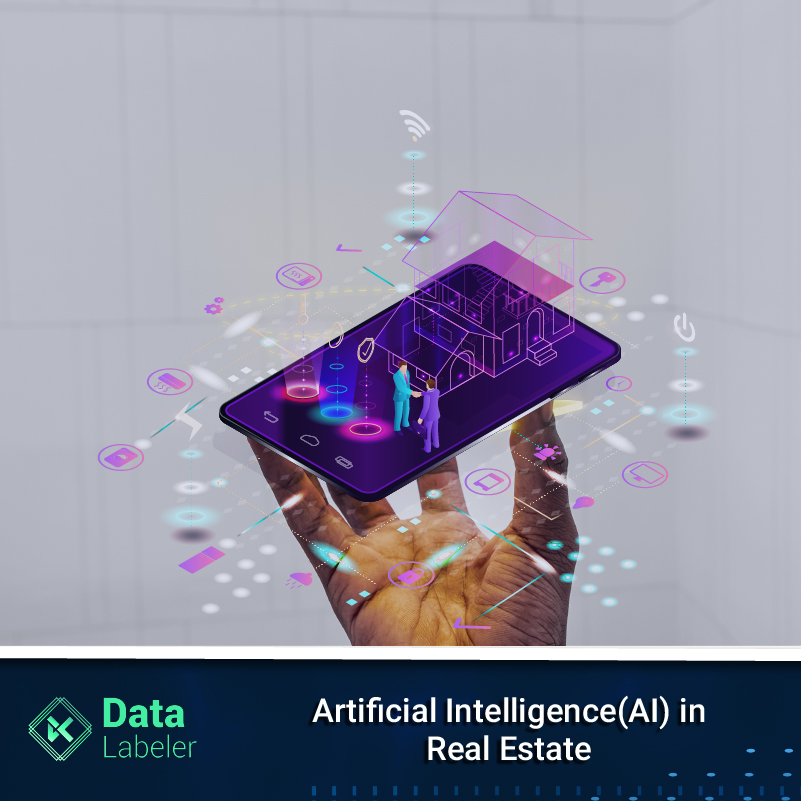
How AI has been Flourishing the Real Estate with Advanced Investment Decision-Making & Property Search?

Big or small, today almost all industrial sector is revolutionized via Artificial Intelligence. Software
programs with self-learning algorithms are known as artificial intelligence (AI) tools. Various
advanced AI theories can be applied to enhance and expedite several difficult procedures. They
improve the productivity of real estate participants like sellers, brokers, asset managers, and
investors in this way which ultimately leads to cost savings in real estate transactions.


Artificial Intelligence & Machine Learning has been transforming the Real Estate Sector:


The artificial intelligence (AI) market for real estate is divided into three categories: technology,
solution, and region. In terms of solutions, chatbots had 28.98% of the market in 2022 and are
predicted to maintain their dominance during the projected period. By gathering client information
and assisting in increasing lead generation and content marketing, AI-enabled chatbots are helpful to
many real estate organizations. A chatbot is a fantastic virtual assistant for customers and a great
way to send customized content straight to leads. Customer behavior is mentioned before chatbots.
Analytics and Advanced Property Analysis each hold a sizeable percentage of the market. Real estate
businesses are using AI to gather, report, and analyze massive amounts of data to derive insightful
information about their clients and better meet their needs. The demand for the technology will be
influenced by its capacity to carry out operations including processing natural language and
recognizing images, sounds & text using sophisticated machine learning algorithms.


Four Advanced Ways that AI Impact the Real Estate Sector

  1. Intelligent Property Search & Smart Recommendations
    By focusing on their target market and increasing the value of their products, large estate companies
    with a large inventory of properties for sale can save clients a great deal of time. Using a client’s
    preferences and previous viewings, AI may create personalized real estate listings. Additionally, it
    can use profiling techniques to show suitable offers to new customers based on their demographic
    data or goods that have previously worked well with customers who are similar to them.
    AI-powered real estate search engines place a strong emphasis on the user experience by providing
    simple interfaces and quick search processes. Users receive outstanding and relevant property
    recommendations thanks to AI systems that continuously improve their recommendations based on
    user feedback and behavioral assessments.
  2. Predictive Analytics for Market Analysis & Investment
    One of the most popular and useful uses of AI in real estate is predictive analytics. It usually serves
    as the basis for any estimate of a property’s value that you may see. To relieve consumers of the
    headache of determining the market worth of a property, artificial intelligence algorithms were
    developed.
    By taking into account expanding populations, employment prospects, the construction of new
    infrastructure, and investor sentiment, AI-driven predictive analytics may generate exact estimates.
    This aids investors in locating areas with high growth potential and directs them in choosing wisely.
  3. Chatbots & Virtual Assistants
    NLP approaches can be used by computers with AI technologies to interpret and comprehend user
    questions. Users can take part in conversational searches to ask questions in everyday speech and
    receive suggestions for properties that are pertinent. A seamless user experience is provided by
    chatbots and virtual assistants that use NLP to comprehend the needs of users, provide appropriate
    responses, and provide property recommendations.
    Detailed information on residential properties, such as specifications, amenities, location, nearby
    educational institutions, and available transportation alternatives, can be provided via real estate
    chatbots.
  4. Robust Marketing & Advertising Initiative
    Agents can now have access to cutting-edge tools and technologies that have completely changed
    how they approach marketing. By understanding client preferences and interests and ensuring that
    the right properties are shown to the right market, AI-driven systems can tailor marketing
    campaigns. Lead generation is improved, conversion rates are increased, and marketing ROI is
    maximized.
    On a variety of platforms, including search engines, social media, and real estate websites,
    advertising campaigns can be automated.

Artificial Intelligence is constantly advancing various channels of the Real Estate Sector


The use of AI in real estate has huge promise. By enhancing productivity, consumer satisfaction, and
decision-making processes, AI will revolutionize the industry. Real estate marketers might save time
and money while still providing top-notch customer service by utilizing the possibilities of AI
technologies.


As AI advances, the landscape of property searching and suggestions will change, providing users
greater control over their real estate-related activities and enhancing their accuracy, productivity,
and convenience.


Are you an Enthusiast, a Business Person, or a Technologist?


Please refer to our use cases to know everything about what we provide.
Feel free to share any Use Case regarding Data Labeling & Annotation, we are open for discussion.
Contact us!