Categories
Artificial Intelligence

How Artificial Intelligence Can Help Fight Coronavirus

There is skepticism about Artificial Intelligence in recent times. Many fear the misuse of this cutting-edge technology and its less collaborative behavior with humans. But amid the COVID 19 pandemic, it has done more good than bad. AI in its current state is effective enough to help us in our fight against the coronavirus outbreak.

Let’s take a look into how AI can be leveraged to fight pandemics like coronavirus.

Forecast Outbreaks

AI can help in the faster tracking of an upcoming pandemic that gives us enough time to prepare or even prevent the outbreak from spiraling out of control. A Canada-based company called Blue Dot was able to identify the outbreak in Wuhan even before the world population came to know of it. This company used AI, Machine Learning and Natural Language Processing to sift through 100,000 online resources like posts, articles in 65 languages daily and flagged unusual cases of pneumonia in China.

Track Virus Outbreak

With the novel COVID 2019 spreading across the world, researches are turning to AI and social media to track the virus. A team of experts at the Boston Children Hospital are using ML to sift through news reports, official public health channels, social media posts and doctors’ reports of potential cases and have released a publicly accessible heat map that live-tracks the virus.

Diagnosis

AI can help front-line health workers to better monitor and detect positive cases of Coronavirus. China’s tech giant Alibaba has come up with an AI-based tool that can diagnose the COVID-19. Alibaba claims that its new tool can detect coronavirus with 96% accuracy from CT scans of patients. It takes about only 20 secs for the AI to come to a determination that otherwise requires about 15 minutes for the humans to come to the same conclusion.

Robots

Robots can be deployed to perform various tasks from cleaning and disinfecting hospitals and quarantine facilities to delivering medicine & food thereby reducing human-to-human contact which is the need of the hour during a disease outbreak. Pudu Technology, a Shenzhen-based company deployed its robots in around 40 hospitals around China during the COVID-19 pandemic.

Drones

During a disease outbreak, drones are one of the fastest as well as the safest means to deliver medical supplies to healthcare providers. A Japanese-based company Terra Drone employed its UAV system to transport medical and quarantine supplies from People’s Hospital to Xinchang County’s Disease control center during the recent coronavirus outbreak. Drones are also quite handy during the lockdown period. They can be used to patrol public places, check for quarantine mandate non-compliance and thermal imaging purposes.

Drug Discovery & Development

AI is playing a major role in drug discovery and development against coronavirus. Google’s DeepMind, Longevity Vision Fund’s Insilico Medicine, BenevolentAI and others are leveraging AI-based systems to accelerate drug discovery and development.

DeepMind used its algorithms and computing power to identify and understand proteins that make up the virus. BenevolentAI’s predictive capabilities are helping to identify existing drugs that might be useful against coronavirus. Insilico Medicine was able to identify new molecules that can act as potential medications for coronavirus thereby helping to fast-track drug trials and vaccine development.

About Data Labeler

Data Labeler helps AI companies develop smart machine learning models by providing high-quality datasets that can train, validate and test their models. If you are looking for state-of-the-art data annotation services in Philadelphia, drop a mail to sales@datalabeler.com

Categories
Machine Learning

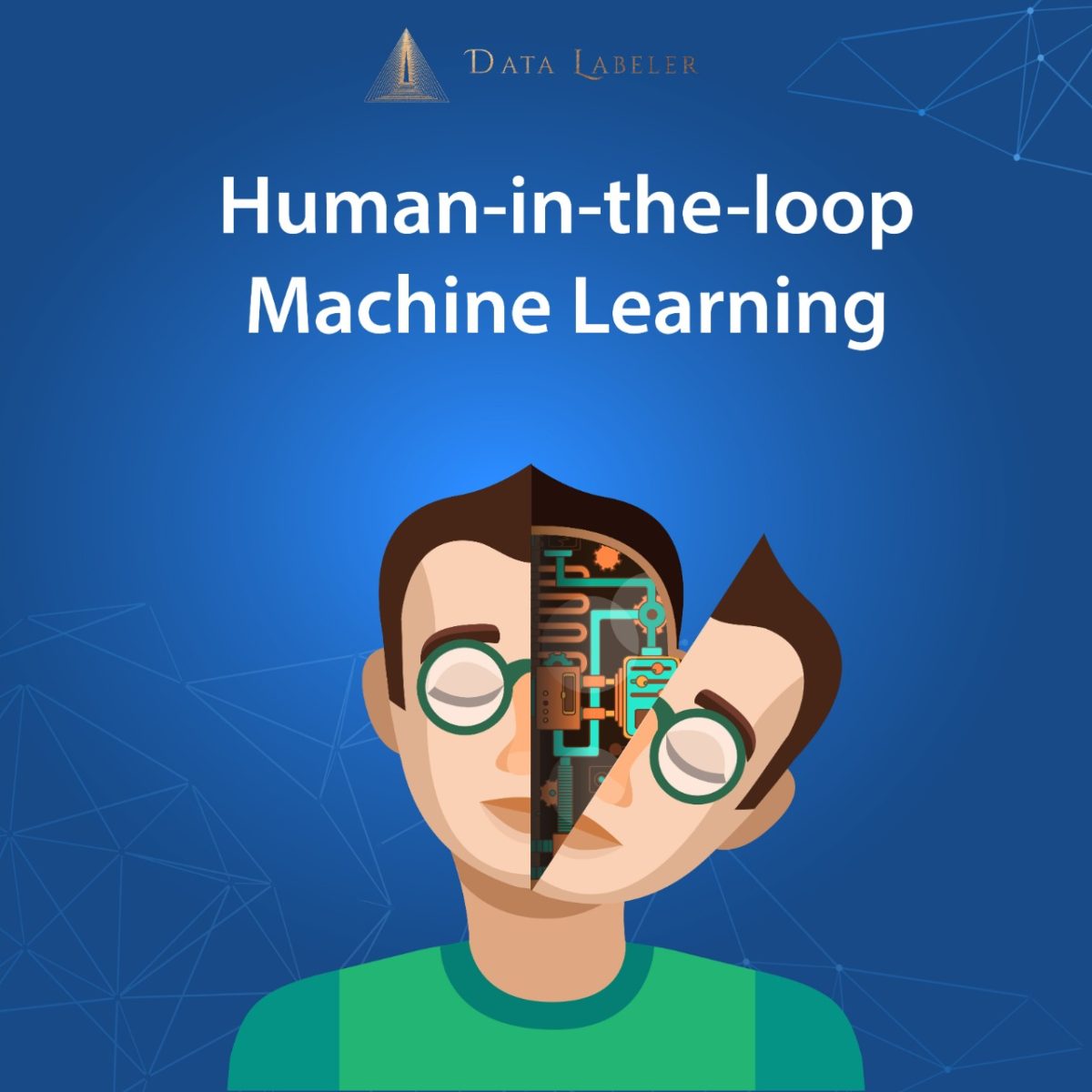
Human-in-the-Loop Machine Learning

Huge advances in the field of Artificial Intelligence (AI) has led to the rise of machines that can learn and perform on their own. But these machine-driven systems tend to fall short when it comes to achieving acceptable accuracy rates. The combination of machines-based classification enhanced by human feedback is the best approach to develop accurate Machine Learning models which is the core philosophy behind the Human-in-the-Loop Machine Learning concept.

What is Human-in-the-Loop Machine Learning?

Human-in-the-Loop (HITL) is a mix and match approach that leverages the powerful combination of human and machine intelligence to develop ML models. This approach involves incorporating human feedback into the learning circle of the machines to make them more accurate and efficient.

HITL mostly involves a variant of the Pareto’s 80/20 rule wherein the algorithm is left alone 80% of the time to learn on its own while humans’ involvement is limited to 19% of the time with the remaining 1% left to randomness.

Humans’ involvement is limited to training, tuning, and testing of a particular algorithm. First, they label the data which provides high-quality training datasets to the machines to learn from for making accurate predictions. Then the humans fine-tune the model in several ways to avoid overfitting and teach a classifier about rare or edge cases in the ML model’s purview. Lastly, humans test and validate the model.  These steps are a part of a continuous feedback loop.

When Human-in-the-Loop Machine Learning Matters?

  1. The cost of errors is high – In certain scenarios, even a small margin of error can lead to dire consequences. HITL plays a significant role in developing ML models with absolutely no room for error.
  2. Class Imbalances – In the case of rare occurrences, machines may not be able to predict or answer accurately. Human involvement helps to resolve such matters and also retrains the models to perform with a high confidence level.
  3. Less availability of data – When there is a scarcity of data for instance in the classification of social media posts during the early stages of a start-up or a new business, humans can make better judgments than ML algorithms which may require some more time to learn and master the task.

Practical Applications of Human-in-the-Loop Machine Learning

Traffic Cameras

Understanding traffic signs is a hard task for algorithms as there are variations in color, size, and text-based on country & area. Humans can help the algorithms by providing labeled datasets which trains them to identify traffic signs without any errors thereby avoiding any fatal accidents.

Chatbots

Chatbots are trained to analyze what the customer wants and offer the best possible solution. But at times customers may enter elaborate queries that might confuse the chatbot causing them to offer a completely irrelevant solution. Human intervention at this stage to point out the core issue would help to resolve the same.

About Data Labeler

Data Labeler helps AI companies develop smart machine learning models by providing high-quality datasets that can train, validate and test their models. If you are looking for state-of-the-art data annotation services in Philadelphia, drop a mail to sales@datalabeler.com

Data Labeler helps AI companies develop smart ML models by providing high-quality datasets that train & test their models.

  1. As per a study by PWC, the global GDP could rise by 14% as a result of AI-enabled activities in 2030. This is equivalent to $15.7 trillion.

AI could contribute up to $15.7 trillion1 to the global economy in 2030, more than the current output of China and India combined. Of this, $6.6 trillion is likely to come from increased productivity and $9.1 trillion is likely to come from consumption-side effects.

  • A self-learning super computer named Nautilus can predict the future, and it became famous when it was able to locate Osama Bin Laden.

Nautilus is a supercomputer that holds the capability to make predictions about future based on news articles that are fed to it. Basically, Nautilus is more like a self-learning machine that came into the limelight when it was able to locate one of the biggest terrorists of all time, Osama Bin Laden within 200km.

A Microsoft machine translation system achieved human-level quality and accuracy when translating news stories from Chinese to English. The test was performed on newstest2017, a data set commonly used in machine translation competitions.

  • Similar to a brain, the neural network learns all by itself without the need for explicit programming. What happens inside a neural network has intrigued many and research has been dedicated to seeing how the neural nets perform what they are intended to.