Categories
Data Labeler

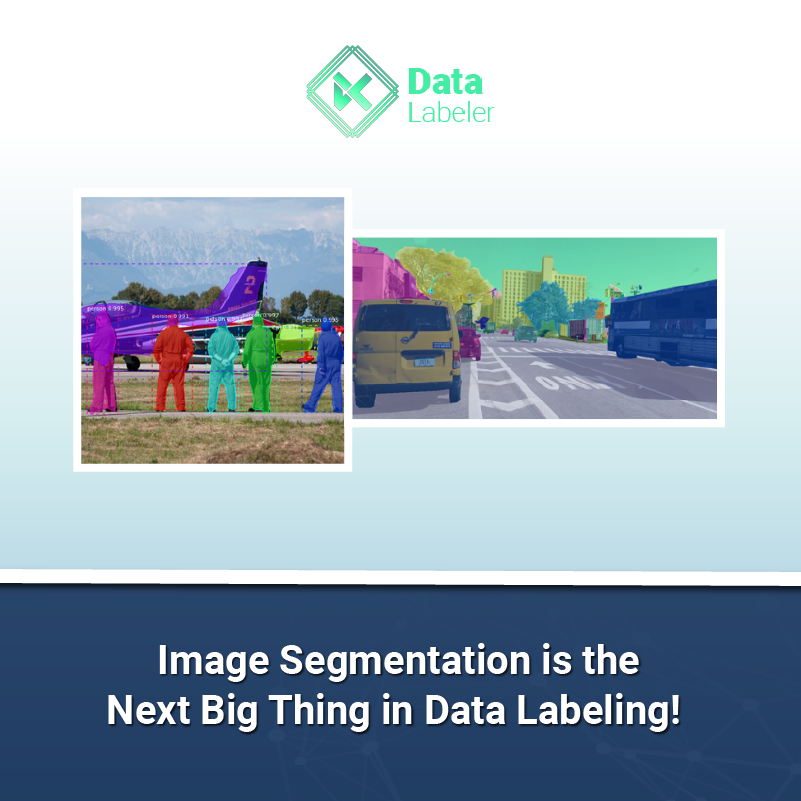
Image Segmentation is the Next Big Thing in DataLabeling! Here’s why

One of the most important areas of computer vision & data labelling is image segmentation. It uses
both learning-based and image processing-based algorithms.


Image Segmentation is not only one of the most crucial areas of computer vision & data labeling, but
it is also one of the oldest problem statements. The earliest works involved simple region growing
methods and optimisation strategies, which were created as early as 1970–1972.


How Data Labeling changed the Image Segmentation Game?


Image segmentation involves both localization and categorization. To determine an object’s location,
the model emphasizes the object’s boundary in picture segmentation, a subset of image
classification.


Unlike classifiers, which typically use a single encoder network, computer vision picture
segmentation models typically use an encoder-decoder network. The encoder transforms the input
into a latent space representation, which the decoder transforms into segment maps, or, more
precisely, maps indicating the positions of each object in the picture.


Annotation for Image Segmentation


As with all supervised deep learning methods, supervised segmentation techniques need a
significant amount of annotated, pre-processed training data.


Depending on the sort of segmentation the model performs, different types of annotations are
needed, from very detailed annotations for panoptic segmentation tasks to very basic annotations
for semantic segmentation tasks.


For delicate and important use cases like self-driving cars and medical imaging, auto-annotate can
quickly generate high-precision segment maps.


How Does AI Image Segmentation Work?


Image Segmentation divides an image into various areas or parts according to how similar the pixels
are inside each region of interest. This likeness might stem from many things, including the color,
texture, or shape of the object.


Convolutional neural networks (CNNs), fully convolutional networks (FCNs), and transformers are
modern sophisticated approaches used in AI picture segmentation to increase task accuracy.


Pre-processing and data collection: A complete set of labeled data is gathered at this stage. Both
input and output are present in this kind of dataset.


As a result, the AI system can operate more effectively with hidden images.


Steps to Effective Image Segmentation


Training: The AI system is trained on the relevant dataset during this stage. By establishing a
connection between the input and ground truth during training, the system learns patterns and
representations.


Testing: After the system has been trained, it is put to the test on a new dataset to assess how well it
performs.

Segmentation Generation: If the model works well during testing, it is then put into use in the real
world where it builds segmentation masks on the actual images in real time. Also known as the
inference phase.


The Major Gains from AI Image Segmentation for Automated Image Analysis


Time-Saving:
Because of the inherent features of the item, the manual analysis might take hours or
even days while AI algorithms can analyze and segment photos within seconds. This increases the
effectiveness of the analysis process and facilitates speedy decision-making.


Cost-Effective: Compared to manual image analysis, AI image segmentation can be more cost-
effective because fewer or no human resources are required. As a result, more people can afford
and have access to the analytical process.


Safety: The possibility of bias in the training data, which can provide skewed findings, is a prevalent
worry. Yet the possibility of inaccuracy can be decreased with precise data labeling and testing.


Robust Application: People frequently grow weary while performing repetitious jobs. The fact that
humans’ attention spans are getting shorter over time is another important worry. Inefficiency and
subpar performance can be caused by these two elements. Because it was trained on a lot of data
and is not fatigued by repetition, AI image segmentation is robust.


With reinforcement learning, these algorithms can also learn from their errors and gradually become
more effective. This indicates that they can adjust to various types of images and function well even
under trying circumstances.


If you’re looking for seamless Image Segmentation and Data Labeling Service .
Data Labeler, provides a effective data labeling services that allows companies to focus on their core
ML/AI business, while we create the datasets that you need to power your algorithms.
Want to know more? Click here
Categories
Annotation Artificial Intelligence

It’s Time that Businesses around the world startadapting Data Annotation & Labelling into their operations

Do you know? Artificial Intelligence has the potential to deliver an additional Global Economic
Activity of $13 trillion by 2030.


The foundation of AI and ML algorithms, data annotation, generates a highly accurate contextual
information that has a direct impact on algorithmic performance. For AI and ML models to recognize
and analyse in coming data accurately, annotated data is essential.


Worldwide spending on third-party data annotation solutions is anticipated to increase seven times
by 2023 compared to 2018, accounting for nearly one-fourth of all spending on annotation.


Large training dataset requirements, which are frequently specific to individual enterprises and
which data annotation services are addressing, are at the heart of the AI revolution.


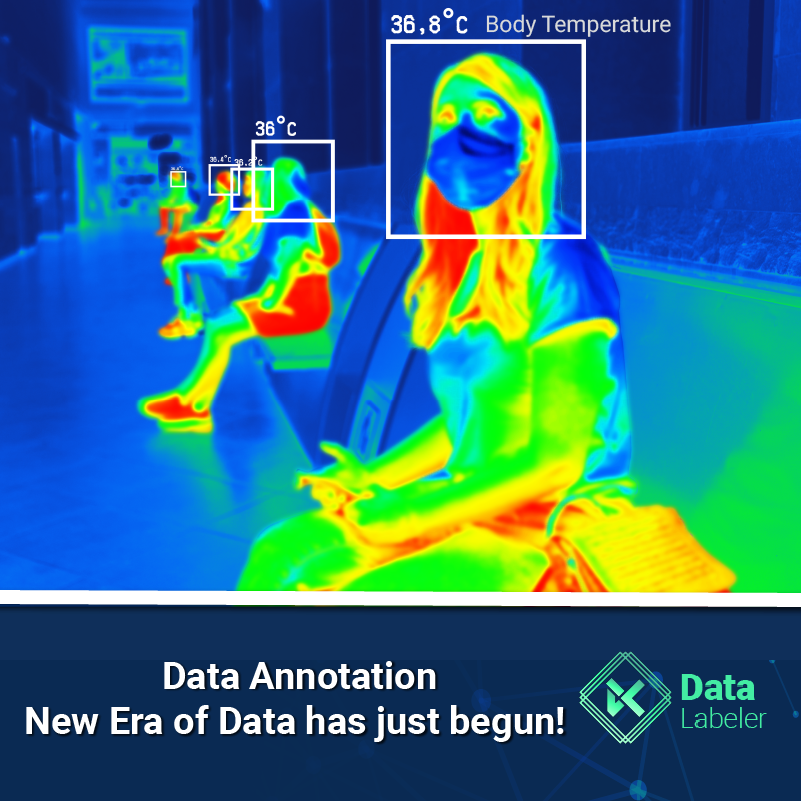
Data Annotation: New Era of Data has just begun!
All machine learning and deep learning algorithms depend on data in some way. That is what drives
these smart and intricate algorithms to provide cutting-edge performances.


So, one must feed the algorithms with data which is appropriately structured and labelled if they
want to create AI models that are actually accurate. And this is where the Data Annotation process
makes an absolutely sense to the businesses.


Data must be annotated for machine learning algorithms to use it and to learn how to carry out
specific tasks.


Data Annotation – what is it?


This simply refers to marking the region or area of interest; this kind of annotation is unique to
photographs and videos. Apart from that, adding relevant information, like metadata, and
categorising text data are the main components of annotation.


Data annotation typically falls under the topic of supervised learning in machine learning, where the
learning algorithm links input with the relevant output and refines itself to minimise errors.


Types of Data Annotation


Image Annotation
The process of labelling an image is known as image annotation. It makes sure that an annotated
area in a given image is recognised by a machine learning system as a certain object or class.

  1. Bounding box: Drawing a rectangle around a specific item in an image is known as “bounding.” Bounding boxes’ edges should contact the labelled object’s furthest pixels.
  2. Object Detection: It can be used to annotate items that need to be grasped by a robot, such as those on flat planes that need to be navigated, like cars or planes.
  3. Polygons: Users can make a pixel-level mask around the intended object which is why polygons are
    useful.
  4. Semantic Segmentation :The process of grouping comparable parts or pixels of an object in an image is known as semantic segmentation. This method of annotating data enables the machine learning algorithm to learn and comprehend a particular feature and can aid in the classification of anomalies.


Best Use Case Scenario Data Labeling and Annotation

Rise of Virtual Assistants: Just like Alexa and Siri, developing next-generation personal assistants
involves a lot of text annotation. This is necessary because there are so many subtleties in human
speech that the annotators must label every piece of textual material to aid the system in
understanding them.

Increasing Crop Yield: With data annotation, now farmers can find the parts of the farmland that
needs more cultivation with the aid of drones that are driven by computer vision technology. For
farmers to make the most of their available farmland in order to successfully yeild crops.

Robotic Process Automation: A lot of the repetitive tasks that are performed in factories, farms,
warehouses, and other industries can be automated to relieve some of the workload from human
employees. However, in order to see and interact with the physical environment around them, these
robots depend on LiDAR and 3D Point Clouds.

Development of Autonomous Vehicles: AI vehicles are taught using a variety of image and video
training sets, which call for data annotators to label different aspects of the images. Simple examples
include drawing a bounding box around another object, or more complex examples include semantic segmentation, LiDAR, and 3D point cloud labelling.

Wondering how to start with Data Labeling Service?
In comparison to insourcing or in-house annotation, outsourcing data annotation has proven to be
both commercially and technically superior. In fact, a report claims that considering the
infrastructure, expertise, and employment costs associated with it, in-house data annotation is likely
to prove four to five times more expensive than outsourcing.

Outsourcing also means a stronger professional dedication and greater scalability. Additionally, it
includes a higher level of professional experience and expertise as well as significant and long-lasting cost savings from ready infrastructure without having to pay for hiring costs.
Data Labeler, specializes in creating quality labeled datasets for machine learning and AI initiatives.
Want to know how? Contact us!

Categories
Annotation Artificial Intelligence Artificial Intelligence Services Bounding Box Computer Vision Data Labeler Data Labeling Deep Learning Image Captioning Image Classification Machine Learning Machine Learning and Deep Learning Machine learning service Natural Language Processing Natural Language Processing and Deep Learning

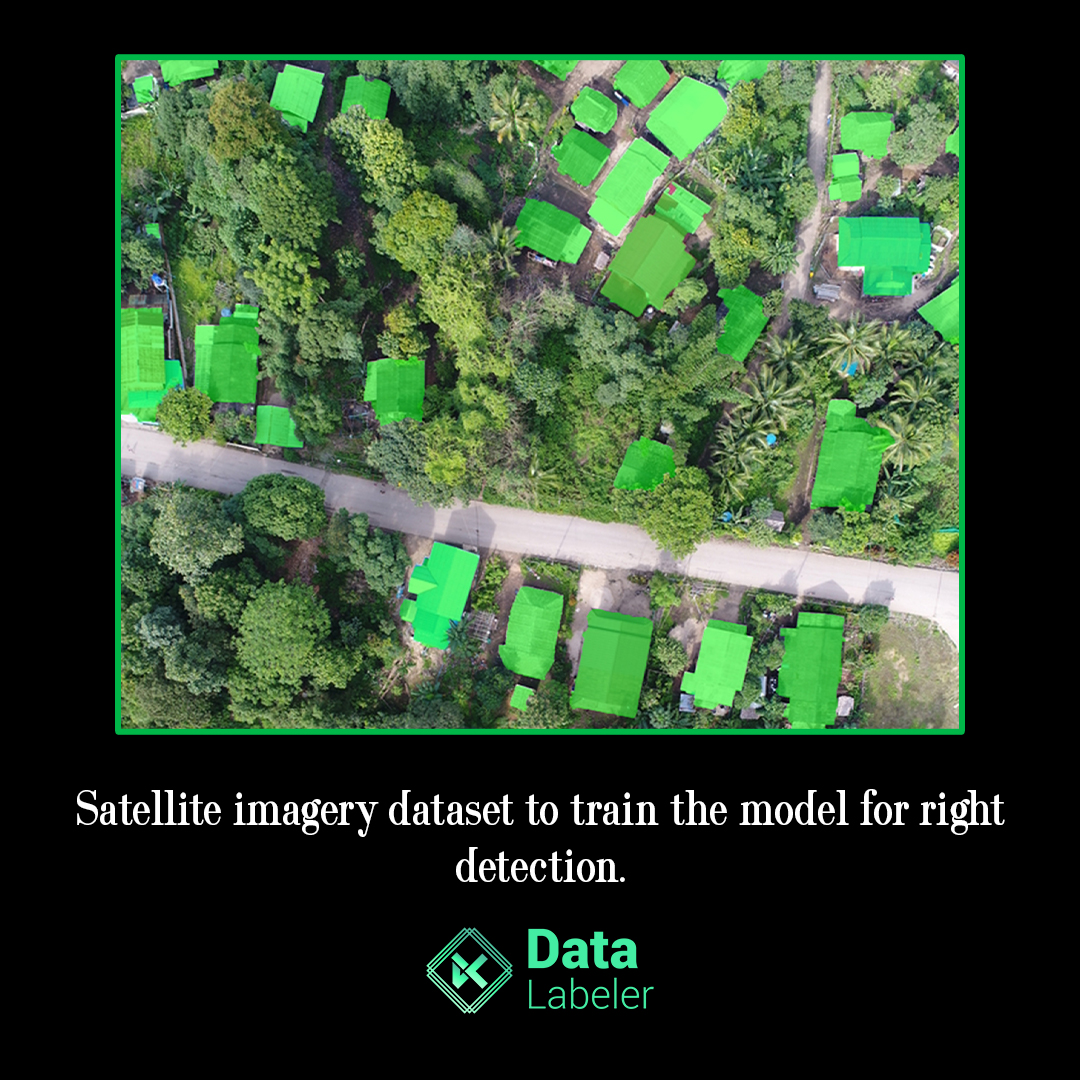
Satellite Imagery Dataset To Train The Model For Right Detection 

Datalabeler provides satellite imagery data sets with annotated images to make the varied objects recognizable from the Aerial view , at sky level heights , Drone images etc 

Datalabeler Annotation Technique

Bounding Box  – Utilizing data annotations to outline objects of interest within an image for object detection using bounding box annotations

Video Annotation  – Using annotated lines to capture each object in the video so that computers or machines can recognize the moving objects.

Objects Localization with 2D Polygon –  Using the polygon annotation technique to annotate unevenly shaped objects in drone and satellite imagery for object localization

Object counting

Object counting is one of the most common ways to use an object detection model. A newsroom might use object counting to estimate the size of a crowd in an ongoing  protest, while a retailer may use a similar model to predict the hours with the highest level of footfalls in a street . Other uses of object detection models include detecting and monitoring animal populations and identifying the valuation of houses for bank loans.

Inspection

Inspections are now characterised by drones, especially in industries. We label people, objects and other field equipment in aerial images captured by drones using various annotation techniques.

Disaster Management

We analyse pre and post aerial images of disaster-hit locations and label structures like buildings, ports, utility sheds, etc. for enabling smart and effective disaster management projects.

Field Analysis

We analyse aerial images of agricultural fields captured by drones and label them using semantic segmentation technique.

Why Outsource to Datalabeler ?

Datalabeler is a cutting-edge AI provider specializing in creating high-quality AI training data sets. With our dedicated team of annotators working 24/7 developing datasets for GIS  based projects. We ensure consistency in interpreting edge cases across the images where we classify every pixel in images containing buildings, flat surfaces, high and low vegetation, wires, masts, pedestrians, vehicles, etc.

Categories
Annotation Artificial Intelligence Artificial Intelligence Services Bounding Box Computer Vision Data Labeler Data Labeling Deep Learning Image Captioning Image Classification Machine Learning Machine Learning and Deep Learning Machine learning service Natural Language Processing Natural Language Processing and Deep Learning others Points Polygon

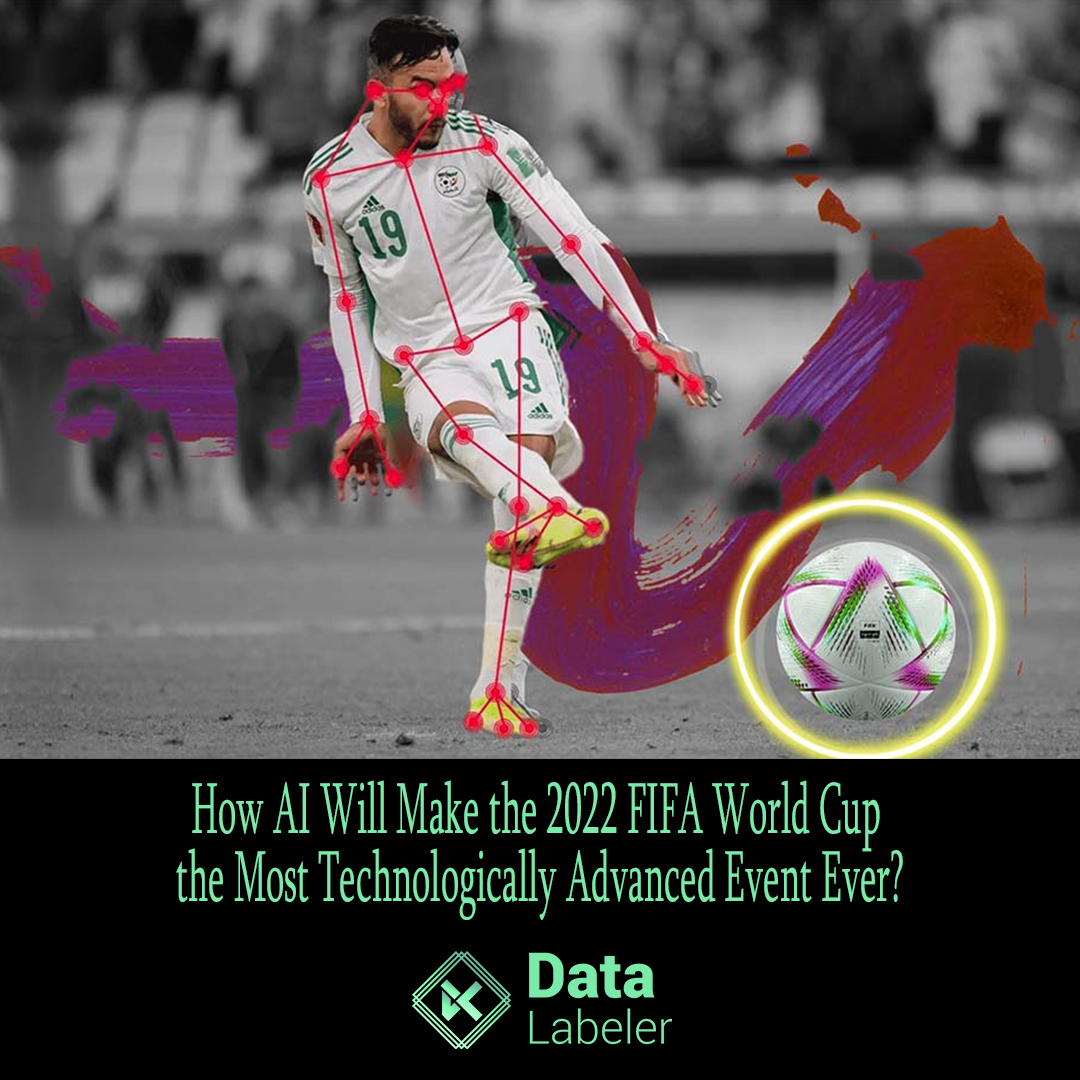
How AI Will Make the 2022 FIFA World Cup the Most Technologically Advanced Event Ever?

Computer vision servicesTechnology has a long-standing impact on football. For instance, goal-line technology and video-assisted replays both increase accuracy and do away with guessing. Additionally, both current and future AI-powered algorithms provide insights that should enhance the game.

Applications of AI on Sports Field

There are additional advancements that AI brings to the game. Utilizing AI technologies, certain applications evaluate athletes’ performances. These programmes analyse the playing style by providing precise real-time feedback to enhance performance and decision-making while playing. In order to portray athletes’ movements in three dimensions, the programmes make use of biomechanics sensors.

The hybrid system was developed by Loughborough University to examine player performance. It employs deep learning, computer vision knowledge, and automated camera-based decisions. These are the technology’s primary goals:

  • Detection of limbs and body pose
  • Evaluation of player performance data
  • Camera blending

A number of companies have emerged in an analogous effort to offer tools for monitoring player performance and obtaining scouting information. These instruments efficiently gather data for analytics, including as goals, fouls, free kicks, and shots from one player from one scene in a video to another.

AI Trends not to be Missed at FIFA 2022

  • Artificial intelligence is capable of creating and refining gaming strategies to produce exceptional, faultless decisions. Sports statistics are significantly impacted by AI tools like machine learning and deep learning as well. These are useful in a variety of gaming genres, but football in particular, where big businesses make a lot of money, is one of them.
  • One of the most basic applications of AI in sports is providing referees with a third set of eyes. The goal line and the video assistance referee are the two cutting-edge innovations that enhance the game with AI. These techniques support referees in their decision-making throughout games.
  • FIFA said this year that AI-powered cameras would be deployed to aid referees in making offside calls during the 2022 World Cup.
  • The AI semi-automated system uses machine learning to detect 29 spots on players’ bodies and consists of a sensor in the ball and 12 monitoring cameras placed beneath stadium roofs.
  • AI-powered facial recognition, the crew will now be able to zoom in on each of the 80,000 seats at Lusail Stadium
  • “connected stadium” idea will be employed for the first time at a World Championship. With the use of AI, security personnel will be able to foresee crowd swells and quickly address overcrowding.

How Datalabeler Can Help 

computer vision in sports

Data Labeler specializes in offering accurate, convenient, customized, expedited, and quality-labeled datasets for Machine Learning and AI initiatives. 

Player Tracking : Build real-time player tracking models with first-rate annotation tools, including bounding boxes, cuboids, polygons in both image and video.

Refereeing : Our annotation team can Train your AI to understand the game rules and assist referees to make the decisions where human senses lack accuracy.

Ball Tracking  : Datalabeler team can help in creating the most precise real-time ball tracking models to resolve disputes that may occur during the match.