Categories
Data Labeling

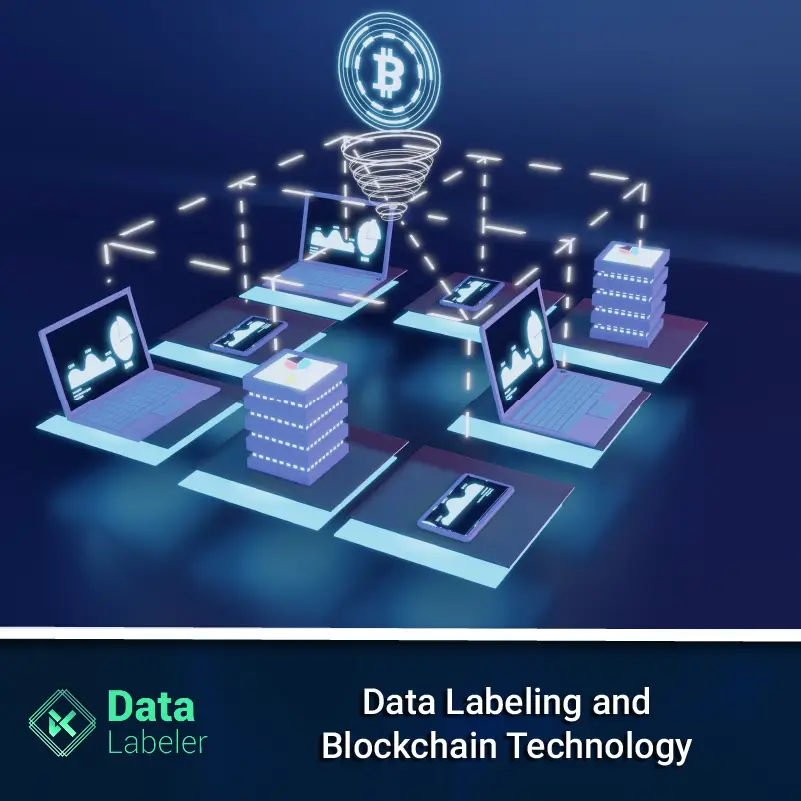
Getting Started: A Beginner’s Guide to Combining AI and Blockchain for Data Analytics

What steps can be taken to strengthen labeling data? The blockchain is a distributed digital ledger that can provide transparency that goes beyond data labels. It has a high trust value because, in contrast to conventional digital databases, once an entry is registered, it cannot be altered. Blockchain, sometimes known as “The Technology of Trust,” is sweeping the globe. It has completely changed how business is conducted.

Businesses may be sure to have technology that blends cryptography security with the internet’s openness. Additionally, they receive a new, quicker, safer method that eliminates the need for a central authority to transact data and build confidence.

Introducing Data & Blockchain

A blockchain is an encrypted digital ledger made up of data recordings, or “blocks,” that is kept on several computers inside a public or private network. Once these blocks are gathered into a chain, only shared governance protocols and automation are used to verify and manage them; a single actor is unable to alter or remove them.

A blockchain is a type of database that keeps a set of records safe against changes or interference. To put it simply, consider copying a document more than once. The document is checked with all the other scopes each time it is opened, transferred, or viewed to make sure no modifications or mistakes have been made. All of this occurs automatically; no human involvement is required. It is simple to see instances where someone tries to alter a document or access information, they shouldn’t be able to.

Successful businesses rely heavily on data, yet this carries a great deal of responsibility. Businesses are required to protect customer information and abide by all relevant security laws. Future-ready businesses will need to have a strong plan in place that protects partners and consumers while maximizing data usage.

The Power of Machine Learning and Blockchain Technology

For effective cooperation and automated decentralization, blockchain technology and machine learning are a perfect fit. More automation, decentralized intelligence, higher confidence, and more intelligent decisions are made possible by the marriage of machine learning (ML) and blockchain technology. Thus, the combination of blockchain technology and machine learning enhances financial performance and has a good effect on company processes.

We already know that machine learning has the potential to be special since it offers a variety of solutions to current business problems. Additional options include deep learning and reinforcement learning. These are all the fundamental methods of big data analytics. Consequently, smart contracts—tiny pieces of code—created by blockchain networks provide a means for the interchange and storing of massive volumes of data.

Significant Alliance of Machine Learning & Blockchain

This implies that ML and blockchain have the potential to form a strong alliance centered on data, its reliability, and all of the process’s data-driven choices. Because blockchain guarantees data security, it may encourage data sharing during the training and testing of machine learning models. Blockchain can also be used to distribute computational resources, establish Internet of Things (IoT) networks, and develop online prediction models using various data sources.

About Us:

With its advanced approach, Data Labeler offers consistency, efficiency, precision, speed, and an integrated data labeling platform. 

Also, our label auditing ensures that your models are trained and deployed more quickly because of its simplified task interfaces. Contact us or request a demo today for any kind of Data Labeling & Annotation Services

Categories
data annotation

Unlock the Reseller Benefits of Data Annotation Services with Data Labeler

Creating a high-performing machine learning model requires data labeling. Data labeling may be difficult to apply even when it seems straightforward. Thus, to choose the optimal strategy for data labeling, businesses must take into account a variety of variables and techniques. 

Given that each data labeling technique has advantages and disadvantages of its own, it is advised to do a thorough analysis of the work complexity concerning the project’s scope, size, and duration.

Why is Data Labeling Service important to Businesses? 

The core of the model is data labeling. The performance and generalization capacities of AI models are directly impacted by the precision and thoroughness of the labeled data. Reputable labeled datasets are essential for both training and evaluating machine learning algorithms. 

Without precise definitions, models can be biased, untrustworthy, and even unethical. As a result, data labeling is essential to the success and ethical application of AI technology.

Why choose Data Labeler for a Reseller program?

Selecting to outsource data annotation offers unmatched benefits that clear the path for the success of AI, making the decision more than just sensible. Below are the benefits of joining our Reseller Program:

Major Advantages are…

  • Cost-effectiveness: Hiring and sustaining an internal staff of annotators may be more expensive than outsourcing data annotation. Businesses can save money on hiring, training, salaries, benefits, and infrastructure by utilizing outside resources.
  • Scalability: Companies can swiftly and effectively expand their data annotation activities by outsourcing. When a project has to be finished quickly or involves a lot of annotated data, outsourcing can supply the labor and resources needed.
  • Quality Control: To guarantee accurate and trustworthy annotations, reputable data annotation businesses put in place strong quality control procedures. 
  • Privacy & Security: Trustworthy outsourcing providers follow strict security protocols and are knowledgeable about data privacy laws. This lowers the possibility of data breaches or leaks.
  • Flexibility: Businesses can select from a range of data annotation alternatives through outsourcing, including project-based and on-demand services that can be tailored to meet their unique requirements and financial restrictions.

Have a look at how multiple sectors unlock unique solutions with Data Labeler 

Businesses can create a variety of use cases with Data Labeler’s extensive training datasets for autonomous model validation and training.

  • Lane and Parking Area Detection – Data Labeler offers training datasets to help your Computer Vision models learn to recognize lanes and lane markers to determine which area is safe to drive in and which area is a parking lot.
  • Object Recognition: Data Labeler creates training datasets to assist your autonomous vehicle models in correctly identifying items in the immediate vicinity.
  • Pest & Disease Diagnosis: Diagnose diseases and pests with efficiently labeled datasets, which the agricultural sector is using to teach their smart detection systems to recognize and identify pest infestations.
  • Crop Harvesting: Data Labeler offers high-quality training datasets to support the development and validation of your machine-learning models for agricultural harvesting.
  • Product Recognition: For retail establishments, Data Labeler provides precise pixel-by-pixel product annotation services.
  • Email Assistants: Data Labeler automates multiple daily tasks, such as auto-complete, grammar, spell checking, and filtering unsolicited emails from the inbox.
  • Chatbots: Data Labeler enables chatbots to understand the meaning of client inquiries and provide real-time, automated answers.
  • Sentiment Analysis: Data Labeler aids in determining a text’s positive or negative polarity as well as doing back-end computation and data analytics to comprehend massive volumes of data.
  • Face Detection & Analysis: For training and testing models that carry out facial recognition, gesture labeling, and emotion detection, Data Labeler provides key point annotation services.
  • And more

Discover Reseller Opportunities with Data Labeler

Join forces with us to help bridge the gap in the vast array of businesses where data labeling is in high demand. We could give you the personnel you need to launch your own specialized annotation business. We offer adaptable solutions to support your project, development, and success.

Concentrate on acquiring clients, and we’ll concentrate on giving you the assistance you require!

With the Data Labeler Reseller Program, you can experience the data labeling & annotation of the future—a place where precision and expertise meet, with our ultimate aim being your success. 

Put your trust in us to take your ML and AI projects to the next level with the support of an efficient staff who weaves data. Request a demo today!

Categories
data annotation

Everything you should know to Kickstart a Career in the Data Annotation industry

According to studies, the market for Data Annotation is expected to develop at a compound annual growth rate of 33.2%, from USD 0.8 billion in 2022 to a valuation of USD 3.6 billion by 2027. The value of annotated data is only going to increase in the rapidly changing fields of Artificial Intelligence and Machine Learning.

Various Data Annotation Jobs Available in This Booming Market

Below are the top 5 Data Annotation Jobs that are worthwhile to pursue due to the high demand for annotated data:

  • Annotation Analyst Analysing and labeling data is an AI annotation analyst’s primary duty.
  • Data Annotation Engineer – Below are the main duties of Data Annotation Engineers:
  • Creating, modifying, and incorporating automation tools to improve AI annotation procedures and thus increase efficiency.
  • Putting in place quality-control measures in annotation tools in accordance with the rules increases the effectiveness of tools for automatic AI Annotation.
  • Ensuring efficient frameworks and techniques for data protection and privacy.
  • Data Labeler – The primary duty of a Data Labeler is, as the name implies, to tag, label, and categorize data following project specifications. In actuality, they use AI annotation tools or manual annotation of data to carry out labeling tasks like object detection.
  • Data Annotation Specialist – A Data Annotation Specialist’s job is quite similar to that of a Data Labeler. The role’s relative seniority is the main distinction.
  • Natural Language Processing (NLP) Engineer – To help AI computers comprehend, interpret, and produce human language, NLP Engineers create Machine Learning Models. They also carry out AI Annotation activities to train AI systems.

Data Annotation Career: Scope & Opportunities

The discipline of Data Annotation is booming, with many career opportunities and significant development potential. Businesses across all industries use data to make informed decisions and stay ahead of the competition in today’s tech-driven environment. The demand for experts who can glean insights from massive amounts of data is expanding as our reliance on data increases.

Now let’s explore the many kinds of Data Annotations to identify the scope and opportunities:

  1. Visual Data Annotation

Data Vision Analyst identifies and classifies specific attributes or objects in an image by using bounding boxes in a specified area of the image or frame.

Visual Data Annotation demands the following essential competencies:

  • Analytical Mathematics
  • Thorough familiarity with ML libraries
  • Programming Languages, such as Python, Java, C++, etc.
  • Algorithms for Image Analysis
  • Visual Database Management
  • Comprehending dataflow programming
  • Familiarity with tools such as OpenCV, Keras, etc.
  1. Audio Data Annotation

Natural language processing (NLP), Transcription, and Conversational Commerce can all benefit from Audio Data Labeling. Tech behemoths like Google, Microsoft, and Amazon Web Services are using startups like Shaip to provide auditory Data Annotation Services. 

The abilities needed in this field are:

  • Spectrogram evaluation
  • Thorough familiarity with ML libraries
  • Programming Languages such as Python, Java, C++, etc.
  • Auditory Database Management
  • Familiarity with tools such as Studio One, Adobe Audition, Audacity, and Cubase.
  1. Text Data Annotation

Machines can recognize text in photos, videos, PDFs, and files, as well as the context around the words, thanks to AI systems that have been trained with the appropriate datasets to understand written language. 

The essential competencies needed in this field are:

  • Proficiency in Computational Linguistics
  • Knowledge of Machine Learning
  • Database Administration
  • Programming Languages, such as Python, Java, C++, etc.
  • Familiarity with tools such as AGTK, NLTK, GATE, and Apache UIMA.

About Us:

At Data Labeler, we’re dedicated to building a supportive, robust, dynamic platform where people from all walks of life can come together to empower marginalized groups. To educate young minds and inform them of the new job opportunities brought forth by Artificial Intelligence (AI).

For further queries, please visit our website or send us an e-mail and we’ll gladly get back to you. Or request a demo today!

Categories
Data Labeling

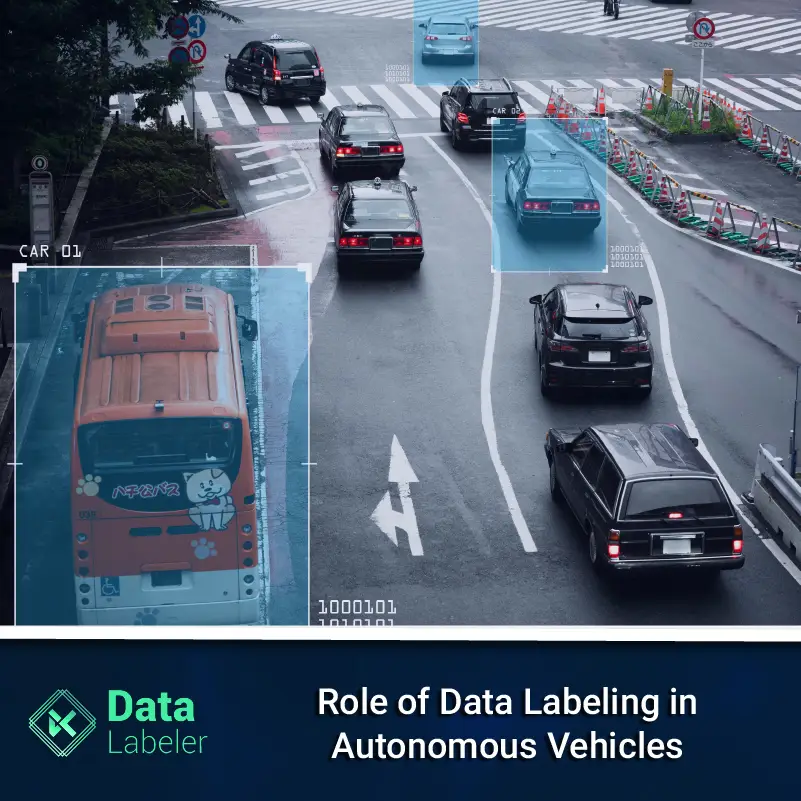
7 Key Reasons Why Data Labeling is Crucial for Autonomous Vehicles

Did you know that the concept of autonomous vehicles first emerged in the 1930s? General Motors first proposed the concept of autonomous vehicles in a 1939 exhibit, and it became a reality in 1958.

Accurate data labeling is a critical step that provides the foundation of autonomous cars’ ever-evolving capabilities. This procedure is essential to giving these cars the ability to comprehend their surroundings and navigate them precisely.

This article explores the significance of data labeling for autonomous cars and highlights how crucial it is to determine the future of the transportation sector.

  1. Enhancing Classification and Object Recognition

Supervised learning is the foundation of autonomous cars’ capabilities, and data labeling is its fundamental component. Utilizing carefully chosen labels, autonomous systems are trained to distinguish between automobiles, people, traffic signs, and other important objects; this is the foundation for their understanding of their environment.

  1. Systems for Nurturing Object Detection

The essential component of autonomous driving is object detection, which allows cars to recognize and follow a variety of things in real time. To teach models to perceive and react to their environment appropriately, data labeling services provide precise object placement and attribute annotations.

  1. Improving Semantic Segmentation

The technique of breaking up scenes into discrete areas and giving each pixel a label is known as semantic segmentation. To advance this process and enable autonomous cars to understand the geographical distribution of items, data labeling is essential. Consequently, this improves their ability to make decisions and their contextual awareness.

  1. Using Precise Labelling to Ensure Safety and Dependability

Data labeling requires careful consideration of how to reduce the possibility of false positives and negatives. To reduce the likelihood of accidents and incorrect decisions made by autonomous vehicles, training data must be accurately categorized. This will ultimately improve road safety.

  1. Managing Complicated Situations

Data labeling enriches the training set of data with a variety of complex driving circumstances. This enables self-driving cars to handle real-world scenarios with ease, improving the overall dependability of their operation.

  1. Data Labeling Navigation Methods and Technologies

Data labeling for autonomous vehicles is a dynamic, constantly changing process. To address the demands of this cutting-edge industry, a variety of approaches and technologies are utilized.

  1. Adherence to the Regulations

Meeting the strict safety regulations and regulatory norms governing autonomous vehicles depends on data labeling. An organized approach to testing and validation is demonstrated by properly labeled data, which gives regulatory agencies and the public trust.

Businesses that offer data labeling services, such as Data Labeler, are leading the way in providing high quality data solutions and are crucial to this development.

About Us:

Data Labeler highlights how important data labeling is to the field of autonomous vehicles. Through their experience, it is clear that accurate data labeling is a critical component of the safety, effectiveness, and public confidence in self-driving cars. 

As we move towards a future where these cars predominate, it becomes evident that the precision and caliber of this foundational process will determine how successful these vehicles are. This realization emphasizes how crucial data labeling is, and how businesses like Data Labeler are spearheading the effort as we swiftly approach the autonomous-driven era.

Are you looking for an efficient Data Labeling Services? We at Data Labeler provide an array of the best data annotation and labeling services. 

Have a use case in mind? Let’s discuss this, contact us at Sales@DataLabeler.com