Categories
Annotation Artificial Intelligence Artificial Intelligence Services Bounding Box Computer Vision Data Labeler Data Labeling Deep Learning Image Captioning Image Classification Machine Learning Machine Learning and Deep Learning Machine learning service Natural Language Processing Natural Language Processing and Deep Learning others Points Polygon

Prevention of Accidents by Helmet detection

Bike riders have been rapidly increasing amid time in various countries. Motorbikes are favoured by citizens belonging to different classes of the society due to many reasons such as its economic value. Wearing helmets is compulsory according to the standard however the vast majority avoid it. A principal goal of the helmet is to guarantee the safety of the riders.
In this work, we aim to automatically and accurately detect whether a person is wearing a helmet while riding a motorcycle. Our motivation is to promote road safety and ultimately help reduce the number of motorcycle accidents. To this end, we have annotated a data set of 25000 images that contain people riding motorcycles with or without helmets.


Separating Riders from Images

The purpose of this project is to introduce a new method for helmet detecting in video footage. This new method is based on the use of bounding boxes. By using this method, it is possible to separate the user from the background and distinguish them from other objects in the footage.

Tools used to make this happen

We use data annotation tool called Plainsight to annotate all the datasets. The tool offers different and efficient annotation methods to completely transform any dataset to be used for machine learning algorithms. The methods available are:

Conclusion

In conclusion, the use of bounding boxes for helmet detection can be an effective method for detecting people wearing helmets in video footage. This method can help to improve road safety and reduce the number of motorcycle accidents.
This method has the potential to accurately detect whether a person is wearing a helmet while riding a motorcycle. The use of bounding boxes also has the advantage of being able to separate the user from the background and distinguish them from other objects in the footage.

About Data Labeler

By leveraging the advanced tools and technologies, Data Labeler offers best-in-class data labeling services in computer Vision projects. We at Data labeler believe in providing jobs to underserved communities and making them financially independent. We are on a mission to help them earn a living through the major changes brought by AI & ML, empowering businesses all over the world.
Increase your competitive advantage with unlimited support and exponential growth through our Data Annotation Services.

Categories
Annotation Artificial Intelligence Artificial Intelligence Services Bounding Box Computer Vision Data Labeler Data Labeling Deep Learning Image Captioning Image Classification Machine Learning Machine Learning and Deep Learning Machine learning service Natural Language Processing Natural Language Processing and Deep Learning Points Polygon

Interested in computer vision? DATA LABELER can help in providing real-time intelligence and a higher ROI.

The market for computer vision produced $9.45 billion USD in 2020. This amount is expected to grow by 41.11 billion USD between 2021 and 2030 at a compound annual growth rate (CAGR) of 16.0%.

Since its inception in the middle of the 20th century, advances in technology, faster processing, and better algorithms have significantly changed computer vision..

What Is Computer Vision?

Computer vision is an area of artificial intelligence that gives machines the ability to perceive, recognise, and describe objects in their surroundings. Computer vision, which works as the eyes for computers, is an essential tool for many complex AI operations. Real-time data collecting, predictive analytics, enhanced security, and process enhancement are a few of these. They all enable companies to increase operational effectiveness and generate significant revenue increases.

Why Is Computer Vision Important?

One approach to understanding the significance of computer vision is to think about the benefits that human eyesight offers to society. With the help of our sense of sight, we are able to recognise objects, carry out tasks, analyse issues, choose the best course of action in specific situations, and much more. Similarly, computer vision advances technology.

Artificial intelligence innovations have produced amazing advancements in visual systems. Today, it is possible to train a computer vision platform to carry out particular activities very precisely and effectively—even better than a human could.

Advances in neural networks allow computer vision systems to learn similarly to humans, much as the brain enables human sight. This implies that they may get valuable insight from digital photographs and utilise that information to inform data-driven decisions that improve business performance.

How Does Computer Vision Work?

Humans as a species have the most advanced neurological systems on the planet, largely as a result of our capacity for critical thought-based information processing. With the help of our five senses, including sight, we can process information from our environment to detect patterns and resolve issues. This skill has helped society advance greatly, and the same principle holds true for computer vision.

Neuroscientists have provided guidance to computer scientists on how to imitate human vision in computer vision systems. Computer scientists can improve the vision of computers by studying how human learning functions.

Computer Vision 101

When humans learn from what they see, they do it by drawing conclusions about the thing from other, related images they’ve seen before. An object’s distinctive characteristics and a framework for understanding it was developed by their earlier interactions with it. As a result, they are now classifying new images using the criteria they previously set.

A platform for computer vision operates similarly. Advanced image recognition algorithms find clusters of pixels and add labels to particular things to identify them from other objects so that a computer can “see” them. They carry out this procedure repeatedly for tens of thousands or even millions of photos before uploading the data to a machine learning engine. The system then makes judgments about additional things not included in its enormous database.

Common Computer Vision Techniques and Algorithms

Because it has so many interesting uses, computer vision is advantageous for many different sectors. Finding a computer vision platform like Data Labeler that can handle the tasks required by your industry involves looking for one that has a certain set of algorithms and data processing methods. Here are some typical computer vision methods:

  • Object detection: recognises and labels any things that come into contact with a sensor.
  • Object tracking: recognises and tracks distinct objects in a video stream.
  • Image classification: identifies objects based on distinctive qualities that make them stand out in their class.
  • Pose estimation: finds and forecasts a human form’s transition based on a user-defined reference pose.

These computer vision approaches necessitate the simultaneous operation of several technical components, as we’ll see. Imaging sensors to record the data, processors to identify it, and databases to store it are all included in this. To keep everything running smoothly and create a successful CV system, you need a cross-functional team of professionals on your side.

The Complexity of CV

Developers are producing hundreds of models and frameworks that are specially tailored to satisfy a wide range of industry needs as the CV world constantly changes. They are constructed using intricate open-source architectures and a variety of hardware parts, even from the same brands.

Computer vision involves more than just creating models and frameworks to process images. Forming a development infrastructure that can give practical advantages in particular situations is necessary to create a high-quality computer vision platform. These infrastructure parts consist of:

  • A video stream can be recorded using a camera or sensor.
  • Training and optimization models
  • Sophisticated algorithm processing and decision-making logic programming.
  • Deployment on the edge.

Benefits of a Computer Vision Platform

CV will be as crucial to some industries’ operations as human vision is to ours. Businesses must constantly enhance key elements including supply chain dynamics, logistics, quality assurance, downtime reduction, increased productivity, and profits. With all of these, computer vision can be helpful.

Computer vision is expensive and difficult for many organisations to use because it takes a team of specialists to install it. However, the Data labeler computer vision platform offers a simpler method.


Why Are Computer Vision Platforms Inspiring Executives?

Platforms for computer vision not only offer excellent technical advantages, but they also increase revenue. Their data-driven insight produces strong returns on investment and frees managers and executives to concentrate on expanding their businesses. Higher earnings, fewer expenses, and wiser decision-making result from a CV. Simply said, computer vision technologies enable companies to operate at their peak efficiency.

Data Labeler offers simple-to-implement CV solutions that are superior to other platforms or do-it-yourself alternatives in a number of ways. We provide faster development timeframes, straightforward model training, sector knowledge, and plug-and-play models that are appropriate for your application. We can increase the intelligence and productivity of your company.

Data Labeler is an excellent platform to grow your AI initiatives. With 1000+ expert data labelers, we aim to empower brands around the globe.

Contact us for detailed information.  

Categories
Annotation Artificial Intelligence Artificial Intelligence Services Bounding Box Computer Vision Data Labeler Data Labeling Deep Learning Image Captioning Image Classification Machine Learning Machine Learning and Deep Learning Machine learning service Natural Language Processing Natural Language Processing and Deep Learning others Points Polygon

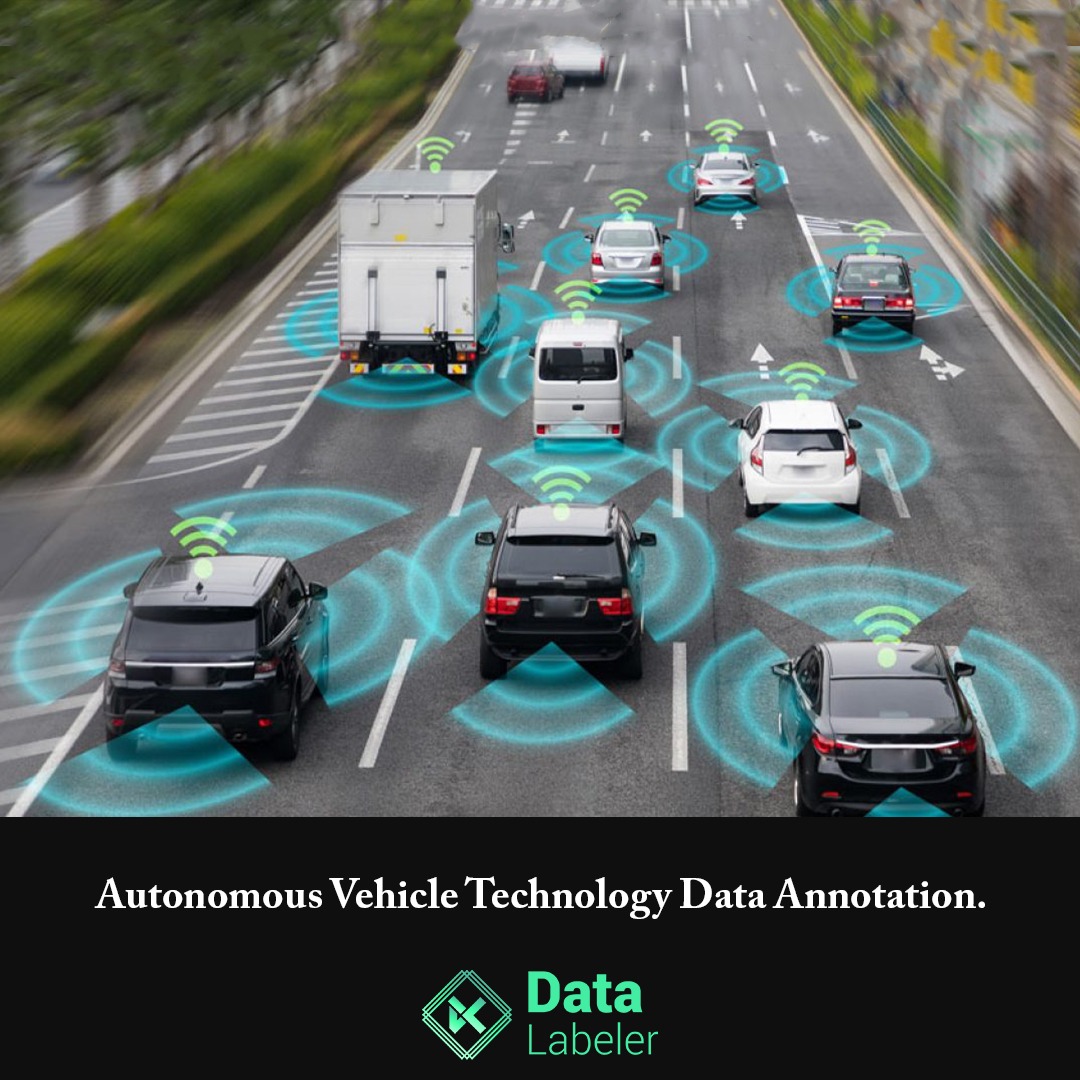
Autonomous Vehicle Technology Data Annotation

Vehicles that are autonomous or semi-autonomous are equipped with a variety of technology that significantly improves the driving experience. The existence of several cameras, sensors, and other systems makes this possible. A tonne of data is produced by all of these elements. The Advanced Driver Assistance Systems(ADAS), which relies on computer vision, is one such instance. It makes use of a computer to understand the visuals at a high level and warn the driver by helping him make better decisions by assessing various situations.

Why is annotation used?

The numerous sensors and cameras found in modern vehicles generate a lot of data. These data sets cannot be used effectively unless they are correctly labeled so that they can be processed further. In order to create training models for autonomous vehicles, these data sets must be employed as a component of a testing suite. The data can be labeled using various automation methods because doing so by hand would be incredibly laborious.

Data annotation and AV safety

We are contrasting viewpoints when we contrast a computer-driven car with a human-driven car. The National Highway Traffic Safety Administration in the US estimates that there are more than six million auto accidents each year. In these collisions, more than 36,000 Americans perish, and another 2.5 million end up in hospital emergency rooms. Even more astounding are the figures on a worldwide scale. Annotation can be done using polygons, boxes, and polylines. Different modes namely interpolation, attribute annotation mode, and segmentation among others.

Types of data annotation

Data annotation is the process of tagging or classifying objects captured in a frame by an AV. Deep learning models are fed with this material that has been further curated, manually labeled or tagged, or both. In order for AVs to learn to see patterns in data and effectively classify in order to make the best conclusion, this approach is necessary. In

order to get the best possible data, it is crucial to use the proper type of annotation. Some of the various data annotation kinds for AVs are as follows:

The future

Driverless cars are already on some highways, altering transportation as a result of the tremendous improvements brought on by the push for AVs. Innovative thinkers will always need access to high-quality, affordable data to advance at this rate. We have a huge chance to work with people, processes, and technology to deliver the greatest datasets as data annotation experts. Data annotation suppliers and developers must innovate to address edge circumstances and create data-driven systems that are impenetrable and perceptive if AVs are to become a mainstream reality.

About Data Labeler

By leveraging the advanced tools and technologies, Data Labeler offers best-in-class data labeling services in computer Vision projects. We at Data labeler believe in providing jobs to underserved communities and making them financially independent. We are on a mission to help them earn a living through the major changes brought by AI & ML, empowering businesses all over the world.

Increase your competitive advantage with unlimited support and exponential growth through our Data Annotation Services.

Categories
Annotation Artificial Intelligence Artificial Intelligence Services Bounding Box Computer Vision Data Labeler Data Labeling Deep Learning Image Captioning Image Classification Machine Learning Machine Learning and Deep Learning Machine learning service Natural Language Processing Natural Language Processing and Deep Learning others Points Polygon

Picking the way to a better asparagus future with robotic harvesting

Fruits are picked automatically by a harvesting robot under specific climatic conditions. Machine vision research based on harvesting robots is still in its early stages. The growth of artificial intelligence technology has made it possible to gather and interpret 3D spatial data about the target.

One of the most often used robotic applications in agriculture is harvesting and picking due to the accuracy and speed that robots can achieve to increase yields and decrease waste from crops left in the field.

Agriculture is already highly mechanised and automated. In fact, the sector has decreased to less than 2% of the labor force in the U.S., which is undoubtedly a result of the development of machines. And harvesting is included in that. The machine learning model can sense its environment, form opinions, and respond in another way thanks to data labeling services.

Harvesting Robots Are Making Big Leaps at the Right Time

For the asparagus sector, which now relies mainly on labor-intensive manual plucking of asparagus, robotic harvesting will be a game-changer. It is tough to find individuals to undertake the task because an average picker walks 10 kilometers daily. Access to a commercial robotic harvester will also significantly reduce expenses and ensure that we can keep serving locally grown, fresh asparagus on our plates.

Use automation to reduce your labeling time

It goes without saying that a lot of data is needed in order to create and maintain an effective ML model. However, labeling training data from scratch can take a lot of time, requires professional labeling and review teams, and quickly add up in cost, especially for organizations still working to establish best practices. It can be difficult to effectively accelerate the data tagging process. Automation is helpful in this situation. One of the best methods to quickly produce high-quality data is incorporating automation into your workflow.

Labor accounts for 50% of the cost of growing asparagus. In the 1980s and 1990s, asparagus exports were booming, but because of rising expenses, particularly for labor, exports have nearly completely ceased. Given that farmer returns have been declining, no investments have been made in the future of the sector. Advancing the

project to a commercially available asparagus harvester will help increase grower returns and exports

About Data Labeler:

By leveraging the advanced tools and technologies, Data Labeler offers best-in-class data labeling services in computer Vision projects. We at data labeler believe in providing jobs to underserved communities and making them financially independent. We are on a mission to help them earn a living through the major changes brought by AI & ML, empowering businesses all over the world.

Increase your competitive advantage with unlimited support and exponential growth through our data annotation services.