Categories
Machine Learning

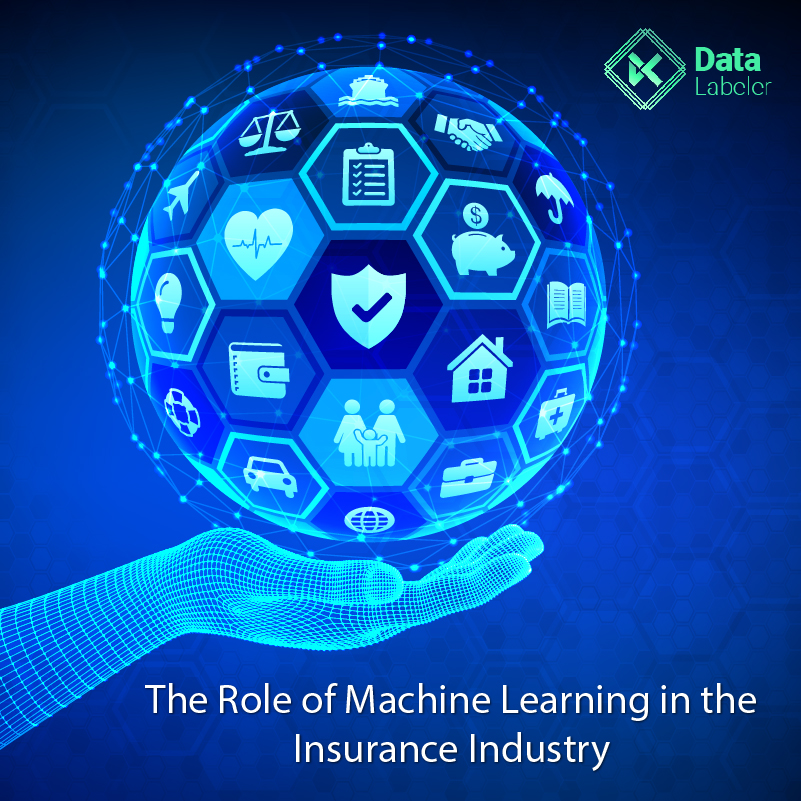
The Role of Machine Learning in the Insurance Industry

The insurance industry depends heavily on data for calculating risks and procuring personalized ratings. And today, the sector is going through a significant digital transformation due to the gradual advent of technologies. Insurers use machine learning to smoothen business operations, seamless customer experience, and effective detection of fraud. Lately, Artificial Intelligence has created a lot of buzz in almost all the industrial sectors, and the insurance industry is no exception. 

At present, data plays a crucial role in the insurance industry as insurance carriers have access to most of it. Like any other sector, even insurers are overwhelmed by the thriving data resources, which include multiple data sources like online and social media activity, voice analytics, connected sensors, or other wearable devices. They are extensively making use of machine learning for processing the information and unleash the analytical insights. 

This circumstance has been witnessing a steady change driven by the environment featured by increased competition, complex claims, elastic marketplaces, fraud behaviors, higher customer expectations, and tighter regulations. Insurers are now forced to look for ways to utilize predictive modeling and machine learning for maintaining their competitive edge, boosting business operations and enhancing customer satisfaction seamlessly. 

Let’s discuss the four effective ways how the Insurance Industry is adopting the advanced assistance of Machine Learning:

1. Improvement of the Automation process

The insurance industry is regulated through several legal requirements. It processes multiple claims and replies to so many customer queries. Apparently, machine learning could easily improve the process and automatically move claims through the systems beginning from the initial report to the analysis and interacting with the customers. 

In few cases, the claims might not require any work of the human employees. Hence these Machine Learning would allow them to dedicate their time to other demanding claims. Insurance companies automate few parts of their claim process and have increased their quality of service. 

For instance, Captricity has developed algorithms that would extract handwritten or typed forms into digital forms with 99.9% accuracy. This would help the insurers to reduce cycle times. Due to low accuracy in reading handwriting and poor-quality images, enterprises have struggled with automation technology. 

2. Sophisticated Rating Algorithms for Data Insurance

Rating is the foundation of insurance companies. As the famous saying goes, “there are no bad risks, only bad pricing,” which means brands let the companies accommodate most risks as long as they find a good match for pricing. 

Though various insurers still depend on traditional methods of risk evaluation. So while calculating property risks, they might make use of historical data for specific zip codes. Also, individual customers are being assessed using outdated indicators like loss history or credit score. 

In this way, machine learning could offer agents new tools and methods that support them in classifying risks and calculating predictive pricing models, reducing loss ratios. 

3. Provides better Customer Lifetime Value (CLV) prediction

Customer Lifetime Value prediction helps insurance companies predict the customer behavior data and assess the customer’s potential profitability of the insurer for creating a personalized marketing offer. 

These behavior-based machine learning models could be applied for forecasting retention or cross-buying all critical factors in the brand’s future income. Machine Learning also helps the insurer predict the likelihood of specific customer behaviors, such as maintaining or surrendering their policies.

4. Detection & Prevention of Fraud

Nowadays, fraud is a serious concern, and it costs the US insurance sector nearly 40 billion USD in a year. So, if insurance companies found the methods of mitigating fraud effectively, they could easily impact the profit and loss statements. Now, this is where machine learning algorithms could help.

ML is being used to identify the claims that are more seem to be fraud and subject them to further investigation by human employees. ML tools enable insurance companies to take action against fraud way more quickly than human capabilities. 

Conclusion

Machine Learning is leading the way for creating a significant disruption across multiple industrial sectors. Since insurance companies have always worked with data, it makes sense that they could easily master the digital transformation wave and implement machine learning solution for having an in-depth look into data and unleash new insights. 

About Data Labeler 

From offering quality and customized datasets with our sophisticated softwares to catering seamless machine learning datasets, we are a full-time Data Labelers. 

We intend to empower businesses all over the world and ensure supreme quality. Our robust data labeling platform promises consistency, efficiency, accuracy, and speed. Read more – https://datalabeler.com/

Contact us for advanced Data Labeling Services – Sales@DataLabeler.com
Categories
Data Labeling

Unethical Practices among few Labeling Companies

Enterprises across multiple verticals like agriculture, retail, entertainment, and robotics, all rush to apply AI to their business operations. Lately, they have been continuously overcoming their ongoing obstacles over data labeling at scale. Business enterprises today are flooded with the need for the production of usable data. They do not lack raw data; on the contrary, brands possess a lot of data in their organizations. A massive amount of data from cameras, sensors, and other types of equipment are gathered by these organizations at any given time. The prime challenge is how to process and label the data to make it effective and usable. 

Relevant labeled data ensures that machine learning systems establish reliable models for pattern recognition, which forms the foundation of every artificial intelligence project. But, applying complex attributes and various annotations, leads organizations to deploy deep learning and machine learning models, which takes up to 80% of the AI project time. At the same time, 19% of the businesses led to the lack of data and data quality issues and the adoption of Artificial Intelligence.

What misleading Data Labeling can get you through? 

Data Labeling can be misleading and intentional at times if the creator promotes the agenda on purpose. This might result in data errors or the misunderstanding of data or the data labeling process. But, whatever might be the reason, misleading data labeling do not have any place in eLearning as they confuse and misinform the learners. 

The primary ways through which labeling could mislead learners are… 

  1. Presenting large data
  2. Hiding the relevant data
  3. Misinforming the presentation of data
  4. Inaccurate data annotations

Now let’s get in depth about each of these:

  1. Presenting Large Data

Sometimes, looking at the bigger picture could make it tough to identify the salient data. The entire data set is visualized and studied separately. This phenomenon is known as Simpson’s Paradox. Examination of the data revealed that the data period covered an era with huge growth in numbers and a range of data. 

The learners will require a bigger picture and a thorough visualization of data. Hence, the designers must consider a series of data visualizations. New media mostly does this with large data stories showing a national map, for instance, with broad representations of data via state or region, narrowly focuses visualizations that focus on important trends or other information. 

  • Hiding the Relevant Data

Highlighting a particular benefit or hiding a significant data point could lead the learners to focus on a small fraction of the data story at the expense of an accurate understanding of the bigger picture. Any individual statistics or parameter could reveal useful information. So, data visualization presents more complete data, leading the learners to adopt a different approach.

  • Misinforming the Presentation of Data

Emphasizing these selected data could lead to errors which results in selecting the wrong format for the data visualization or not completely realizing the data. These errors could be unintentional, still few presentations of the data distort in ways which appear to be agenda-driven or intentional. 

This type of distortion could be found in marketing, consumer advertising, public relations materials, and more. 

  • Inaccurate Data Annotations

A specific unethical way that leads to the utilization of data visualizations is, mislabeling of data inaccurately. Data annotators generate metadata in the form of code snippets which categorize data. A brand makes use of data annotations to identify patterns and make data searchable. However, organizations are concentrating their resources on data annotations for preparing data stacks for structured or unstructured machine learning.  

Artificial Intelligence and machine learning is the latest technology to fulfill the new vision of the future. The intersection of data science and computer science is the first step towards the computational representation of everything, where algorithms and big data are the two keys. Algorithms and big data go hand in hand to generate models to process machine learning. 

About Data Labeler

From offering the highest quality training datasets using an advanced workforce to allowing the companies to focus on their core AI/ML business, Data Labeler powers your algorithms. 

Boxes for Object Detection, Polygons for Semantic and Instance Segmentation, Points for facial recognition and body pose detection, and more. 

Contact us for effective Data Labeling Services – Sales@DataLabeler.com
Categories
Artificial Intelligence

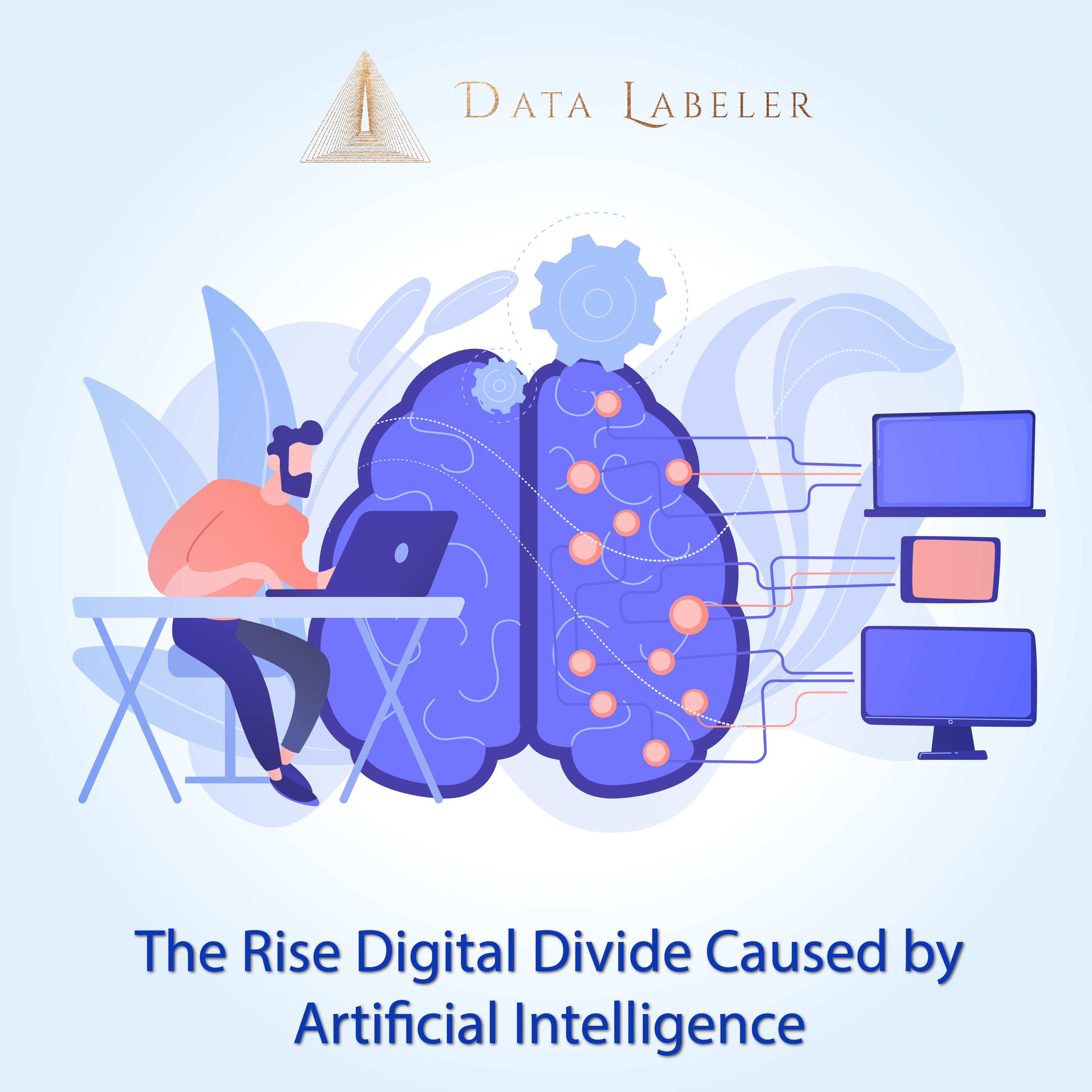
The Digital Divide that is being caused by Artificial Intelligence

“Diffusion of Innovation,” a book by Everett Rogers, explains the conditions needed for new ideas and technologies which are easy to outspread throughout society. There he raised the issue of unintended consequences. The tremendous benefits of innovation could result in unintentional negative effects, which would create a condition of disequilibrium. An innovation that advances faster than the society, research, and policies, reduces the ability to identify or assess the adverse effects. 

Over time, artificial intelligence (AI) has created a state of disequilibrium in the society as well as in education. Presently, AI could be found driving the search engines, enabling text-to-speech, translations, smart tutoring technologies, and many more. And these technologies have prospered education faster than research. As a result, despite all the promises, there could be real and significant consequences, specifically when it comes to digital equity. 

Educators & policymakers have already warned about the effects of the digital divide in the 1990s. In the beginning, this deficit referred to the lack of access to computers as well as the internet. By 2016, the National Education Technology Plan which is warned of another issue that is emerging as digital use divide, as few students realized the use of technology for the active creation of knowledge and understanding while others remained passive customers of digital content. Therefore, with the growth, another chasm may rise as a result of varying experiences and exposure to this kind of innovation.

How Artificial Intelligence Used Divide? 

According to a report by the State of Creativity in Schools, there’s no difference between the learning experience of students across multiple grade levels, geography, and students who attended schools at distinct underserved communities who reported fewer opportunities for creating learning experiences with transformative uses of technologies. 

As artificial intelligence (AI) continues to penetrate the education space, a similar dichotomy might soon arise. And students might leverage AI in support of complex problem solving, critical thinking, or to create new forms of Artificial Intelligence. 

Moreover, if students have equal access to artificial intelligence, that exposure might aid in expanding the digital use divide.  

Opportunity Gap

The great promise of Artificial Intelligence is wider personalization as a platform that intends to stimulate the experience of learning alongside a personal teacher. Since the 1920s, educators are trying to create and train machines to provide immediate learning experiences on a large scale. AI platforms guide you in suggesting resources, problem-solving, or analyzing writing or speech. So, a computer decides what, when, and how students learn, or questions emerge about whether an experience could be described as personalized or leaving very little to student’s interest. 

Similarly, the volumes of evidence demonstrate that students learn the best when inspired with curiosity and opportunities for developing new thinking through social interactions and authentic experiences, which could test different ideas within a supportive environment. So, consider the potential implementation of AI platforms for personalization where the meaningful face-to-face learning experience is absent. Few of the backlashes to AI and personalized learning could be attributed to the perception that learners spent their days in technology-rich spaces.

Digital Literacy & Skills

Research reveals that the digital divide is more than only an access issue that cannot be alleviated by offering the necessary equipment. There are a minimum of three factors, information utilization, information accessibility, and information receptiveness. An individual needs to know how to utilize information and communication tools when they exist in a community. Information professionals can bridge the gaps and provide reference and information services to aid the people in learning and utilizing the technologies that have access without taking into account the economic status of the people seeking help.  

Artificial Intelligence could bring amazing benefits to education, and it could also fan flames of existing inequities and further widen the digital divide. 

About Data Labeler

Data Labeler caters to a crucial service that empowers the companies to concentrate on their Machine Learning or Artificial Intelligence business. We create the data sets that you require to power the algorithms. 

Contact us for specialized & quality datasets.

Meta Description

Artificial Intelligence continues to penetrate the education space as it intensifies the existing inequities and further widen the digital divide. 

Categories
Artificial Intelligence

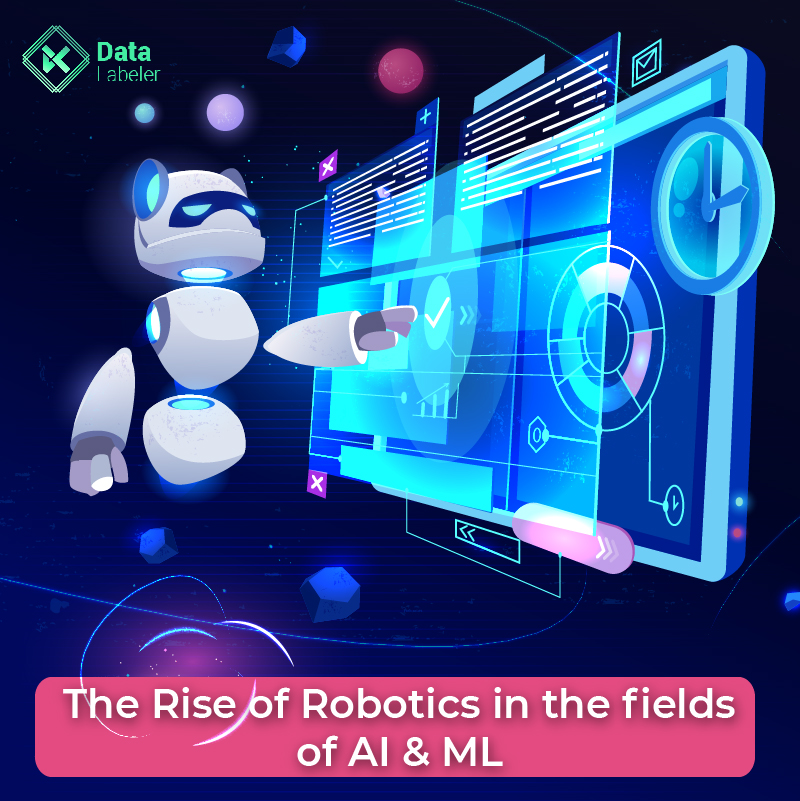
The Rise of Robotics in the fields of AI & ML

Artificial intelligence is all set to disrupt every imaginable industry, including industrial robotics. Presently the robust combination of Artificial Intelligence or Machine Learning has already opened multiple new automation possibilities. Yet, it enhances the capabilities of the industrial robotic systems. Though industries are yet to make use of the full potential of machine learning as well as robotics and the applications are seem to be promising.

Robots are one of the first automated machines which are developed for performing the various actions which aid humans in completing day to day tasks in a short period. Also, by utilizing machine learning robotics, developers build AI robots that could better understand the various scenarios and work more effectively. 

The thriving field of Robotics 

From agriculture to the manufacturing sector, artificial robots play an influential role in making the production process faster and cost-effective due to mass production and achieving economies of scale. Hence, it helped those industries by producing the goods more economically than others. 

Moreover, data labeling companies provide advanced data annotation services integrated with Artificial Intelligence applications in robotics and autonomous utility vehicles, including multiple use cases. Some of these use cases are drones, intelligence gathering, machine or human interactions, security monitoring, warehouse logistics, and many more.

Nowadays, brands possess deep expertise in Training Data annotation and collection for Artificial Intelligence and Machine Learning applications. Their data annotation platforms cater to highly accurate data labeling in the clouds and any brands’ secure computing environment. Best data labeling companies aid a few of the world’s largest brands for training utilizing AI/ML models, data, services, and software.

Data labeling brands also help in manufacturing industrial goods and services, building industrial robots, and improving the accuracy of the computer vision models through cost-efficient and high-quality labeled datasets.

Artificial Intelligence & Machine Learning Applications offers excellent potential. There are experts who expertise in robotics, engineering, and related fields of science.

Here are some examples of why an artificial intelligence robot could master the recent technologies.

How industrial robots could be integrated with AI for making people more aware of their surroundings

The Industrial sector has beautifully leveraged robotics for doing multiple things without errors. And indeed, safety is the key when robots are deployed in the workplace. So the offerings of AI robotics have played a pivotal role in the current environment.

For instance, Veo Robotics has an advanced, industrial robotics system which combines AI, sensors, and computer visions. This will allow them to setup their machines for working full-fledged by themselves without any human interference.

Also, autonomous mobile robots (AMR) are fully equipped with robotics technology and offer a dynamic performance.

Machine learning empowers robots to adapt and learn from their mistakes

More people are getting smarter day by day with both technology and experience. Although technologies like robotics applications or machine learning might hold the same abilities. Therefore, when that happens, they might or might not continue with the intensive training they receive from the humans. Rather learning might happen through vivid use.

For example, how one could be able to train a robot by making use of machine learning. 

Conclusion

The transformation of multiple technologies begins when brands onboard several technological platforms, which are often integrated with AI, ML, or robotics. These technological innovations have been proven beneficial to several organizations.

For instance, data collection is nothing but a rigorous process of gathering, storing, and transforming data for making it ready for predictive modeling. Since the arrival of these innovations relevant data could be collected based on our business requirements very easily.

Image annotations, image labeling, data labeling, and data annotations have also made the task of the data experts easier.

About Data Labeler

Data Labeler increases your competitive advantage, provides you unlimited support, and guarantees exponential growth.

Data labeler empowers business organizations by offering convenient, accurate, expedited, and quality labeled data sets for robust Artificial Intelligence and Machine Learning initiatives.