Categories
Machine Learning

Why Data Annotation is Important for Machine Learning?

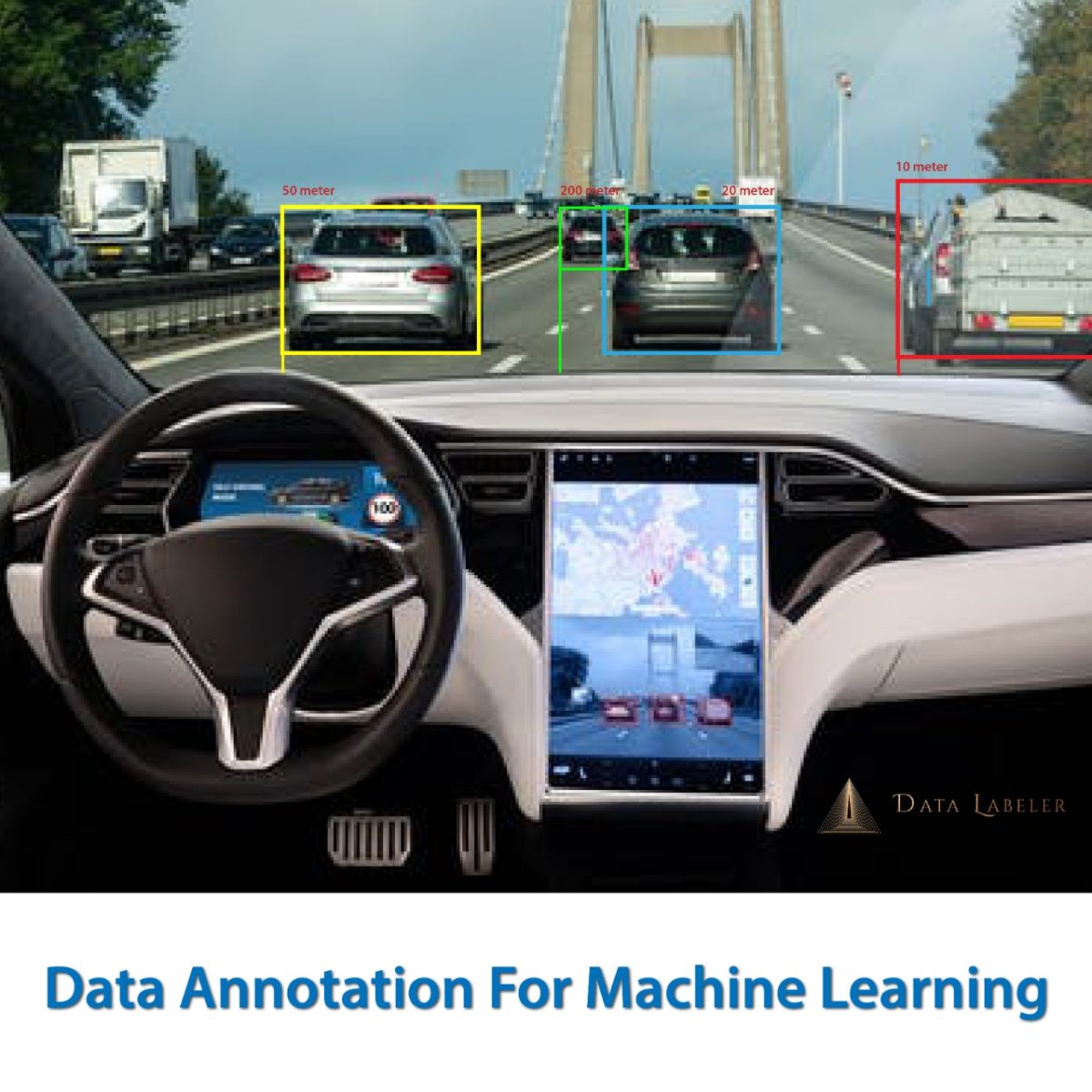
Data Annotation is the process of attaching labels to datasets that are used for training machines. About 80% of Artificial Intelligence project development time is spent on data preparation. The success of any AI or Machine Learning project is directly proportional to the quality of the annotated data fed to the algorithms for training them. Even the slightest of errors can prove disastrous to humankind especially when you trust machines with your life.

Data Annotation for Supervised & Unsupervised ML Algorithms

Data Annotation plays a crucial role in the training of the machine learning algorithms more so in the case of supervised ML projects. Annotated data helps the machines to understand its surroundings better and identify the objects in its vicinity.

When it comes to unsupervised ML project, you would need annotated data sooner or later to improve the performance of your ML algorithms. Human data annotation can play a key role to increase the accuracy rate of an unsupervised ML algorithm that learns on its own by connecting the dots. In such cases, human annotators can manually review each image to determine if the quality of the annotated image is good enough for the algorithms to learn or not.

Are Open-Sourced Datasets a Good Choice for AI/ML projects?

Even though there are open-sourced annotated data available, not the best option to consider. As per Mckinsey, about ¾ of AI projects would need monthly data refresh while 1/3rd of them need a weekly data refresh. As the datasets need to be refreshed every week, using the publicly available datasets may not be good for your AI/ML projects.

Trust Data Labeler with All Your Human Data Annotations Needs

Data Labeler specializes in building comprehensive datasets that are perfect for training your ML models. Even though Data Annotation is a very significant part of your AI/ML undertaking, you don’t have to worry about spending time annotating data yourself. We will do the heavy weight-lifting part while you focus on optimizing your AI/ML models to perfection. Write to us at sales@datalabeler.com for customized training datasets for your AI/ML projects.

Can you build Machine Learning models without data? The answer to that question is an obvious NO. Whether you are creating supervised or unsupervised algorithms, annotated data is the key to successful #MachineLearning projects.

And about 80% of Artificial Intelligence project development time is spent on data preparation of which #dataannotation is an indispensable stage.

Read the blog to find out how valuable is #AnnotatedData and the role it plays in the development of highly-efficient #MLModels

what crucial role does data annotation play in the development of 

Is it possible to build Machine Learning projects without data? Whether supervised or unsupervised machine learning development require data annotation


Categories
Machine Learning

Data Labeling Approaches for Machine Learning

Data Labeling is one of the key factors that determine the quality of a machine learning project. Although data labelling tasks are time-consuming and can get very complex, by selecting the right approach, your machine learning project can steer clear of any quality or accuracy hurdles.

In this blog, we have listed out 5 data labeling approaches for Machine Learning projects along with their pros and cons.

Data Labeling for Machine Learning

Internal Labeling

As the name suggests, the data labeling tasks are performed by an in-house team. Internal labeling can help you achieve the highest level of accuracy and also allows you to track the progress. This means your ML models will predict good results and you will have complete control over the data labeling process. But, it is a very slow process when compared to other data labeling approaches. Hence, you should opt for this approach if your company has enough time, human and financial resources,

Outsourcing

You can create a team of freelancers who provide data labeling services to speed up your ML development. You can find them on recruitment and social networking sites. You can also easily find them on freelancing sites like UpWork. This approach allows you to get the right people onboard since you check for the freelancer’s skills with tests.

Outsourcing mostly entails small to mid-sized teams. Hence you will be able to control their work. But the drawback of this approach is that you will have to build an intuitive workflow and that requires some amount of planning. You should also be able to provide them with the right tools to finish their job.

Crowdsourcing

Crowdsourcing platforms give you access to datalabelers from across the world. It is one of the cost-effective approaches and you can get the data labeled in a quick time. The quality of the workers and quality assurance may vary from platform to platform. Hence when choosing a crowdsourcing platform, it is best to check for workers’ quality, QA, and the tools they use to manage data labelers and projects.

Data Programming

This approach involves the method of using scripts to label data automatically. The programming approach not only gets your data labeling done quickly but also reduces the need for human data labelers. It is often combined with a QA team as the processes are still far from being perfect.

Synthetic Labeling

Synthetic labeling involves the generation of data having the required parameters set by the user for real data. Generative models that are trained and validated using an original dataset are used to produce synthetic data. There are three types of generative models – Variational Autoencoders, Generative Adversarial Networks, and Autoregressive models. This approach to data labeling is fast and cheaper but may require high computational power to render and train the model further.

About Data Labeler

Data Labeler helps AI companies develop smart machine learning models by providing high-quality datasets that can train, validate, and test their models. If you are looking for innovative data labeling companies in Philadelphia, drop a mail to sales@datalabeler.com

Categories
Points

Facial Recognition

The basic concept behind Facial Recognition involves identifying a human face using technology. It can be defined as a software application that recognizes a person by comparing or discovering patterns from his/her unique facial contours. Since every individual has a unique facial structure, this technology can analyze the features, match them with the information in a database and identify the person.

How Facial Recognition Works?

An algorithm is fed with a large number of photos with faces in known positions and is trained using deep neural networks.

Detection

The camera will first spot and recognize a face from photos or videos, either alone or in a crowd. The algorithm can best spot a face when the person is looking straight.

Analysis

The algorithm reads the geometry of your face by identifying 80 nodal points of the human face. These points help the algorithms to pick up specific and unique details about a person’s face such as depth of the eye sockets, length & width of the nose, shape of the cheekbones & chin, distance between the eyes and other details. 

Data Conversion

The person’s faceprint which is a mathematical formula is determined from the analysis. Similar to how every person has a unique fingerprint, each person has their unique faceprint.

Matching

The algorithm compares the person’s faceprint with the ones in the face recognition database and looks for matches with a preset threshold which are then ranked and displayed.

Applications of Facial Recognition Technology

Facial Recognition technology isn’t a new concept but has already been implemented in a variety of ways. Tech firms around the world have implemented this technology and even been used by law enforcement agencies to identify perpetrators of crime. If you have been tagging people on Facebook photos, then you are already using the Facial Recognition technology. Apple, Microsoft, and Google have integrated this technology into their apps for compiling albums of people who hang out together.

Let’s take a look at some of the existing applications of this technology;

Securing the Premises with Facial Recognition

The chief application of this technology in the security sector is to identify unauthorized access to restricted areas by non-authorized personnel. Facial Recognition software is integrated into IP cameras which are then used to provide access to restricted areas. These cameras are fed with whitelists and blacklists for certain locations and equipped with asset and perimeter monitoring capabilities for identifying threats and detecting any intrusion.

Smarter Border Control at Immigration Checkpoints

Facial Recognition has been implemented in a variety of ways to protect and keep our borders secure. Keeping criminals and persons of interest at bay has been the chief application of Facial Recognition. INTERPOL has its own Face Recognition System which has a database of facial images received from 160 countries making it one of the unique global criminal databases. Border controls have been synced with this database to identify criminals with accuracy.

Fleet Management

Facial Recognition has been used to help fleet managers monitor their drivers remotely. A camera is installed inside the vehicles which are used to identify the driver and assign them work for their shift hours. When unauthorized persons try to access vehicles, alerts can be sent to the managers thereby helping to prevent theft.

About Data Labeler

Data Labeler helps AI companies develop smart machine learning models by providing high-quality datasets that can train, validate and test their models. If you are looking for state-of-the-art data annotation companies in Philadelphia, drop a mail to sales@datalabeler.com.

Categories
Artificial Intelligence

How Artificial Intelligence Can Help Fight Coronavirus

There is skepticism about Artificial Intelligence in recent times. Many fear the misuse of this cutting-edge technology and its less collaborative behavior with humans. But amid the COVID 19 pandemic, it has done more good than bad. AI in its current state is effective enough to help us in our fight against the coronavirus outbreak.

Let’s take a look into how AI can be leveraged to fight pandemics like coronavirus.

Forecast Outbreaks

AI can help in the faster tracking of an upcoming pandemic that gives us enough time to prepare or even prevent the outbreak from spiraling out of control. A Canada-based company called Blue Dot was able to identify the outbreak in Wuhan even before the world population came to know of it. This company used AI, Machine Learning and Natural Language Processing to sift through 100,000 online resources like posts, articles in 65 languages daily and flagged unusual cases of pneumonia in China.

Track Virus Outbreak

With the novel COVID 2019 spreading across the world, researches are turning to AI and social media to track the virus. A team of experts at the Boston Children Hospital are using ML to sift through news reports, official public health channels, social media posts and doctors’ reports of potential cases and have released a publicly accessible heat map that live-tracks the virus.

Diagnosis

AI can help front-line health workers to better monitor and detect positive cases of Coronavirus. China’s tech giant Alibaba has come up with an AI-based tool that can diagnose the COVID-19. Alibaba claims that its new tool can detect coronavirus with 96% accuracy from CT scans of patients. It takes about only 20 secs for the AI to come to a determination that otherwise requires about 15 minutes for the humans to come to the same conclusion.

Robots

Robots can be deployed to perform various tasks from cleaning and disinfecting hospitals and quarantine facilities to delivering medicine & food thereby reducing human-to-human contact which is the need of the hour during a disease outbreak. Pudu Technology, a Shenzhen-based company deployed its robots in around 40 hospitals around China during the COVID-19 pandemic.

Drones

During a disease outbreak, drones are one of the fastest as well as the safest means to deliver medical supplies to healthcare providers. A Japanese-based company Terra Drone employed its UAV system to transport medical and quarantine supplies from People’s Hospital to Xinchang County’s Disease control center during the recent coronavirus outbreak. Drones are also quite handy during the lockdown period. They can be used to patrol public places, check for quarantine mandate non-compliance and thermal imaging purposes.

Drug Discovery & Development

AI is playing a major role in drug discovery and development against coronavirus. Google’s DeepMind, Longevity Vision Fund’s Insilico Medicine, BenevolentAI and others are leveraging AI-based systems to accelerate drug discovery and development.

DeepMind used its algorithms and computing power to identify and understand proteins that make up the virus. BenevolentAI’s predictive capabilities are helping to identify existing drugs that might be useful against coronavirus. Insilico Medicine was able to identify new molecules that can act as potential medications for coronavirus thereby helping to fast-track drug trials and vaccine development.

About Data Labeler

Data Labeler helps AI companies develop smart machine learning models by providing high-quality datasets that can train, validate and test their models. If you are looking for state-of-the-art data annotation services in Philadelphia, drop a mail to sales@datalabeler.com