Categories
Machine Learning

Human-in-the-Loop Machine Learning

Huge advances in the field of Artificial Intelligence (AI) has led to the rise of machines that can learn and perform on their own. But these machine-driven systems tend to fall short when it comes to achieving acceptable accuracy rates. The combination of machines-based classification enhanced by human feedback is the best approach to develop accurate Machine Learning models which is the core philosophy behind the Human-in-the-Loop Machine Learning concept.

What is Human-in-the-Loop Machine Learning?

Human-in-the-Loop (HITL) is a mix and match approach that leverages the powerful combination of human and machine intelligence to develop ML models. This approach involves incorporating human feedback into the learning circle of the machines to make them more accurate and efficient.

HITL mostly involves a variant of the Pareto’s 80/20 rule wherein the algorithm is left alone 80% of the time to learn on its own while humans’ involvement is limited to 19% of the time with the remaining 1% left to randomness.

Humans’ involvement is limited to training, tuning, and testing of a particular algorithm. First, they label the data which provides high-quality training datasets to the machines to learn from for making accurate predictions. Then the humans fine-tune the model in several ways to avoid overfitting and teach a classifier about rare or edge cases in the ML model’s purview. Lastly, humans test and validate the model.  These steps are a part of a continuous feedback loop.

When Human-in-the-Loop Machine Learning Matters?

  1. The cost of errors is high – In certain scenarios, even a small margin of error can lead to dire consequences. HITL plays a significant role in developing ML models with absolutely no room for error.
  2. Class Imbalances – In the case of rare occurrences, machines may not be able to predict or answer accurately. Human involvement helps to resolve such matters and also retrains the models to perform with a high confidence level.
  3. Less availability of data – When there is a scarcity of data for instance in the classification of social media posts during the early stages of a start-up or a new business, humans can make better judgments than ML algorithms which may require some more time to learn and master the task.

Practical Applications of Human-in-the-Loop Machine Learning

Traffic Cameras

Understanding traffic signs is a hard task for algorithms as there are variations in color, size, and text-based on country & area. Humans can help the algorithms by providing labeled datasets which trains them to identify traffic signs without any errors thereby avoiding any fatal accidents.

Chatbots

Chatbots are trained to analyze what the customer wants and offer the best possible solution. But at times customers may enter elaborate queries that might confuse the chatbot causing them to offer a completely irrelevant solution. Human intervention at this stage to point out the core issue would help to resolve the same.

About Data Labeler

Data Labeler helps AI companies develop smart machine learning models by providing high-quality datasets that can train, validate and test their models. If you are looking for state-of-the-art data annotation services in Philadelphia, drop a mail to sales@datalabeler.com

Data Labeler helps AI companies develop smart ML models by providing high-quality datasets that train & test their models.

  1. As per a study by PWC, the global GDP could rise by 14% as a result of AI-enabled activities in 2030. This is equivalent to $15.7 trillion.

AI could contribute up to $15.7 trillion1 to the global economy in 2030, more than the current output of China and India combined. Of this, $6.6 trillion is likely to come from increased productivity and $9.1 trillion is likely to come from consumption-side effects.

  • A self-learning super computer named Nautilus can predict the future, and it became famous when it was able to locate Osama Bin Laden.

Nautilus is a supercomputer that holds the capability to make predictions about future based on news articles that are fed to it. Basically, Nautilus is more like a self-learning machine that came into the limelight when it was able to locate one of the biggest terrorists of all time, Osama Bin Laden within 200km.

A Microsoft machine translation system achieved human-level quality and accuracy when translating news stories from Chinese to English. The test was performed on newstest2017, a data set commonly used in machine translation competitions.

  • Similar to a brain, the neural network learns all by itself without the need for explicit programming. What happens inside a neural network has intrigued many and research has been dedicated to seeing how the neural nets perform what they are intended to.
Categories
Artificial Intelligence

Artificial Intelligence for Wildlife Conservation

Artificial Intelligence (AI) with its myriad of applications over the years in the research labs and business world is now stepping onto the arena of wildlife conservation.

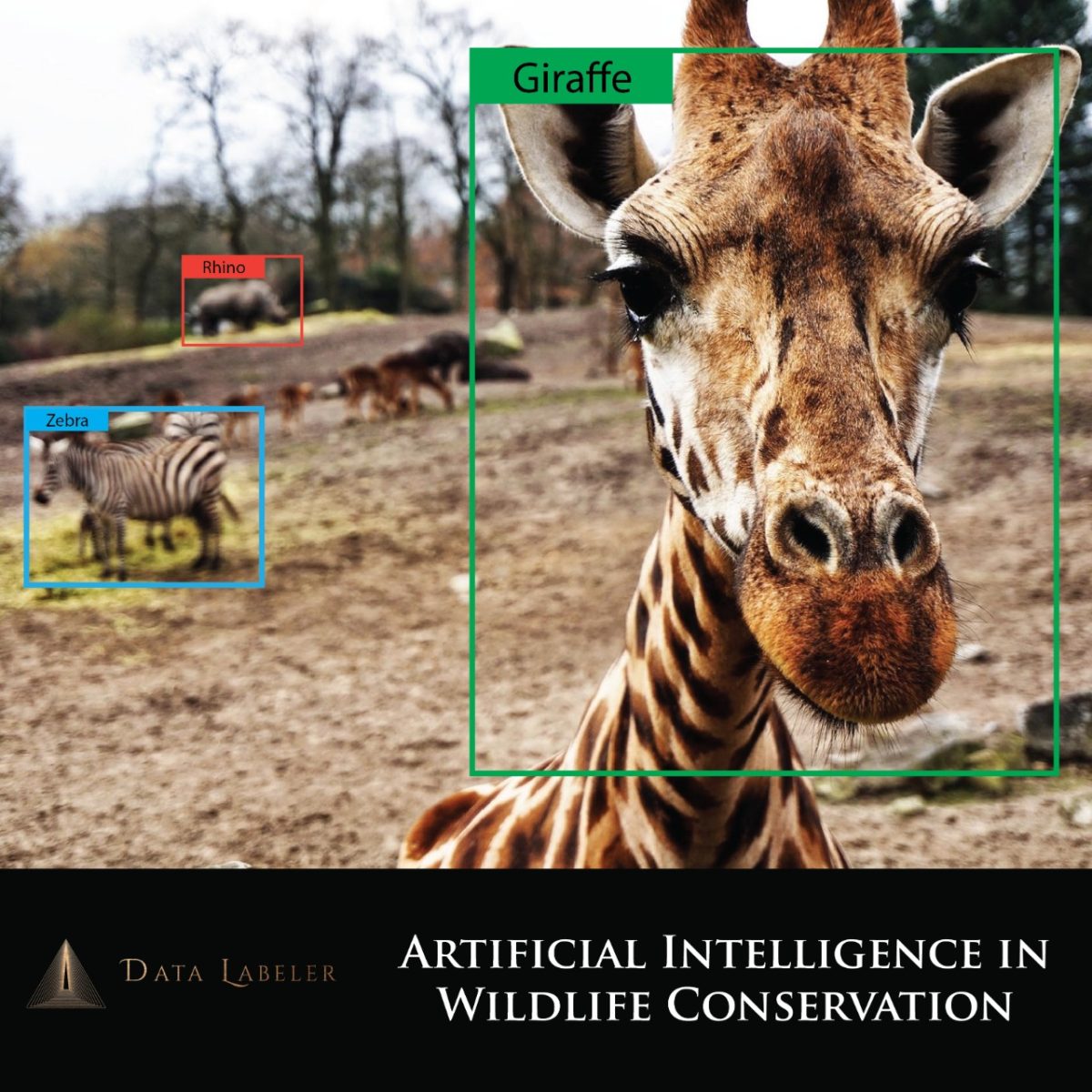
The recent advances in Machine Learning, Deep Learning (DL) and especially Image Recognition technologies have paved the way for development AI-based applications that play a significant role in wildlife conservation.

Why AI for Conservation?

AI in collaboration with other technologies like Big Data is aiding wildlife researchers in studying and protecting wildlife. From predicting the extinction of endangered species to assessing species population, measuring the global footprint of industries & businesses, predicting climate changes and stopping wildlife poaching, AI changing the future of environmental conservation.

Wildlife Conservation Projects Using AI

World Wildlife Fund (WWF) is working in collaboration with Intel on monitoring and protecting Siberian tigers in China by leveraging AI. Their collaboration has resulted in the development of an integrated solution that comprises a visual device at the frontend and an analysis & recognition platform at the backend.

The visual device called Intel Movidius has been deployed for surveillance and data collection in tigers’ habitat. For analysis of collected data on tigers and to track them, the back-end platform leverages TensorFlow tools and Intel’s DL library MKL-DNN. This solution has also deployed to protect polar bears and whales across the world.

DeepMind

Capturing photographs of animals and identifying them using humans usually would take more than a year. DeepMind, a UK-based company developed a product that helped to speed up the process and recognizes most of the animal species with high-accuracy.

This product which leverages ML has been deployed at Serengeti National Park in Tanzania to detect and count animals using millions of pictures taken at the park.

Rainforest Connection

Rainforest Connection is a San Francisco-based non-profit organization that is using AI to fight wildlife poaching. Their product called RCFx acoustic monitoring system helps by recognizing activity patterns related to bushmeat hunting like detecting the presence of trucks, motorcycles, cars and other vehicles.

This system has been deployed in African key roads using which poachers enter the rainforest. This helps the wildlife organizations to protect the rainforest to allocate manpower on days or hours when poaching activity is predicted to be high.

About Data Labeler

Data Labeler offers world-class labeled datasets to train your ML/AI-based wildlife research and conversation models. Reach out to us at sales@datalabeler.com for top-quality data labeling services.

Categories
Artificial Intelligence

AI in Retail

Artificial Intelligence is one of the emerging technologies that offer a wide range of applications for nearly all market segments, business domains, and sectors. Naturally, how can the retail industry be left behind? By leveraging AI, companies will be able to reduce costs and make shopping an amazing and efficient experience for the end customers.

As per insights from the Global Market, investments by the retail segment in AI is expected to exceed USD 8bn by 2024. Digital disruption is expected to happen in the retail sector at a rapid pace as more applications are developed using machine learning and deep learning technologies.

AI is believed to offer a diverse range of applications for the retail industry. Several AI-based solutions will be developed that will impact the day-to-day operations of the retail sector. The AI-Retail Syndicate will enhance the customer service cycle in the retail sector and both consumers, as well as retailers, are going to benefit from the syndicate.

Use Cases of AI in Retail

AI helps retailers to offer personalized shopping experiences to its end customers via interactive chatbots, smart in-store bots, and structured webshops. Let us take a look at how AI will transform the shopping experience for end customers.

Virtual Racks

Apparel and fashion product retailers can create virtual trial rooms and racks having touch-free monitors or gesture walls that will help the shoppers to find their style without having to go through a pile. They can check how a dress would look on them instantly and also get recommendations as per their style and preferences.

This helps to enhance shopping experiences of customers and also to select from a huge collection which is otherwise not possible in a physical outlet due to space constraints. Stores can collect insights on shoppers’ behavior which they can use to optimize their business and product for delivering the best retail experiences.

Virtual Trial Rooms for Instant Decision Making

Customers can get quite frustrated while trying out different options to buy new apparel and it is also time-consuming. Retailers can equip their stores with virtual trial rooms having digital mirrors which allows customers to try dresses without having to keep changing again and again.

A shopper can mix and match dresses, shoes, and accessories with a touch or gesture-based interface to get the perfect look swiftly. Apart from apparel brands, even cosmetic companies can use AI to help customers to check how a cosmetic product will look on them without actually applying it.

Digital Assistance

By leveraging AI, predictive analytics and Natural Language Processing, retailers can develop robots and touch panels to assist customers inside the stores. These robotic assistants can help customers find what they are looking for, answer to their queries and give info on the product.

Developing AI-powered customer service bots will help retail stores to reduce costs on manpower and offer assistance 24X7 to their customers which helps to attract more buyers to the stores.

Enhanced Customer Support

Retail brands can use chatbots powered by AI to engage customers with their brand efficiently. Chatbots can be used to handle millions of queries simultaneously without the need for retailers to employ a large workforce.

Apart from answering queries, chatbots can be configured to offer shopping suggestions and personalized attention to customers which will help them engage with the brand deeply thereby leading to enhanced customer loyalty.

About Data Labeler

Data Labeler specializes in providing high-quality data labeling services and is one of the top data annotation companies in New Jersey. Are you looking for Machine Learning Training Data to train your AI-based algorithms and models? Reach out to us at sales@datalabeler.com for top-quality data labeling services.

Categories
Artificial Intelligence

Wildlife Population Assessment and Estimation

Machine Learning tools have been used to assess and evaluate wildlife status, population and distribution trends. Aerial imagery, motion-sensor cameras and other powerful monitoring tools have been used to collect wildlife pictures frequently and unobtrusively. This has generated rich datasets that help to us understand wildlife and improves our ability to conserve ecosystems.

Data Labeler specializes in extracting information from these large monitoring datasets. Our high-quality training labeled datasets enable our clients to develop and train Machine Learning/Artificial Models that can monitor the wildlife.

Our world-class labeled datasets can be used to train models/algorithms to do the following:

  • Detect the presence of rare species in images and videos
  • Conduct wildlife population surveys
  • Study animal behaviour
  • Estimate wildlife population trends over time